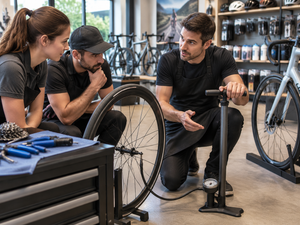
Bike retailers often need to serve different customer groups at the same time. Some customers want an affordable pump for home use. Others need a reliable pump for road bikes, mountain bikes, e-bikes, or frequent shop service.
This is why many retailers should not stock only one type of bike pump. A stronger bike pump inventory strategy usually includes both consumer bike pumps and commercial or shop-use pumps.
This guide explains how retailers can plan a balanced bike pump assortment for different users, price levels, and retail scenarios.

Why Retailers Need Both Consumer and Commercial Pumps
A bike pump is a basic cycling accessory, but not every customer needs the same product.
A casual rider may only need a simple pump for occasional tire top-ups. A road cyclist may care more about high pressure, gauge readability, and Presta compatibility. A bike shop may need a durable floor pump for repeated daily service. A cycling brand or distributor may need different models for retail, service, and promotional use.
If a retailer stocks only low-cost consumer pumps, professional customers may not find a suitable option. If the store stocks only premium shop pumps, casual customers may think the products are too expensive or too advanced.
For B2B buyers, the purchasing meaning is clear: bike pump inventory should match real customer segmentation. A balanced product range can support more customer needs and reduce missed sales opportunities.

Consumer Bike Pumps for Everyday Riders
Consumer bike pumps are usually designed for normal riders who need a practical and affordable inflation tool.
These products may include mini pumps, compact electric pumps, basic floor pumps, or portable models for home and travel use. They are often purchased by commuters, family bike users, beginner cyclists, e-bike users, and customers buying accessories with a new bike.
Consumer bike pumps should be easy to understand. Customers may not know much about pressure range, valve types, or pump head design. The product should clearly explain what bikes it supports and what accessories are included.
Important features for consumer bike pumps include:
- simple operation
- clear valve compatibility
- compact storage
- reasonable price
- basic pressure range
- included adapters
- easy-to-read instructions
- attractive retail packaging
For retailers, consumer pumps help build volume sales. They can be placed near bike accessories, helmets, lights, locks, tubes, and repair kits. They are also useful for entry-level product bundles.
For B2B buyers, consumer bike pumps should be selected for clarity, convenience, and retail appeal.
Commercial Bike Pumps for Shop Service and Serious Cyclists
Commercial bike pumps are usually built for higher-frequency use and more demanding customers.
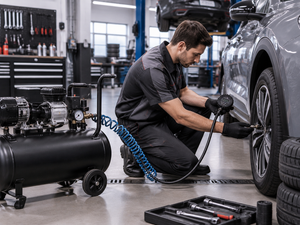
These may include professional floor pumps, high-pressure pumps for road bike shops, durable shop pumps, or models designed for daily service areas. They are not only retail products; they may also be used by store staff for repairs, demonstrations, and customer service.
Commercial bike pumps should be evaluated differently from consumer pumps.
Key factors include:
- stable base
- durable hose
- clear and protected gauge
- strong handle
- reliable pump head
- Presta and Schrader compatibility
- high-pressure capability
- repeated-use durability
For serious cyclists, product confidence is important. A road cyclist may ask about pressure accuracy, Presta support, and high-pressure performance. A mountain bike rider may care more about volume, durability, and ease of connection.
For bike shops, a commercial pump also represents service quality. If staff use a weak or unstable pump in front of customers, it can reduce the professional image of the store.
For B2B buyers, commercial pumps support both product sales and in-store service.
 mini bike pump designs for branded giveaways
How to Plan Shelf Space and Price Levels
Retailers should plan bike pump assortment by user type and price level.
A simple assortment may include:
- Entry-level consumer pump
- Compact mini pump for riding carry
- Rechargeable electric bike pump
- Mid-range floor pump
- Professional commercial floor pump
This structure allows customers to choose based on budget, use scenario, and performance needs.
Entry-level products can attract casual customers. Mid-range models can serve regular riders. Premium or commercial pumps can support serious cyclists and shop service needs.
Shelf placement should also be planned carefully. Consumer pumps can be displayed with everyday cycling accessories. Mini pumps can be placed near repair kits or saddle bags. Electric pumps can be placed in a premium accessory section. Commercial floor pumps may fit better near service areas or professional cycling products.
For B2B buyers, price levels should not be random. Each product should have a clear role in the assortment.

Packaging and Product Education for Different Buyers
Packaging should explain the difference between consumer and commercial pumps.
A consumer pump package should be simple and easy to read. It should show compatible valve types, pressure range, included accessories, product size, and basic use scenarios. For electric models, it should also explain charging method, display function, and battery use.
A commercial bike pump package can include more technical information. It may highlight high-pressure performance, gauge readability, stable base, durable hose, and shop-use design.
Retailers should avoid packaging that is too technical for beginners or too vague for serious cyclists. Product education should match the buyer.
Useful packaging messages include:
- suitable for road bikes
- suitable for mountain bikes
- Presta and Schrader compatible
- high-pressure floor pump
- compact emergency pump
- rechargeable electric bike pump
- professional shop-use design
- included adapters and accessories
For retailers, clear product education can reduce customer hesitation and after-sales questions. It also helps staff recommend the right pump faster.
What Retailers Should Ask Suppliers Before Stocking
Before stocking both consumer and commercial bike pumps, retailers should ask suppliers practical questions.
Important questions include:
- What product range can the supplier provide?
- Which models are suitable for consumer retail?
- Which models are suitable for shop or commercial use?
- Can the supplier support Presta and Schrader valve compatibility?
- Can packaging be adjusted for different product levels?
- Are manuals and accessory lists clear?
- Can private label packaging be supported?
- What MOQ applies to each model?
- Can samples be tested before bulk orders?
- Can the supplier support repeat orders and spare accessories?
Retailers should also test samples with real customers or shop staff. A product that looks suitable in a catalog may feel different in daily use.
For B2B buyers, the best supplier is not only the one with the lowest price. It is the supplier that can support a complete retail assortment with stable quality, clear packaging, and practical after-sales support.
Quick Retail Assortment Table
| Product Type | Target Customer | Retail Role | Buyer Focus |
|---|---|---|---|
| Entry-Level Consumer Pump | Casual riders and families | Affordable basic option | Price, simplicity, packaging clarity |
| Mini Bike Pump | Riders who carry tools | Compact emergency product | Size, valve support, logo area |
| Electric Bike Pump | Convenience-focused customers | Premium portable option | Battery, display, charging, pressure range |
| Mid-Range Floor Pump | Regular cyclists | Everyday home-use product | Gauge, base, hose, valve compatibility |
| Commercial Floor Pump | Shops and serious cyclists | Professional service and premium sale | Durability, high pressure, repeated use |
Conclusion
Retailers should not treat bike pumps as one single product type. Consumer bike pumps and commercial bike pumps serve different users, price levels, and retail roles.
A strong bike pump inventory strategy can help retailers serve casual riders, commuters, road cyclists, mountain bikers, serious enthusiasts, and shop service needs. The right assortment can also improve shelf presentation, customer education, and repeat sales.
For B2B buyers, stocking both commercial and consumer bike pumps requires clear product positioning, packaging, supplier support, and sample testing.
YANTU supports bike pump projects for retailers, distributors, bike shops, marketplace sellers, and private label brands. If you are planning a bike pump retail assortment, our team can help discuss product options, packaging, sample testing, and bulk order requirements.