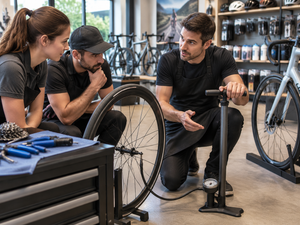
Selling a high-pressure bike pump to a professional bike shop requires more than showing a maximum PSI number on a specification sheet.
Bike shop owners and staff already understand inflation tools. They may use floor pumps every day, carry several pump types, and serve customers with road, gravel, mountain, city, and electric bikes.
For brands and distributors, the challenge is therefore not explaining what a bike pump does. It is demonstrating why a particular high-pressure pump deserves space in the shop’s service area or retail assortment.
A strong sales demonstration should connect product specifications with real shop use.
Do Not Lead with Maximum PSI Alone
Maximum pressure is one of the easiest specifications to compare, but it does not explain the full value of a pump.
A bike shop may ask more practical questions:
- How does the pump feel as pressure increases?
- Is the gauge easy to read?
- Does the pump head connect securely?
- Is it convenient for Presta valves?
- Is the base stable?
- How much effort does the user need?
- Can staff use it repeatedly?
- Will customers understand why it costs more than a basic pump?
These questions matter because a high-pressure pump is not automatically valuable simply because the specification shows a large number.
Actual tire pressure needs vary with tire width, tire construction, riding style, system type, rider weight, and manufacturer recommendations.
For sales teams, the better message is not “this pump reaches the highest PSI.”
It is:
This pump provides controlled, practical inflation for customers and shop situations where higher-pressure capability and pressure confidence matter.
That is easier for a professional retailer to translate into real customer value.
 high-pressure pump buying guide for road bike shops
Demonstrate the Pump on Real Bicycle Tires
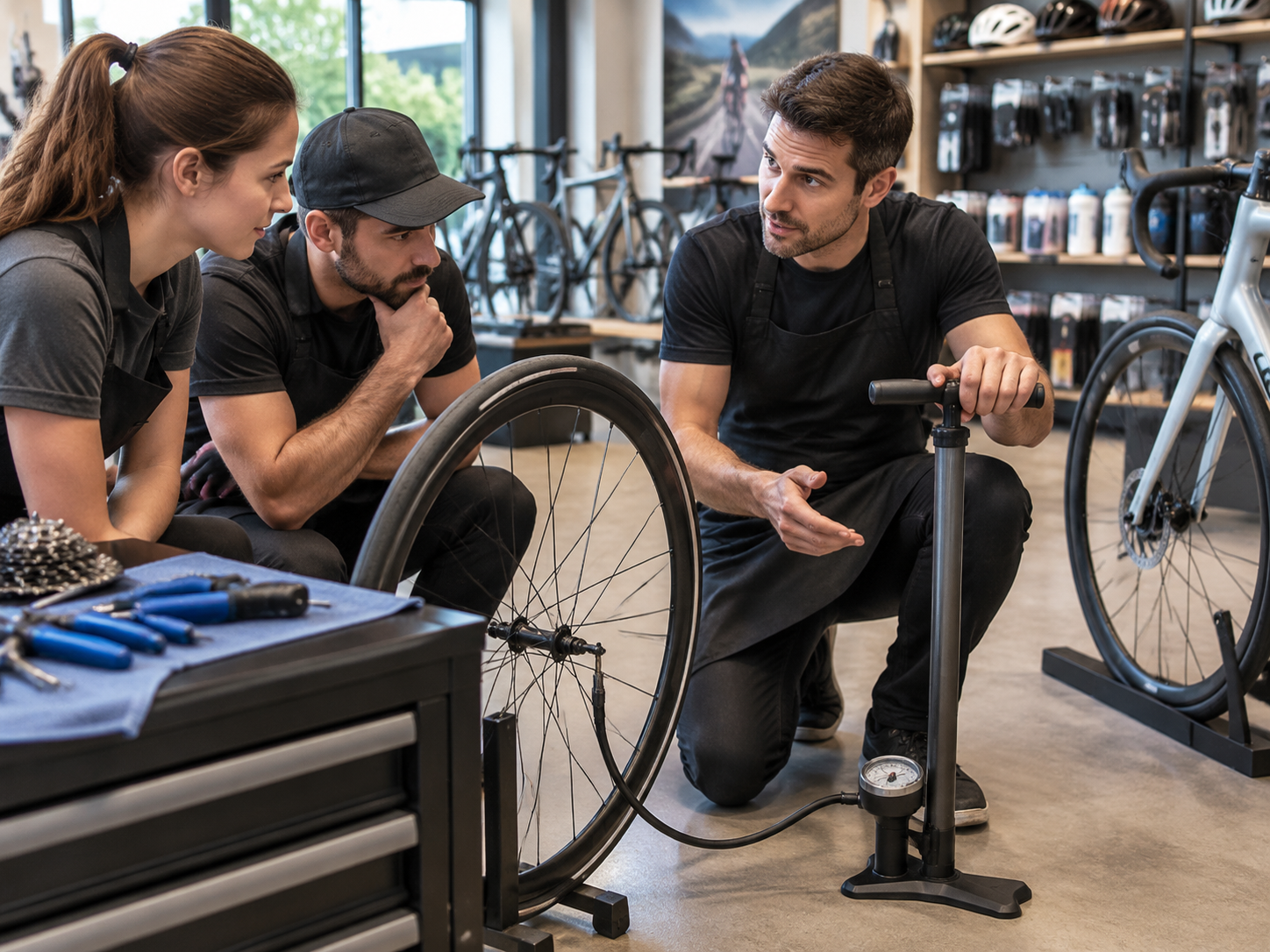
The most effective product demonstration is usually a real inflation test.
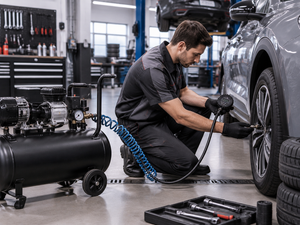
Instead of operating the pump without load, connect it to the type of bicycle tire the target shop regularly services.
For a road-focused store, demonstrate it on a suitable road bike tire. For a mixed shop, compare how the pump behaves across several relevant tire types.
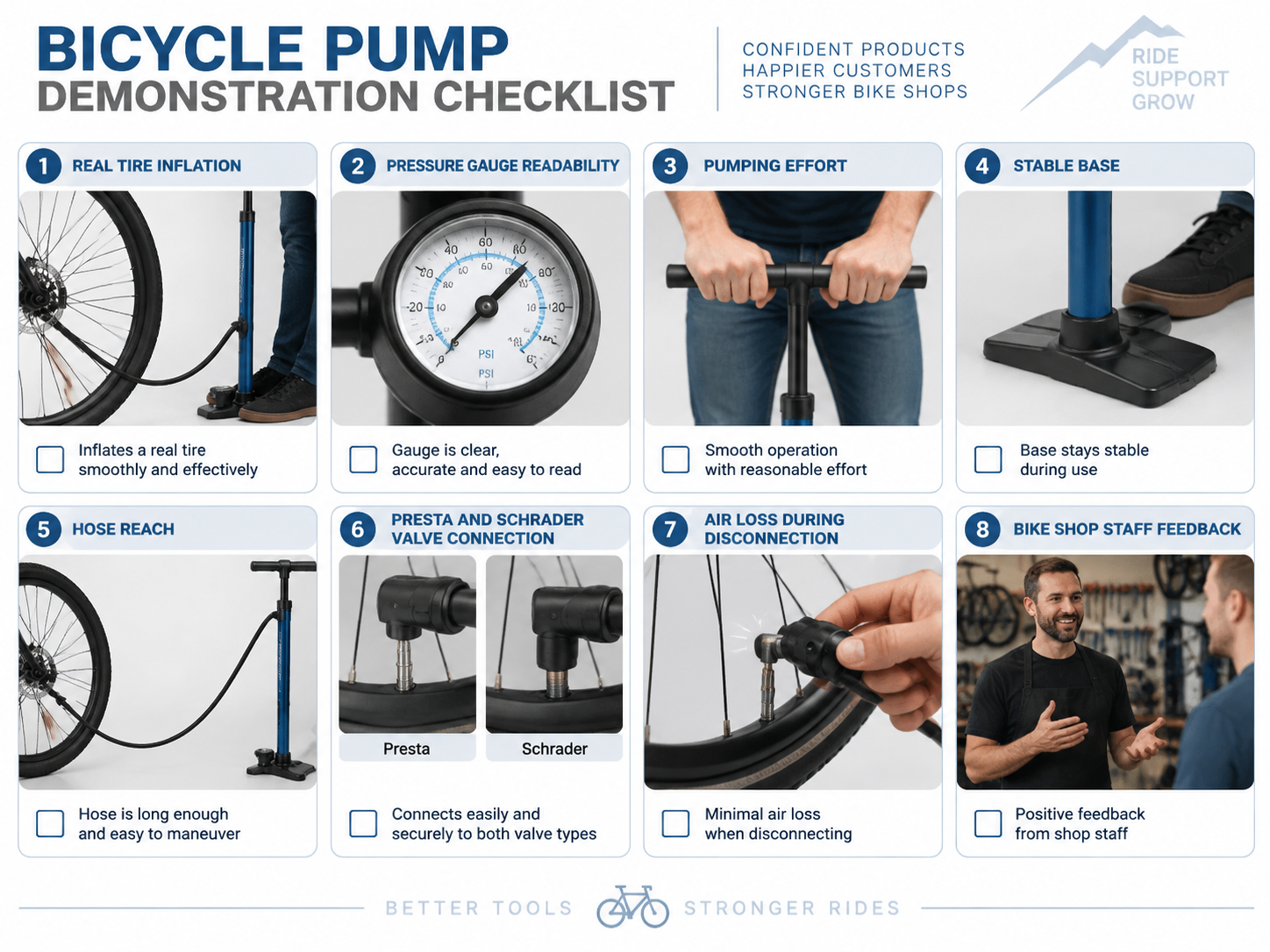
During the demonstration, pay attention to:
- connection to the valve
- stability during pumping
- gauge visibility
- pumping effort
- hose reach
- pressure control
- release and removal of the pump head
- overall speed and workflow
This gives shop staff something much more useful than a catalogue claim.
A buyer can immediately judge whether the product feels professional.
For electric high-pressure models, a real demonstration can also show the display, pressure setting, automatic stop, operating sound, heat development, and valve connection.
The goal is not to create a dramatic performance test. It is to let the shop experience the product under realistic conditions.
Show the Difference Between High Pressure and High Volume
One useful part of a bike shop sales conversation is explaining that different pumps are optimized for different inflation needs.
High-pressure and high-volume performance are not the same thing.
Some tire applications need more air volume, while others benefit from the ability to reach and control higher pressure efficiently.
This is especially useful when a shop carries multiple pump categories.
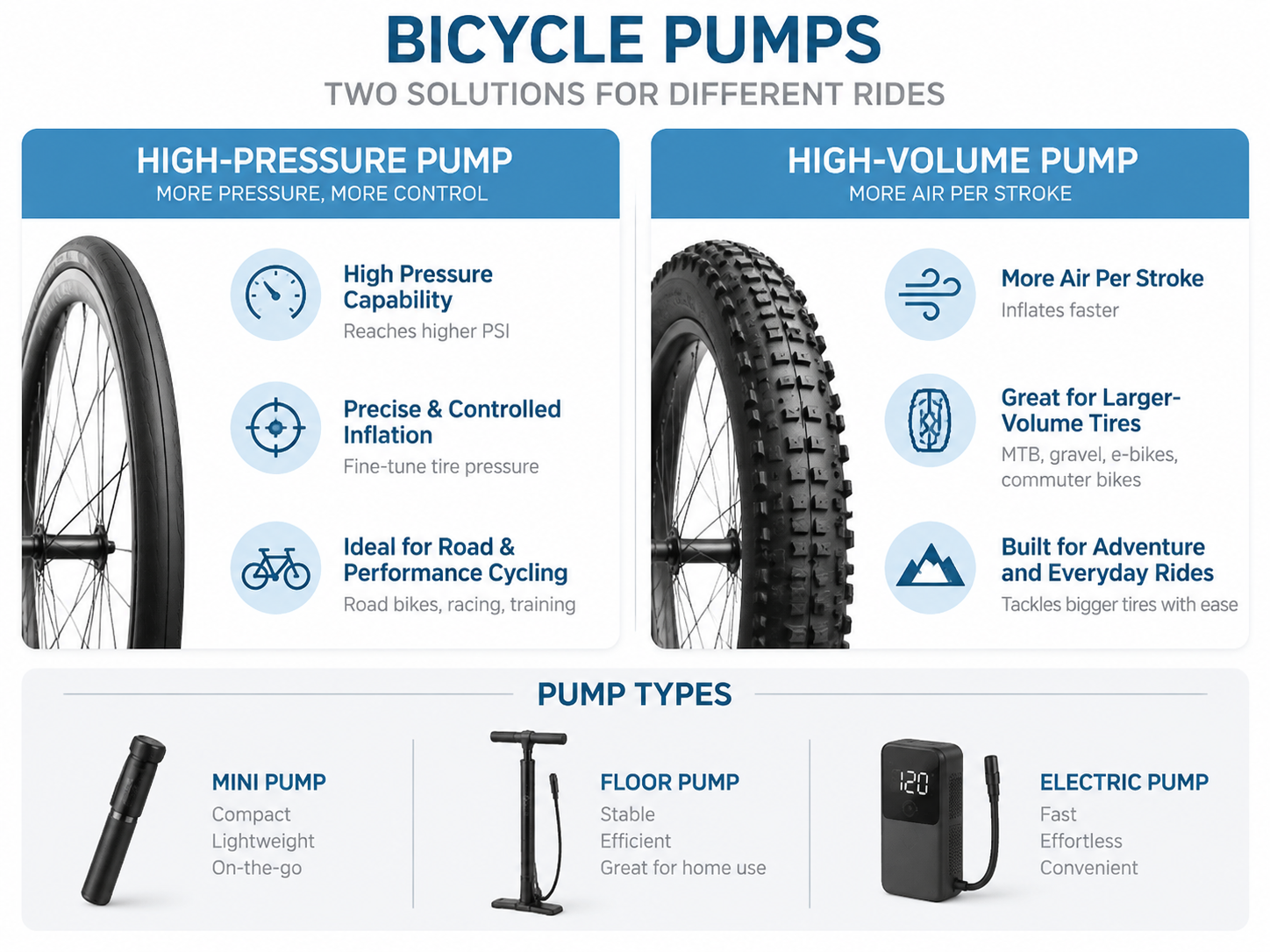
A simple comparison can include:
| Pump Type | Main Strength | Typical Positioning |
|---|---|---|
| High-Pressure Pump | Pressure capability and control | Road / performance / selected gravel use |
| High-Volume Pump | Moves more air per stroke | Larger-volume tire applications |
| Mini Hand Pump | Portability | Ride emergency / backup |
| Floor Pump | Stability and regular use | Home / shop / workshop |
| Electric Pump | Convenience and automation | Portable premium / emergency / consumer use |
This helps the retailer understand that a high-pressure pump is not meant to replace every other pump.
It fills a specific position in the product range.
For distributors, this also makes assortment planning easier.
Demonstrate Gauge and Pressure Control
A professional shop may care about pressure confidence as much as maximum pressure.
If the pump has a gauge, the sales demonstration should show:
- gauge size
- display position
- readability
- pressure units
- response during inflation
- consistency during repeated use
For digital products, buyers may also want to see pressure presets and automatic shut-off.
For manual pumps, gauge placement and scale readability can make a significant difference in daily use.
Sales teams should avoid making unsupported accuracy claims.
Instead, show the shop how the actual sample behaves and provide whatever verified specification or test information is available.
This is especially important for professional channels, where staff may compare the pump with tools they already use.
A clear, stable reading creates more confidence than a marketing statement about “professional accuracy” without evidence.
Valve Compatibility Should Be Part of the Demo
A high-pressure pump sold to bike shops needs a clear valve story.
Many performance-oriented bicycles use Presta valves, but shops often serve a mixed customer base.
During the demonstration, show the actual connection method.
Important points include:
- Presta connection
- Schrader compatibility where supported
- adapter requirements
- locking mechanism
- ease of attachment
- ease of removal
- air loss during disconnection
Small details can strongly affect staff impressions.
If the pump requires several steps to change between valve types, the shop should understand that before buying.
If the pump head handles both valve types conveniently, that can become a meaningful selling point.
For retailers, clear valve compatibility also reduces customer confusion after the product reaches the shelf.
Help the Shop Understand the Retail Story
A good B2B demonstration should not end with product performance.
The shop also needs to know how to sell the pump.
Brands and distributors can support this with:
- clear packaging
- bike-type positioning
- valve compatibility icons
- product comparison charts
- simple demo videos
- staff training sheets
- realistic use-case photos
- accessory information
- pressure guidance language
- retail display suggestions
This is especially useful when the pump costs more than a basic model.
The shop staff needs an easy answer when a customer asks:
“Why should I buy this one?”
The answer should connect the product to a real use case, such as controlled inflation, higher-pressure capability, professional-style gauge visibility, better valve connection, or convenient portable operation.
A product is easier to sell when staff can explain its value in one or two sentences.
Give Shops a Simple Sales Demonstration Kit
For brands actively selling into bike shop channels, a reusable demonstration kit can improve consistency.
A practical kit may include:
- A working sample
- A compatible bicycle wheel or tire
- Valve adapters
- Product specification sheet
- Pump-type comparison chart
- Packaging sample
- Accessory list
- Short training guide
- Real inflation test notes
- Contact information for wholesale orders
The demonstration does not need to be complicated.
The objective is to help the buyer evaluate three things:
Does it work well?
Can my staff explain it?
Can I sell it to the right customer?
If the answer to all three is clear, the product becomes much easier for a bike shop to consider.
What Brands Should Ask After the Demo
The demonstration is also an opportunity to learn from the shop.
Useful questions include:
- Which bike categories generate the most pump demand?
- Do customers usually ask for floor, mini, or electric pumps?
- Which valve type causes the most confusion?
- Do customers care more about portability, gauge readability, or speed?
- What price range works in the shop?
- Would staff use the pump internally as well as sell it?
- What packaging information would make the product easier to explain?
- Which accessories should be included?
This feedback can help brands improve product configuration and future sales materials.
A bike shop should not only be viewed as a customer. It can also provide useful channel feedback.
Conclusion
Demonstrating a high-pressure pump to bike shops is not about proving that the product can reach the biggest PSI number.
Professional buyers need to understand how the pump performs in a real workflow, which riders need it, how it compares with other pump types, and how staff can explain its value to customers.
A strong demonstration should include real tire inflation, gauge visibility, valve compatibility, stability, pumping feel, product positioning, and retail support.
For brands and distributors, this changes the sales conversation from:
“Here is our high-pressure pump.”
to:
“Here is where this product fits in your shop, how your staff can use it, and why the right customer would choose it.”
YANTU supports bike pump projects for cycling brands, distributors, retailers, and private label customers. If you are developing high-pressure pumps for professional bike shop channels, our team can help discuss product configuration, sample demonstrations, packaging, accessories, private labeling, and bulk order requirements.