Auto shops need jump starters that are reliable, easy to store, and ready when a vehicle battery fails. For many years, lead-acid jump starters have been common in workshops. Today, sodium battery jump starters give buyers another option.
The best choice depends on shop workflow, storage needs, safety expectations, portability, and long-term maintenance. This article compares sodium and lead-acid shop jump starters from a practical B2B purchasing perspective.

Why Battery Type Matters for Shop Use
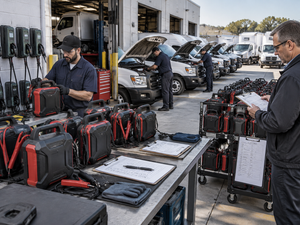
In an auto shop, a jump starter is not a decorative accessory. It is a working tool used for customer vehicles, service checks, emergency starts, and sometimes fleet support.
Battery type affects how the product feels and performs in daily use. It can influence size, weight, recharge habits, storage conditions, and the way staff handle the device.
For shop buyers, the purchasing question is not only “Can it start a car?” A better question is “Can it support repeated shop use with low management burden?”
This is why sodium and lead-acid jump starters should be compared beyond peak current. Buyers should consider the full working environment.
Lead-Acid Jump Starters Are Familiar but Heavy
Lead-acid jump starters are familiar to many auto shops. They are often seen as traditional, simple, and suitable for workshop environments.
One advantage is market familiarity. Many technicians already understand how to use and store lead-acid battery boosters. This can reduce training needs in some shops.
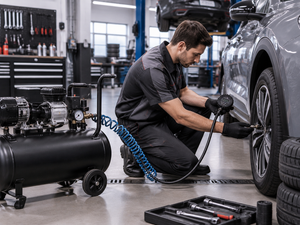
However, lead-acid models are often heavier and bulkier. This can make them less convenient when staff need to move the tool between service bays, vehicles, or storage areas. Heavy tools may still be acceptable in a fixed workshop, but they are less attractive for mobile service, retail shelves, or compact shop layouts.
For B2B buyers, lead-acid jump starters may still fit certain professional channels, especially where price familiarity and traditional tool use are important. But they may not be the best option when portability, modern product positioning, or easier storage is required.
Sodium Jump Starters Improve Portability
Sodium jump starters are usually positioned as a more modern emergency power solution. Compared with traditional lead-acid boosters, they can support a more compact and portable product design.
For auto shops, portability has practical value. A lighter jump starter can be moved more easily between work areas. It can also be stored in service vehicles, mobile repair vans, or emergency tool kits.
This is useful for:
- busy auto shops
- mobile mechanics
- roadside service teams
- fleet maintenance vehicles
- seasonal vehicle service providers
- compact workshops with limited space
For distributors and tool brands, sodium jump starters may also be easier to position as professional but modern products. They can support better packaging, cleaner product design, and more flexible sales channels.
The purchasing meaning is clear: sodium technology can help reduce the handling burden compared with older, bulkier booster formats.

Storage and Maintenance Requirements Are Different
Shop jump starters may stay unused for days or weeks, then suddenly be needed during a service task. This makes storage and maintenance important.
Lead-acid jump starters often require careful recharge management. If they are not maintained properly, their performance may decline over time. In busy shops, staff may forget to recharge the unit until it is needed.
Sodium jump starters can offer a different storage story. For buyers, the focus is on stable storage, easier management, and emergency readiness. A product that is easier to keep ready can reduce tool failure at the moment of use.
Before ordering, buyers should ask suppliers:
- How often should the jump starter be recharged?
- What storage temperature is recommended?
- What is the self-discharge behavior?
- How should the product be checked before use?
- What charging protection is included?
For professional buyers, maintenance burden is part of the real cost. A cheaper product may not be cheaper if it requires more management or replacement.
Safety and Shop Environment Considerations
Auto shops are active working environments. Tools may be moved, dropped, stored near other equipment, or used by different staff members. Battery safety is therefore important.
Lead-acid jump starters are familiar, but they can still require careful handling, especially around charging, storage, and battery condition. Older or poorly maintained units may create reliability or safety concerns.
Sodium jump starters can provide a stronger safety-based positioning. For buyers who care about storage confidence, modern battery chemistry, and safer emergency power tools, sodium technology gives a clearer story.
For retailers and tool brands, this can also support customer-facing messaging. A sodium jump starter can be positioned around safer storage, modern battery technology, and professional emergency use.
However, buyers should avoid relying only on marketing claims. They should confirm protection functions, product documentation, and supplier testing support before bulk orders.
Match the Product to the Shop Workflow
Different shops need different jump starter configurations.
A large service center may need multiple units placed in different work areas. A small repair shop may prefer one compact and easy-to-store device. A mobile mechanic may value portability more than a fixed workshop does.
| Shop Type | Better Product Focus | Purchasing Meaning |
|---|---|---|
| Small repair shop | Compact storage | Saves workspace |
| Busy service center | Multiple ready-to-use units | Improves workflow speed |
| Mobile mechanic | Lightweight design | Easier vehicle-to-vehicle use |
| Fleet maintenance team | Storage stability | Supports emergency readiness |
| Tool distributor | Modern product positioning | Easier channel differentiation |
For B2B buyers, the right choice depends on how the product will be used, not only the battery label. Sodium and lead-acid jump starters can both serve professional users, but they fit different workflow expectations.
 commercial sodium jump starter for fleets
What Buyers Should Check Before Ordering
Before choosing sodium or lead-acid shop jump starters, buyers should evaluate the full product configuration.
Important points include:
- Supported vehicle types
- Peak current and real starting ability
- Battery chemistry
- Product weight and size
- Storage and recharge requirements
- Safety protection functions
- Clamp and cable quality
- Carrying case or storage design
- Packaging and manual support
- Sample testing before bulk orders
For shops and distributors, sample testing is especially useful. Buyers should test whether the product is easy to carry, easy to operate, and suitable for the target vehicle types.
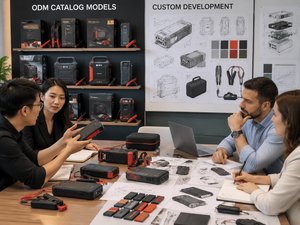
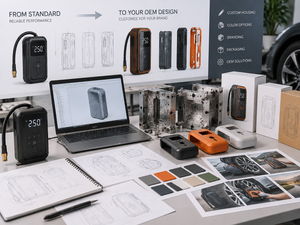
A reliable supplier should also provide clear specifications, safety information, packaging details, and support for OEM or private label requirements.

Quick Comparison Table
| Factor | Sodium Jump Starter | Lead-Acid Jump Starter |
|---|---|---|
| Portability | More compact and easier to move | Usually heavier and bulkier |
| Shop Familiarity | Newer technology story | Traditional and familiar |
| Storage Management | Stronger modern storage positioning | Requires careful recharge habits |
| Safety Positioning | Stronger safety differentiation | Familiar but needs proper maintenance |
| Sales Channel Fit | Shops, mobile service, distributors, retailers | Traditional workshops and budget channels |
| Product Image | Modern emergency power tool | Conventional battery booster |
Conclusion
Sodium and lead-acid jump starters can both be used in auto shop environments, but they serve different purchasing priorities.
Lead-acid jump starters are familiar and traditional, but they are often heavier and may require more storage and recharge management. Sodium jump starters offer a more modern option with stronger portability, storage positioning, and safety-based differentiation.
For B2B buyers, the best choice depends on shop workflow, target vehicle types, storage habits, and sales channel positioning. Buyers should compare real product configuration, not only battery name or peak current.
YANTU supports sodium jump starter projects for auto shops, distributors, retailers, tool brands, and OEM customers. If you are comparing sodium and traditional shop jump starter options, our team can help discuss specifications, packaging, sample testing, and bulk order requirements.