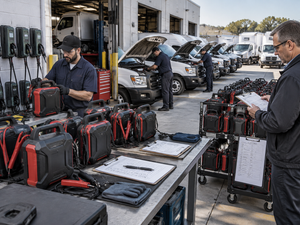
Seasonal vehicles are often stored for months without regular use. Boats may remain unused through winter. RVs may sit between travel seasons. Classic cars, motorcycles, ATVs, and agricultural vehicles may also spend long periods in garages, storage yards, or outdoor facilities.
When these vehicles are needed again, the starting battery may be weak or fully discharged.
This is why jump starters are often included in seasonal vehicle storage kits. However, a jump starter is only useful if it still has enough available power after months of storage.
For B2B buyers, retailers, and brands serving seasonal vehicle markets, standby performance can be more important than a single peak-current figure. Battery self-discharge, storage temperature, charging interval, safety protection, and readiness indicators all affect whether the product works when the season begins.
This article explains why standby performance matters and what buyers should check when selecting jump starters for boats, RVs, classic cars, motorcycles, and other seasonally stored vehicles.

What Standby Performance Means
Standby performance describes how well a jump starter retains usable energy while it is not being used.
A jump starter may be fully charged before storage, but its battery gradually loses energy over time. This is called self-discharge.
The actual standby period depends on:
- battery chemistry
- cell quality
- battery management system
- control-board power consumption
- storage temperature
- initial state of charge
- product age
- whether USB ports or other functions remain active
- frequency of battery checks
For end users, standby performance answers a practical question:
If I charge the jump starter before storing my vehicle, will it still be ready several months later?
For B2B buyers, the answer should be supported by a clear test method rather than a vague claim.
Why Seasonal Vehicles Create a Different Use Case
A normal daily-use vehicle gives the owner regular opportunities to notice battery problems. Seasonal vehicles do not.
A boat or RV may be stored for an entire winter. A classic car may only be driven in warm weather. A motorcycle may stay covered for several months. When the owner finally returns, both the vehicle battery and the jump starter may have been exposed to long storage.
This creates several risks:
- the vehicle battery may be deeply discharged
- the jump starter may have lost charge
- cold temperatures may reduce available output
- storage heat may accelerate battery aging
- clamps or cables may be difficult to access
- the user may not remember the correct operating procedure
For this reason, seasonal vehicle users need more than high peak current. They need a jump starter that is easy to store, easy to check, and supported by clear maintenance guidance.
Common Seasonal Vehicle Applications
Boats
Boats may remain unused during winter or between travel periods. Marine environments also introduce moisture, salt, and temperature changes.
A jump starter intended for boat storage should be protected from moisture and kept in a dry compartment. Buyers should also consider clamp reach, storage case quality, and battery-status visibility.
Claims such as “five-year standby” should be treated carefully. A multi-year shelf-life claim may refer to controlled storage conditions rather than guaranteed readiness without periodic checks.
RVs and Camper Vans
RVs may have multiple batteries and more complex electrical systems. A portable jump starter may support the engine starting battery, but buyers should clearly distinguish this from powering the RV’s living systems.
For RV channels, useful product features may include:
- long standby positioning
- clear charge indicators
- larger clamps
- robust storage cases
- USB emergency output
- cold-weather support
Classic Cars
Classic cars may be stored for long periods and may use older electrical systems.
Owners often care about avoiding damage and using equipment correctly. Clear polarity protection, safe clamps, and simple instructions are important.
Motorcycles and ATVs
Motorcycles and ATVs often use smaller batteries, but access can be limited. Compact clamps and careful current control may matter more than extremely high peak-current claims.
Agricultural and Seasonal Equipment
Tractors, lawn equipment, snowmobiles, and other seasonal machines may be stored in sheds or outdoor facilities. Dust, cold, and irregular maintenance schedules can affect both the vehicle and the jump starter.
For these users, rugged storage and simple readiness checks are important.
Self-Discharge and Storage Time
Every rechargeable battery loses some energy during storage.
The rate varies by battery chemistry and product design. Even when the battery cells have low self-discharge, the jump starter’s control system may consume a small amount of power.
This is why B2B buyers should ask suppliers:
- How was standby performance tested?
- At what temperature?
- At what initial state of charge?
- Was the product switched fully off?
- What capacity remained after the test?
- Does the supplier recommend periodic charging?
- Does the product have a low-power sleep mode?
A claim such as “five-year standby” should not be interpreted as “charge once and forget for five years” unless the supplier can support that exact meaning with data.
A more responsible retail message is:
- designed for long-term emergency storage
- low self-discharge under defined conditions
- periodic charge checks recommended
- standby test data available
Temperature Has a Major Effect
Storage temperature can strongly influence battery condition.
Cold temperatures may temporarily reduce available output. Very hot storage conditions can accelerate long-term battery aging.
Seasonal vehicles are often stored in:
- unheated garages
- outdoor sheds
- marinas
- storage yards
- vehicle trunks
- warehouses
The jump starter may therefore experience wider temperature variation than a normal indoor electronic product.
B2B buyers should confirm:
- recommended storage-temperature range
- operating-temperature range
- low-temperature starting performance
- whether extreme heat affects warranty
- whether the manual recommends indoor storage
For cold-climate products, standby performance should be evaluated together with low-temperature discharge capability.
 cold weather jump starter comparison
Battery Status Indicators Matter
A jump starter stored for months should make readiness easy to check.
Useful indicators may include:
- battery percentage
- multi-level battery bars
- charging-status lights
- low-battery warning
- fault indicators
- clamp-status indicators
A simple battery-status display can reduce uncertainty. The user can check the product before the season begins instead of discovering a problem during an emergency.
For retail and B2B channels, this feature also supports clearer product education. Packaging and manuals can tell users to inspect the charge level at specific intervals.
Maintenance Guidance Should Be Clear
Long standby performance does not remove the need for maintenance.
A responsible storage routine may include:
- Fully charge the jump starter before storage.
- Switch off all outputs.
- Store it in a dry location within the recommended temperature range.
- Check the battery level periodically.
- Recharge when the level falls below the recommended point.
- Inspect clamps and cables before use.
- Review instructions before reconnecting to the vehicle.
The exact interval should come from the product supplier and be supported by testing.
B2B buyers should avoid giving one universal recharge interval across all models. Different batteries and electronic systems may behave differently.

What B2B Buyers Should Ask Suppliers
Before selecting a jump starter for seasonal vehicle channels, buyers should ask:
- What standby test data is available?
- How much capacity remains after three, six, or twelve months?
- Under what storage temperature was the test performed?
- What charging interval is recommended?
- Does the product have a low-power sleep mode?
- Is the battery status easy to check?
- What operating temperature range is supported?
- Are the clamps suitable for boats, RVs, motorcycles, or larger vehicles?
- Is a protective storage case included?
- What wording can safely be used in packaging and product pages?
These questions help buyers build realistic marketing claims and reduce customer disappointment.
Product Positioning for Seasonal Markets
A jump starter for seasonal vehicle storage can be positioned around:
- long-term emergency readiness
- low self-discharge
- clear battery-status monitoring
- cold-weather storage support
- protective storage case
- easy seasonal maintenance
- use with boats, RVs, motorcycles, and classic cars
However, the product should not be marketed as maintenance-free.
A better message is that the jump starter is designed for long standby and easy readiness checks.
This positioning is more credible and gives retailers an opportunity to educate customers about proper storage.
Common Marketing Mistakes
One common mistake is using a long standby figure without explaining test conditions.
Another is assuming the jump starter will remain ready indefinitely inside a vehicle exposed to extreme temperatures.
Buyers should also avoid saying:
- no charging needed for years
- always ready in any condition
- works after unlimited storage
- maintenance-free battery backup
Safer language includes:
- designed for seasonal vehicle storage
- low self-discharge under specified conditions
- periodic charge checks recommended
- suitable for long-standby emergency kits
Conclusion
For seasonal vehicles, jump starter standby performance is a practical reliability issue.
Boats, RVs, classic cars, motorcycles, ATVs, and seasonal equipment may remain unused for months. During that time, both the vehicle battery and the jump starter can lose charge.
For B2B buyers, the right product should offer more than high peak current. It should provide stable standby behavior, clear battery-status indicators, suitable temperature performance, safe clamps, good storage protection, and realistic maintenance guidance.
Long standby does not mean no maintenance. It means the product is designed to retain useful energy and make readiness easier to manage.
For seasonal vehicle customers, the best jump starter is not simply the most powerful one. It is the one that is still charged, accessible, and ready when the vehicle returns to service.