When buyers cannot visit a sodium battery manufacturer in person, a remote factory audit can still help reduce sourcing risk. For sodium jump starter projects, buyers need to verify more than price and product appearance.
A practical remote audit should check factory identity, production capability, quality control, battery safety documentation, and OEM or ODM project support.
This guide explains how B2B buyers can evaluate a sodium battery factory through a structured remote audit process.

Why Remote Audits Matter for Sodium Battery Buyers
Sodium battery products are often positioned around safety, low-temperature performance, and new battery technology. These advantages can be valuable, but buyers still need to confirm whether the supplier can actually support stable production.
For sodium jump starters, the supplier’s capability affects battery consistency, protection design, assembly quality, packaging, and after-sales risk. A weak supplier may provide attractive specifications but fail to support repeat orders or proper documentation.
Remote audits are especially useful when buyers are comparing several suppliers, entering a new category, or preparing private label projects. They help buyers filter suppliers before sample orders or bulk production.
For B2B buyers, the purchasing meaning is clear: a remote audit is not only a formality. It is a practical step to reduce uncertainty before committing to a sodium battery manufacturer.
What to Verify Before the Video Audit
Before arranging a live video call, buyers should collect basic supplier information.
This helps avoid wasting time on unqualified or unclear suppliers. Buyers should request company documents, factory photos, production introductions, product specifications, and existing test information before the remote audit.
Important materials may include:
- business license or company registration
- factory address and production scope
- main product categories
- sodium battery product specifications
- production line photos or videos
- quality control process introduction
- certification or test report summaries
- export experience and target markets
- contact person and project manager information
For buyers, this preparation makes the video audit more effective. If the supplier cannot provide basic documents clearly, it may be a warning sign.
A serious sodium jump starter supplier should be able to explain who they are, what they produce, and how they control battery-related risks.

Production Line and Quality Control Checkpoints
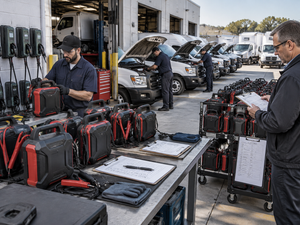
During the remote factory audit, buyers should ask to see the production and inspection process.
For sodium battery jump starters, important checkpoints may include incoming material inspection, battery cell testing, PCB or BMS inspection, assembly process, aging test, final product inspection, and packaging inspection.
Buyers should not only look at the workshop. They should ask what is being checked at each stage.
Useful questions include:
- How are incoming battery cells inspected?
- What tests are performed before assembly?
- How is the BMS or protection board checked?
- Is every finished unit tested before packing?
- Is there an aging test or charging test?
- How are defective products recorded and handled?
- Are inspection records available for review?
For B2B buyers, quality control visibility is important. A supplier with clear inspection steps is usually easier to manage than one that only shows finished products.
Battery Safety and Test Documentation
Battery safety is one of the most important parts of a sodium battery factory audit.
Sodium jump starters may be promoted for safety advantages, but buyers still need supporting information. Safety claims should be connected to actual product design, protection functions, and test documentation.
Buyers should ask suppliers to explain:
- battery chemistry
- protection functions
- overcharge protection
- over-discharge protection
- short circuit protection
- overcurrent protection
- temperature protection
- charging method
- storage recommendations
- transportation documents when needed
The supplier should also provide available test information or explain what tests can be arranged for the target market.
For marketplace sellers, retailers, and brands, safety documentation supports customer trust and reduces compliance risk. For distributors, it also helps with internal product approval and channel communication.
The purchasing meaning is simple: do not rely only on verbal safety claims. Ask for documents, test methods, and clear technical explanations.
 sodium vs lithium jump starter technical differences
OEM and ODM Project Communication Checks
A remote audit should also test how well the supplier communicates project details.
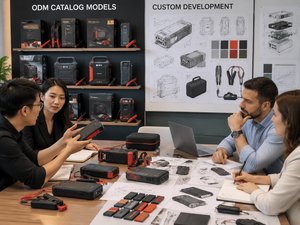
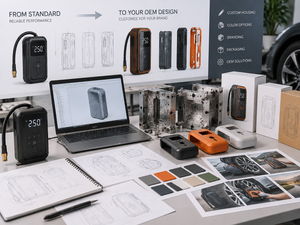
For private label sodium jump starter projects, buyers may need customized packaging, manuals, labels, accessories, product color, branding, or carton information. If the supplier cannot manage these details clearly, the project may face delays or mistakes.
During the audit, buyers should check whether the supplier can support:
- OEM branding
- private label packaging
- user manual customization
- accessory configuration
- sample confirmation
- product photo support
- carton label requirements
- MOQ and lead time planning
- after-sales communication
Communication quality matters because battery products require careful specification control. A supplier who gives vague answers during the audit may also create problems during production.
For B2B buyers, the supplier should be able to turn product requirements into clear production and packaging instructions.
Remote Audit Checklist Before Supplier Approval
Before approving a sodium battery manufacturer, buyers should summarize the audit results.
A simple checklist can help compare suppliers more objectively:
| Audit Area | What to Check | Buyer Meaning |
|---|---|---|
| Company Identity | Registration, factory address, export experience | Confirms supplier background |
| Production Capability | Workshop, assembly process, capacity | Shows whether orders can be produced |
| Quality Control | Incoming inspection, aging test, final inspection | Reduces defect risk |
| Battery Safety | Protection design and test documents | Supports product trust |
| OEM Support | Packaging, manual, branding, accessories | Supports private label projects |
| Communication | Clear answers and project follow-up | Reduces execution mistakes |
Buyers should also record screenshots, videos, documents, and meeting notes. These records can help internal approval and future supplier comparison.
If the supplier passes the remote audit, the next step is usually sample testing. Remote audit and sample testing should work together. The audit checks supplier capability; the sample checks product performance.
Conclusion
Remote factory audits can help B2B buyers evaluate sodium battery manufacturers before placing sample or bulk orders. A good audit should verify company identity, production capability, quality control, battery safety documents, and OEM or ODM project support.
For sodium jump starter projects, buyers should not make decisions based only on price or product photos. Battery chemistry, safety design, inspection process, packaging support, and communication quality all affect long-term sourcing success.
A structured remote audit helps buyers reduce risk and choose suppliers more confidently.
YANTU supports sodium jump starter projects for retailers, distributors, marketplace sellers, automotive tool brands, and OEM customers. If you are evaluating sodium battery jump starter suppliers, our team can help discuss product specifications, packaging, sample testing, and project requirements.