A branded mini bike pump may look like a simple cycling accessory, but small differences in materials, pump structure, valve compatibility, pressure performance, and packaging can have a significant impact on customer experience.
For cycling brands, distributors, and private label buyers, the challenge is not simply finding a mini pump with an attractive appearance. The product needs to meet a defined quality standard before it reaches the market.
A clear specification sheet can help buyers compare suppliers, approve samples, control production quality, and reduce customer complaints.
This guide explains the key quality points B2B buyers should specify when sourcing branded mini bike pumps.
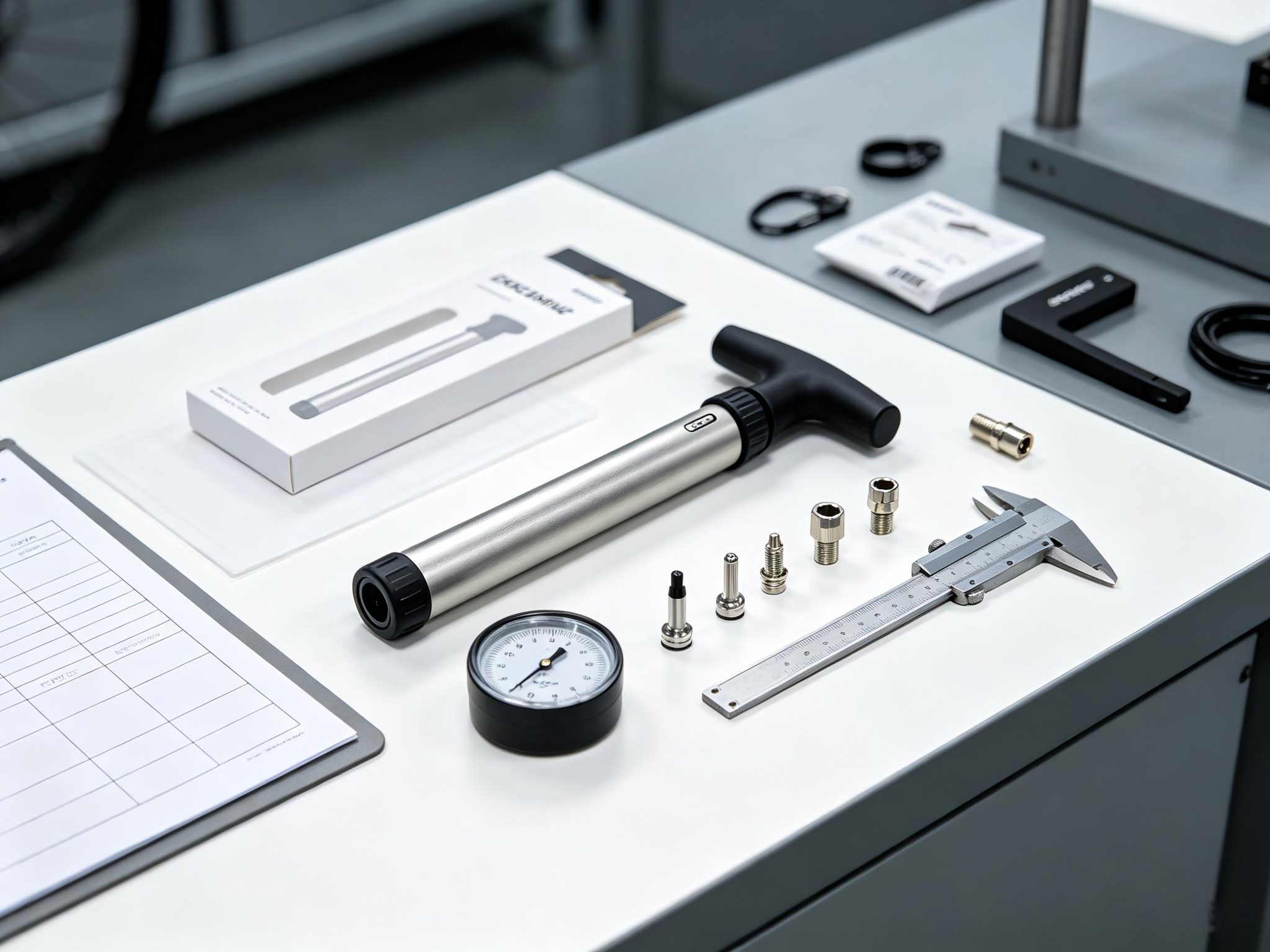
Why a Quality Specification Matters for Mini Bike Pumps
Mini bike pumps are designed to be compact and portable. That creates a natural trade-off between size, weight, inflation performance, durability, and ease of use.
A pump that looks good in product photography may still have problems during actual use. The pump head may not seal properly, the body may flex under pressure, the hose may become damaged, or the handle may feel uncomfortable after repeated operation.
For branded products, these issues can become more serious because customers associate the product problem with the brand rather than the factory.
A quality specification gives buyers a common reference point.
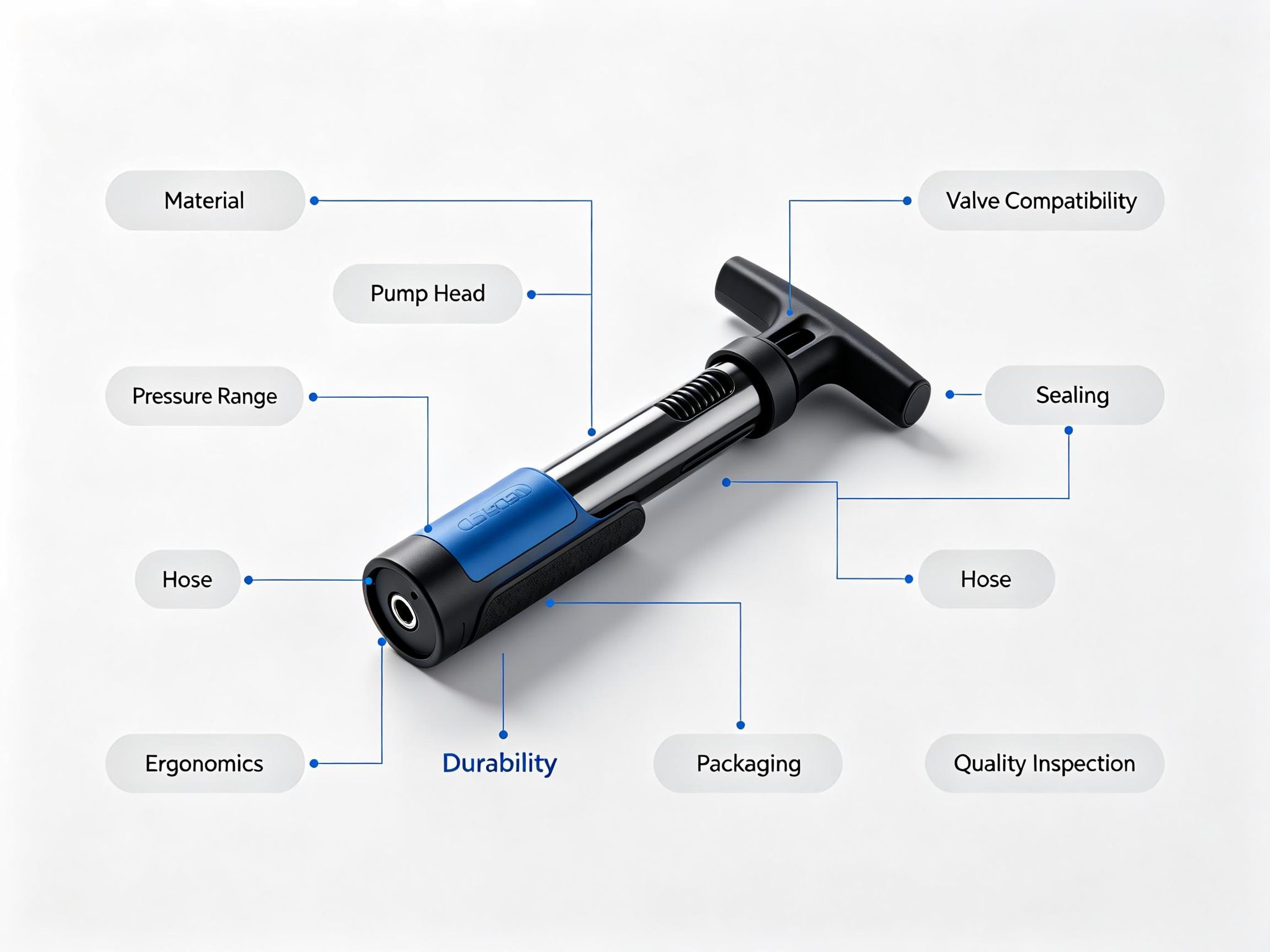
It can define:
- product dimensions
- product weight
- material requirements
- valve compatibility
- pressure range
- pump structure
- pump head design
- hose configuration
- sealing performance
- durability expectations
- packaging requirements
- inspection criteria
The goal is not to make every specification unnecessarily strict. The goal is to define the characteristics that directly affect product performance and customer satisfaction.
Materials and Structural Quality
The body material is one of the first specifications buyers should define.
Mini bike pumps may use plastic, aluminum alloy, or combinations of different materials. Each approach affects weight, appearance, durability, and cost.
For example, a lightweight plastic body may be suitable for an entry-level retail product, while an aluminum construction can support a more premium positioning.
However, material selection should be evaluated together with the internal structure.
Buyers should check:
- body strength
- handle rigidity
- barrel construction
- connection points
- surface finish
- screw or joint quality
- mounting bracket strength
- resistance to repeated use
A mini pump should not feel excessively flexible when the user applies force.
For branded products, the finish also matters. Scratches, inconsistent surface treatment, poor molding, visible flash, or uneven logo printing can affect perceived quality even if the pump works correctly.
During sample approval, buyers should evaluate both functional quality and visual consistency.
Pump Head and Valve Compatibility
The pump head is one of the most important components of a mini bike pump.
If the connection between the pump and tire valve is unreliable, the user may experience air leakage, difficulty attaching the pump, or repeated disconnection during inflation.
B2B buyers should clearly specify whether the product supports:
- Presta valves
- Schrader valves
- both Presta and Schrader valves
- an integrated dual-valve head
- an adapter-based configuration
A dual-valve pump can provide broader market coverage, but the actual mechanism should be tested rather than judged only from the specification sheet.
Buyers should check how easily the pump head connects, whether it locks securely, whether the seal remains stable during pumping, and whether the valve can be released without damaging the tire valve.
For branded products, valve compatibility should also be clearly explained in the manual, packaging, and online product content.
This is particularly important because customers may not know the difference between Presta and Schrader valves.
Pressure Range and Inflation Performance
Maximum PSI is an important specification, but it should not be the only performance indicator.
A mini pump advertised with a high maximum pressure still needs to provide practical inflation performance.
Buyers should specify:
- maximum pressure rating
- recommended operating range
- inflation performance
- pressure gauge type if included
- gauge readability
- pressure display units
- auto or manual operation
- performance under repeated pumping
For road-bike-focused products, higher pressure capability and pressure control may be more important. For general cycling products, ease of use and broad compatibility may have greater commercial value.
The specification should therefore match the intended customer.
A buyer should also avoid evaluating a supplier only by the highest PSI number. Pumping efficiency, sealing, ergonomics, and structural stability can be equally important.
A good product specification should describe the complete performance profile rather than highlight one impressive number.
 160 PSI bike pump specifications
Hose, Seal, and Air Leakage Control
Some mini pumps use an integrated hose while others connect directly to the valve.
If a hose is included, its material, flexibility, connection strength, and storage method should be checked.
The hose should be flexible enough to use comfortably without creating excessive stress around the tire valve.
Sealing is equally important.
Potential leakage points include:
- pump head
- hose connection
- internal piston
- gasket
- valve interface
Even a small leak can make inflation slower and create the impression that the pump is underperforming.
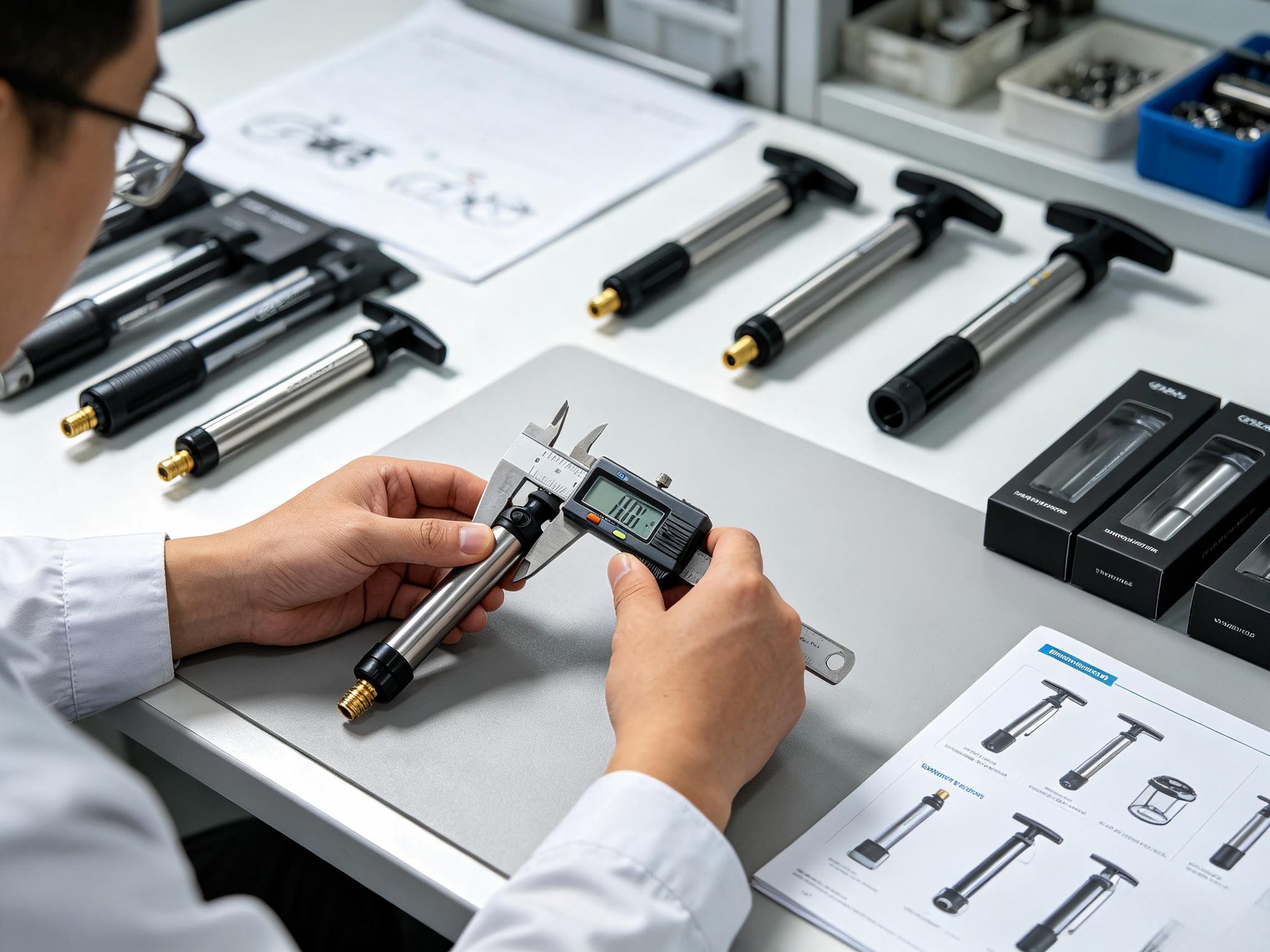
For B2B buyers, sample testing should therefore include an actual inflation test rather than only a visual inspection.
The supplier should also have a consistent production inspection process for key sealing points.
Ergonomics and Repeated-Use Durability
A mini pump is often used outdoors, sometimes when the cyclist is already dealing with a flat tire. The product therefore needs to be practical under less-than-ideal conditions.
Buyers should evaluate:
- handle grip
- pumping resistance
- body diameter
- extension length
- mounting bracket
- weight
- storage convenience
- surface grip
- heat or friction during repeated pumping
A pump that is technically functional but uncomfortable to operate may generate poor customer reviews.
Durability testing should also reflect the intended market. A product designed for emergency roadside use may require different expectations from a workshop-oriented pump.
For branded products, buyers should establish a repeat-use test or internal durability requirement before mass production.
This gives the supplier a measurable quality target rather than a subjective instruction such as “make it stronger.”
Packaging and Brand Presentation
The quality standard does not end with the pump itself.
For branded mini bike pumps, packaging is part of the product experience.
Buyers should specify:
- box or bag material
- logo printing method
- packaging dimensions
- barcode placement
- manual language
- accessory configuration
- mounting bracket presentation
- warning information
- product specifications
- carton marks
The packaging should clearly communicate valve compatibility, pressure range, included accessories, and intended use.
For marketplace sellers, package size and weight can also affect logistics costs.
For cycling brands, consistent packaging across multiple SKUs can strengthen the product line and make the products look more professional.
What B2B Buyers Should Put in the Supplier Specification Sheet
Before requesting samples, buyers should create a clear product specification sheet.
At minimum, it should cover:
- Product dimensions and weight
- Main material
- Valve compatibility
- Pump head design
- Maximum pressure
- Recommended pressure range
- Gauge requirements if applicable
- Hose configuration
- Handle design
- Mounting bracket
- Logo requirements
- Packaging requirements
- Manual language
- Accessories
- Sample approval requirements
For more advanced projects, buyers can also define acceptable tolerances for dimensions, weight, printing, and critical functional components.
The more clearly these requirements are defined before production, the easier it becomes to compare suppliers objectively.
Quick Mini Bike Pump Quality Checklist
| Quality Area | What to Specify | Why It Matters |
|---|---|---|
| Material | Plastic, aluminum, or hybrid construction | Controls durability, weight, and positioning |
| Pump Head | Presta, Schrader, or dual valve | Determines compatibility |
| Pressure | Maximum and recommended range | Defines intended application |
| Sealing | Pump head, hose, gasket, internal seals | Reduces air leakage |
| Ergonomics | Handle, grip, pumping resistance | Affects user experience |
| Durability | Repeat-use requirements | Controls long-term performance |
| Packaging | Box, logo, manual, accessories | Supports branded retail presentation |
| Inspection | Functional and visual checks | Reduces production variation |
Conclusion
For branded mini bike pumps, quality should be defined before the purchase order rather than judged after mass production.
The most important areas include materials, pump structure, valve compatibility, pressure performance, sealing, ergonomics, durability, packaging, and inspection requirements.
A clear specification sheet gives both the buyer and supplier a common reference point. It also makes sample approval and mass-production quality control much easier.
For OEM and private label projects, the best mini bike pump is not necessarily the lightest, highest-PSI, or cheapest model. It is the product whose specifications match the target customer and can be produced consistently at the required quality level.
YANTU supports branded mini bike pump projects for cycling brands, distributors, retailers, marketplace sellers, and OEM/ODM customers. If you are developing a private label mini bike pump, our team can help review product specifications, valve configuration, materials, packaging, samples, and bulk production requirements.