For B2B buyers, selecting bike pumps is not only about choosing one model with the highest PSI or the lowest price. A stronger strategy is to build a product line that covers different riders, price points, and use scenarios.
High-pressure bike pumps play an important role in this product line, especially for road cyclists, performance riders, and customers who need reliable pressure control. However, high-pressure pumps should not be positioned as universal products for every rider.
For brands, retailers, and product managers, the key question is: where should high-pressure pumps fit in the bike pump range?
This article explains how to position high-pressure bike pumps, how they differ from other pump types, and what B2B buyers should consider when planning a complete bike pump product line.

What High-Pressure Pumps Are Best For
High-pressure bike pumps are mainly designed for tires that require higher air pressure. This makes them especially relevant for road bikes and some performance cycling applications.
Road bike users usually care about:
- higher PSI capability
- pressure accuracy
- Presta valve compatibility
- compact carry size
- emergency top-up performance
- reliable operation at higher pressure levels
For these riders, a high-pressure pump is not just a backup accessory. It is part of the riding kit, especially for long-distance rides, training, racing, or emergency roadside use.
In B2B product planning, high-pressure pumps can be positioned as performance-oriented accessories rather than basic entry-level products.
Not Every Rider Needs the Same Pump
Different riders have different inflation needs.
A road cyclist may need higher pressure and accurate PSI control. A mountain bike rider may need more air volume at lower pressure. A city bike user may prioritize simple operation. An e-bike rider may prefer convenience and low effort.
This means one pump type cannot serve every customer equally well.
For example:
- Road cyclists may prefer compact high-pressure pumps.
- Gravel riders may need a balance of pressure and portability.
- MTB riders may care more about air volume and durability.
- City bike users may prefer simple, affordable pumps.
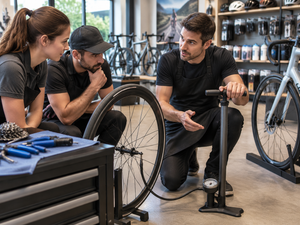
- Bike shops may need commercial floor pumps for repeated service use.
For B2B buyers, this is where product line planning becomes important. Instead of asking which pump is “best,” buyers should ask which pump fits each customer segment.
Product Line Roles
A complete bike pump product line can include several product roles.
| Product Type | Typical Role | Best Fit |
|---|---|---|
| Entry-level hand pump | Affordable basic inflation | Casual riders, price-sensitive channels |
| Commercial floor pump | High-frequency shop service | Bike shops, repair stores |
| CO2 inflator | Fast emergency inflation | Road cyclists, racers |
| Compact electric pump | Portable automatic top-up | Retail, online, emergency riding kits |
| High-pressure electric pump | Premium compact pressure solution | Road, gravel, performance cycling |
High-pressure pumps usually sit in the mid-to-premium part of the product line. They are not always the cheapest option, but they can offer stronger perceived value when the target user is clear.
For brands and retailers, the goal is to make each pump type serve a different purpose. This avoids product overlap and helps customers understand why each model exists.

How to Position High-Pressure Electric Pumps
High-pressure electric pumps are a newer and more differentiated option in the bike pump category. They combine pressure performance with portable convenience.
They can be positioned around several key messages.
Lightweight Emergency Use
A compact high-pressure electric pump can be marketed as a ride emergency tool. It is suitable for cyclists who want inflation support without carrying a large pump.
Preset Pressure and Auto Stop
For electric models, preset pressure and automatic stop can help improve user experience. Riders can set a target pressure and avoid manual guessing.
Road and Gravel Applications
High-pressure electric pumps are especially relevant for road and gravel riders who need portability and pressure control.
Premium Cycling Accessory
Because electric pumps include battery, motor, display, and pressure control systems, they can be positioned as premium accessories rather than basic tools.
For B2B buyers, this positioning is important. If the product is placed too close to low-cost hand pumps, its value may not be understood. If it is positioned as a high-end riding accessory, the features become easier to explain.
Channel Positioning for B2B Buyers
Different channels may need different positioning.
Bike Shops
Bike shops may use floor pumps for service, but they can sell compact high-pressure electric pumps as premium emergency products for riders.
The sales message should focus on real riding use:
- compact carry
- Presta compatibility
- emergency top-up
- pressure accuracy
- easy operation
Online Sellers
For Amazon, independent stores, or marketplace sellers, visuals are very important. Product images should show the pump in actual riding scenarios, not only on a white background.
Useful selling points include:
- size comparison
- pressure display
- valve connection
- charging method
- compatible bike types
- number of top-ups per charge
Cycling Brands
For cycling brands or private label buyers, high-pressure pumps can help expand a premium accessory range. They can be matched with road, gravel, or performance cycling products.
Distributors
For distributors, high-pressure pumps can be positioned as a differentiated product for shops and specialty retailers, especially when the local market already has many basic manual pumps.
B2B Selection Checklist
Before adding high-pressure pumps to a product line, buyers should evaluate more than maximum PSI.
1. Target Rider Segment
Is the product mainly for road, gravel, MTB, city bike, or mixed use?
2. PSI and Real Performance
Does the pump only claim high PSI, or can it actually work steadily at higher pressure levels?
3. Valve Compatibility
For road and gravel users, Presta compatibility is essential. For broader retail channels, both Presta and Schrader support may be needed.
4. Battery and Runtime
For electric pumps, buyers should check battery capacity, number of useful top-ups, charging time, and performance at higher pressure.
5. Heat Control
High-pressure inflation increases load on the motor. Heat control and safe duty cycle are important for compact electric models.
6. Packaging and Retail Message
The product should clearly explain who it is for. Packaging should not simply list PSI; it should show use cases and compatible bike types.
7. Price Positioning
High-pressure electric pumps should usually not compete directly with low-cost hand pumps. They should be priced and presented as a higher-value convenience product.
Common Positioning Mistakes
B2B buyers should avoid several common mistakes.
First, do not market high-pressure pumps as suitable for every rider. Different riders have different pressure and volume needs.
Second, do not rely only on maximum PSI. Buyers should also evaluate pressure accuracy, valve connection, battery life, and heat control.
Third, do not place premium electric pumps in the same communication style as cheap accessories. If the product has advanced functions, the sales message should explain why they matter.
Fourth, do not ignore retail education. Customers may need help understanding why a compact electric pump is different from a traditional hand pump or CO2 inflator.
 compact electric bike pump options
Brands and retailers building a premium cycling accessory range can review different compact electric bike pump options to match road, gravel, and performance cycling users.
Conclusion
High-pressure bike pumps play an important role in a complete bike pump product line, but they should be positioned carefully.
They are especially suitable for road cyclists, gravel riders, performance cycling users, and premium retail accessory ranges. For bike shops, they can complement commercial floor pumps. For online sellers, they can offer a clear convenience and emergency-use story. For brands, they can create a higher-value product tier.
For B2B buyers, the best strategy is not to choose the highest PSI pump and apply it to every channel. The better approach is to match PSI, pressure accuracy, valve compatibility, battery performance, and product positioning with the right rider group.
A high-pressure bike pump is most effective when it has a clear role in the product line.