Bike pump buyers often hear the terms OEM and ODM when sourcing from manufacturers. Both models can work for bike pump projects, but they are not the same.
For B2B buyers, the choice affects product design control, development time, tooling cost, MOQ, packaging flexibility, sample approval, and long-term product strategy.
This article explains the key differences between OEM and ODM bike pumps and how buyers can choose the right cooperation model.

What OEM and ODM Mean in Bike Pump Sourcing
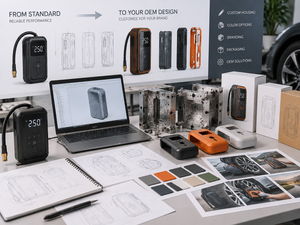
OEM usually means the buyer already has a clear product concept, design requirement, or technical specification, and the manufacturer produces according to that requirement. In a bike pump project, this may include a custom structure, special pump head design, unique shell shape, exclusive color, or buyer-owned product design.
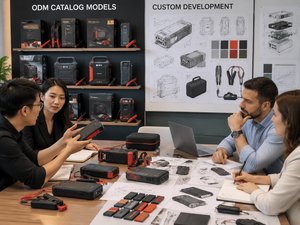
ODM usually means the manufacturer already has an existing product platform, and the buyer customizes it with logo, packaging, color, accessories, manual, or small functional changes. For many bike pump sellers, ODM is a faster way to launch a product because the base design has already been developed and tested.
In simple terms, OEM gives buyers more control, while ODM gives buyers faster access to a mature solution.
For B2B buyers, the right model depends on the business goal. A cycling brand building a unique product line may prefer OEM. An Amazon seller or retailer who needs a reliable private label bike pump may prefer ODM.

OEM Bike Pumps: When Buyers Need Deeper Product Control
OEM bike pump projects are suitable when buyers need a product that is different from existing market models.
This may happen when a brand wants a unique design, specific internal structure, exclusive appearance, special pump head, different pressure range, or a product that matches an existing accessory line. OEM is also useful when the buyer has strong product development capability and wants to control the product roadmap.
OEM projects may include:
- custom industrial design
- new mold development
- special pressure range
- customized pump head structure
- exclusive color and material selection
- unique accessory layout
- custom packaging system
- buyer-specific testing requirements
The advantage of OEM is differentiation. The buyer can build a product that is harder for competitors to copy quickly.
The challenge is cost and time. OEM projects usually require more design discussion, sampling, tooling investment, testing, and revision. MOQ may also be higher because the manufacturer must prepare materials and production processes specifically for that project.
For B2B buyers, OEM makes sense when the expected order volume and brand strategy justify the development cost.
ODM Bike Pumps: When Buyers Need Faster Launch
ODM bike pumps are suitable when buyers want to launch faster using a mature product platform.
This model is common for private label projects, Amazon sellers, retail brands, distributors, and promotional cycling accessory lines. The buyer chooses an existing bike pump model and customizes visible or commercial elements.
ODM customization may include:
- logo printing
- product color
- packaging design
- manual language
- valve adapter set
- storage bag
- carton label
- barcode area
- product bundle
- accessory configuration
The advantage of ODM is speed. Since the product platform already exists, buyers can usually move from sample approval to bulk order more quickly than with OEM development.
ODM also reduces risk. The manufacturer may already have production experience, known material suppliers, and previous test information for the model.
The limitation is differentiation. Other buyers may use the same or similar product platform. For this reason, ODM buyers should pay attention to packaging, product content, accessory configuration, and channel positioning to create a stronger brand identity.
Key Differences in Tooling, MOQ, Lead Time, and Risk
OEM and ODM projects differ most clearly in tooling, MOQ, lead time, and development risk.
OEM usually requires more tooling work. When the buyer needs a new shell, new internal structure, or special component design, mold investment may be required. This increases upfront cost and requires careful sample approval.
ODM usually uses existing tooling. This makes the project easier to start and lowers the development barrier.
MOQ can also differ. ODM projects often allow lower starting quantities for standard models, while OEM projects may require higher quantities to justify tooling and material preparation. However, private label packaging or custom colors may still increase MOQ even in an ODM project.
Lead time is another key difference. ODM projects may move faster because the base product is ready. OEM projects need more time for design confirmation, mold development, engineering samples, testing, and production preparation.
Risk is also different. OEM gives more uniqueness, but development problems may appear during sampling. ODM is more predictable, but buyers must accept some limits in design flexibility.
For B2B buyers, these differences should be reviewed before asking for a quotation.
Packaging, Logo, Color, Accessories, and Manual Customization
Many bike pump projects do not need full OEM development. They need smart customization.
For marketplace sellers and retailers, packaging and content may be more important than changing the whole product structure. A standard bike pump with better packaging, clearer valve explanation, stronger product images, and the right accessory kit can already fit many sales channels.
Common customization items include:
- brand logo on product
- color box design
- neutral or private label packaging
- manual language
- Presta and Schrader valve explanation
- adapter set
- charging cable for electric models
- storage bag or hard case
- carton mark
- product sticker
- retail display information
For B2B buyers, these details affect customer understanding and after-sales support. A bike pump with unclear valve compatibility or missing accessory explanation may create returns even when the product itself works well.
Before production, buyers should confirm all customization details in the specification sheet, sample, packaging artwork, and manual.

How Buyers Should Choose the Right Cooperation Model
The right model depends on the buyer’s channel, budget, timing, and product strategy.
OEM may be the better choice when the buyer wants a unique product, has clear technical requirements, and can accept longer development time. It is also suitable for brands that expect stable long-term sales and need stronger differentiation.
ODM may be the better choice when the buyer wants faster launch, lower development risk, and private label flexibility. It is suitable for Amazon sellers, retailers, distributors, and brands testing a new category.
Before choosing, buyers should ask:
- Do we need a unique structure or only branding customization?
- What is our expected order volume?
- Can we afford tooling cost and longer development time?
- How soon do we need to launch?
- Do we need exclusive design protection?
- Can an existing product platform meet our performance needs?
- What packaging and manual customization do we need?
- Can the supplier support sample testing and revisions?
- What MOQ applies to product, logo, color, and packaging?
- Can the supplier support repeat orders?
A good bike pump supplier should help buyers compare both paths honestly.
 bike pump manufacturer evaluation
Quick OEM vs ODM Comparison Table
| Factor | OEM Bike Pump | ODM Bike Pump |
|---|---|---|
| Product Design | Buyer controls more details | Based on existing platform |
| Development Time | Usually longer | Usually faster |
| Tooling Cost | May be required | Usually lower |
| MOQ | Often higher | Often more flexible |
| Differentiation | Stronger | Depends on customization |
| Launch Risk | Higher development risk | Lower platform risk |
| Best For | Established brands, unique product lines | Private label, retailers, marketplace sellers |
Conclusion
OEM and ODM bike pump projects both have value, but they serve different business goals. OEM is suitable for buyers who need deeper product control and stronger differentiation. ODM is suitable for buyers who need faster launch, lower development risk, and flexible private label customization.
For B2B buyers, the decision should not be based only on price. Tooling, MOQ, lead time, sample approval, packaging, accessories, manuals, and supplier support all affect the final project result.
YANTU supports bike pump projects for cycling brands, marketplace sellers, retailers, distributors, and private label customers. If you are comparing OEM and ODM bike pump options, our team can help discuss product platforms, customization, packaging, sample testing, and bulk order requirements.