Choosing a bike pump manufacturer is not only about comparing prices and product catalogs. B2B buyers also need to decide how deeply they want to participate in product development.
This is where OEM and ODM manufacturing models become important.
For bike pump brands, retailers, distributors, and private label sellers, the choice between OEM and ODM can affect product differentiation, tooling investment, MOQ, development time, sample approval, packaging, and long-term control over the product line.
There is no single model that is always better. The right choice depends on what the buyer is trying to achieve.
What OEM and ODM Mean in Bike Pump Manufacturing
OEM and ODM are commonly used terms in sourcing, although the exact scope can vary between manufacturers.
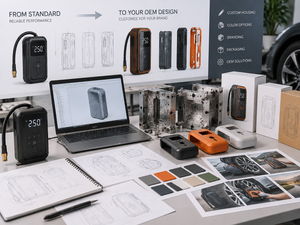
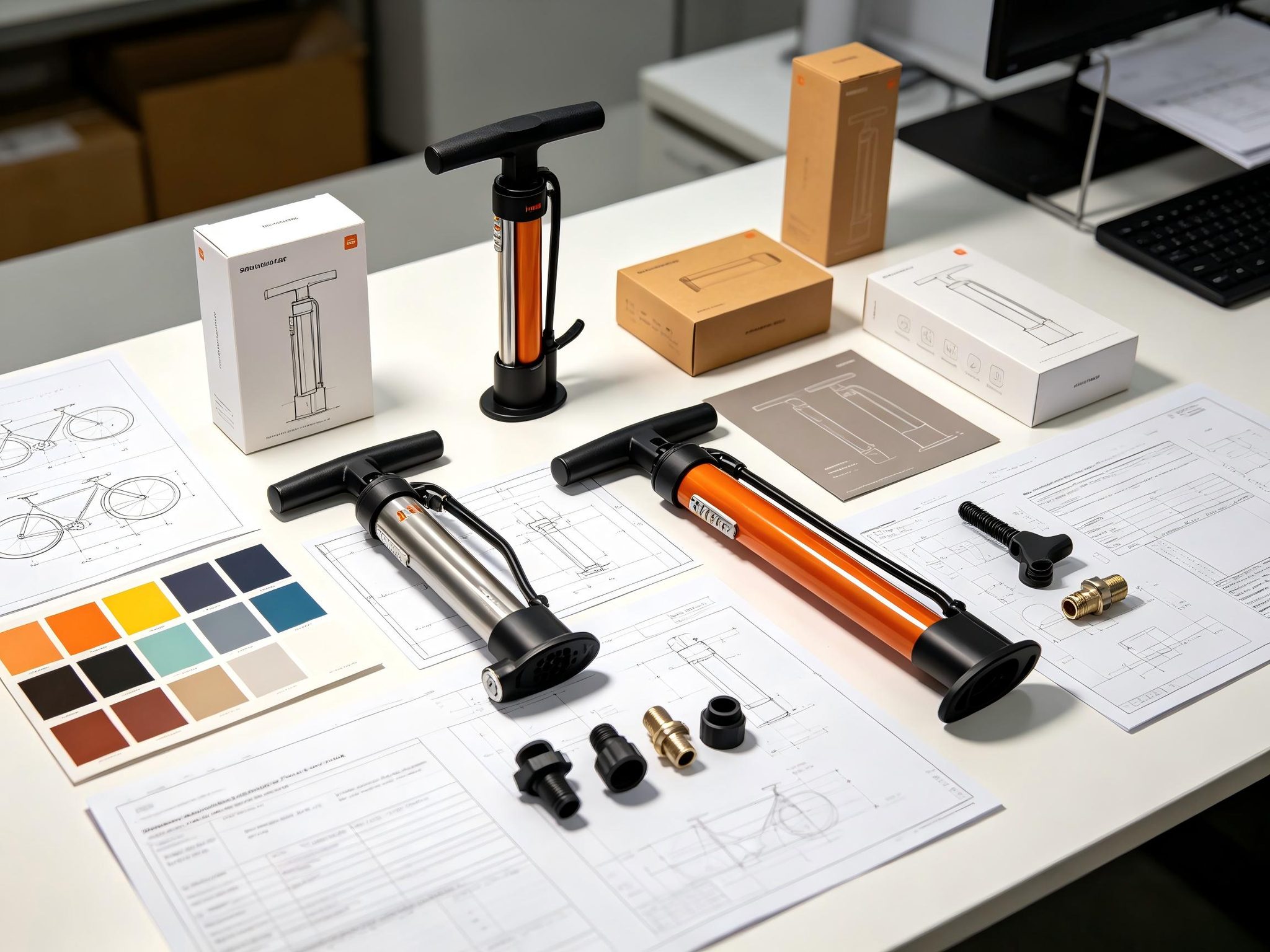
In a typical OEM bike pump project, the buyer provides a product concept, technical requirement, drawing, structure, or specific design direction, and the manufacturer develops or produces according to those requirements.
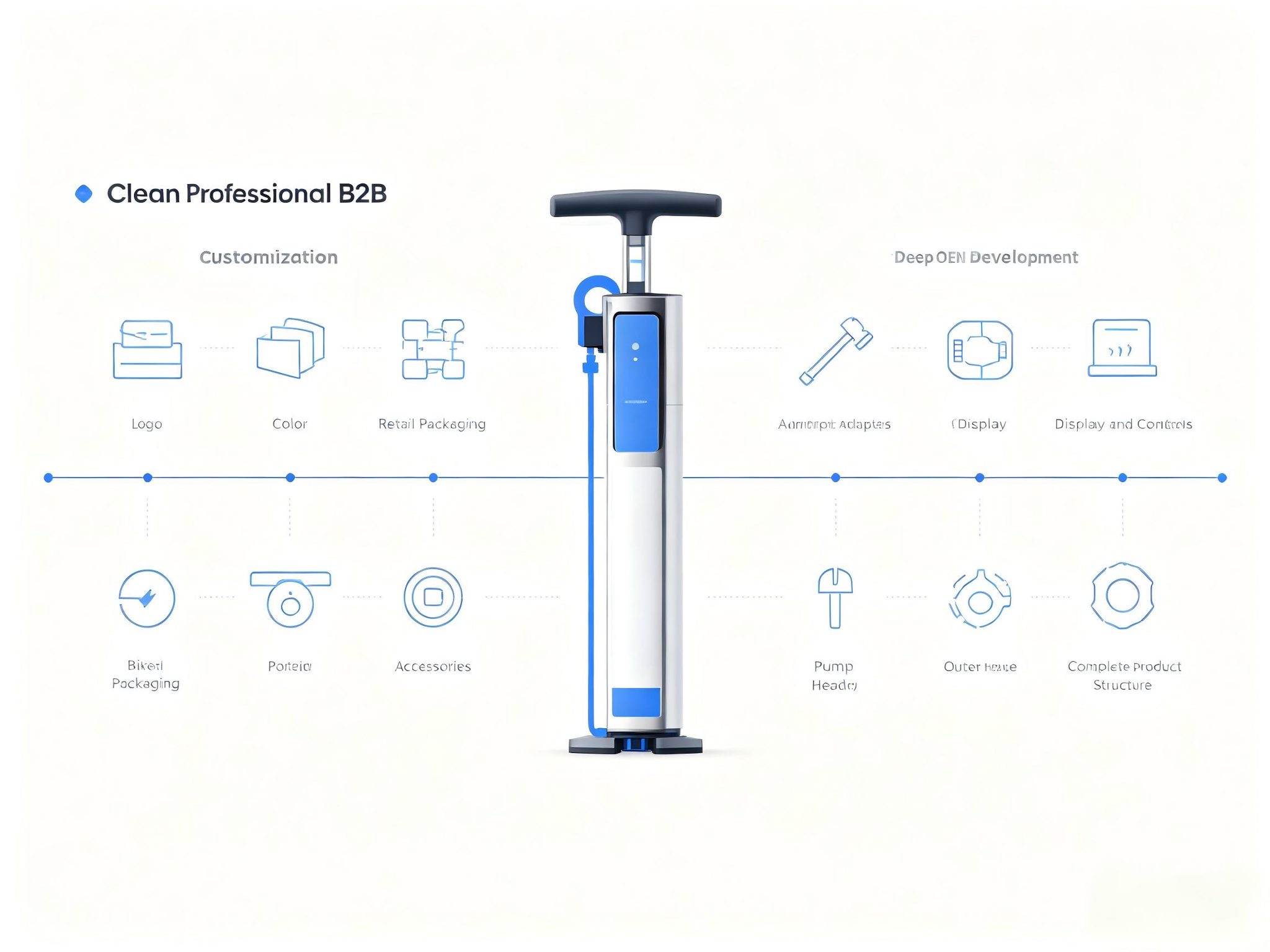
Customization may involve:
- product housing
- handle design
- pump head
- pressure range
- gauge or display layout
- hose structure
- accessory storage
- internal components
- packaging
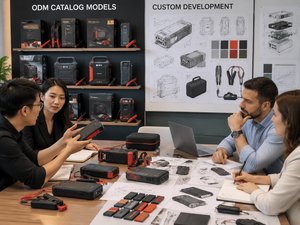
An ODM project usually starts from an existing product platform already developed by the manufacturer.
The buyer may customize areas such as:
- logo
- color
- packaging
- instruction manual
- accessories
- valve adapters
- storage bag
- selected software or function settings
In simple terms, OEM generally offers deeper product control, while ODM can provide a faster route to market.
However, buyers should always confirm the actual customization scope with the supplier rather than relying only on the words “OEM” or “ODM.”
When OEM Makes More Sense for Bike Pump Brands
OEM is more suitable when product differentiation is a major business objective.
A brand may already have several bike accessories and want a pump that follows the same visual identity. Another buyer may want a unique pump head, special housing, different display layout, or structure that is not available in the supplier’s standard catalog.
OEM can support this type of development.
The main advantages include:
- stronger product differentiation
- greater control over appearance
- more flexibility in structural design
- opportunity to create exclusive features
- better alignment with a long-term brand strategy
However, deeper customization usually requires more development work.
New molds may be needed for customized plastic parts. Engineering samples may need several revisions. The buyer may also need to confirm drawings, materials, tolerances, packaging fit, and functional performance before mass production.
For this reason, OEM is usually more suitable for buyers who have a clear product direction and enough expected volume to justify development investment.
When ODM Is the More Practical Choice
Not every buyer needs to create a bike pump from the ground up.
For many retailers, Amazon sellers, distributors, and emerging brands, an existing product platform can already meet most market requirements.
ODM allows the buyer to start with a developed model and focus customization on the parts customers actually see.
For example, a buyer may select an existing electric bike pump and customize:
- product color
- printed logo
- retail box
- manual
- storage bag
- adapter combination
- label design
This can reduce development complexity and shorten the path from sample approval to production.
ODM is particularly useful when:
- launch speed is important
- initial order volume is limited
- the buyer wants to test a market first
- extensive tooling investment is not justified
- the existing model already matches the target customer
For private label projects, this can be a practical way to build a product line without taking on unnecessary development risk.
The key is to make sure the existing product is genuinely suitable for the target market rather than selecting it only because it is available quickly.
Tooling, MOQ, Cost, and Lead Time
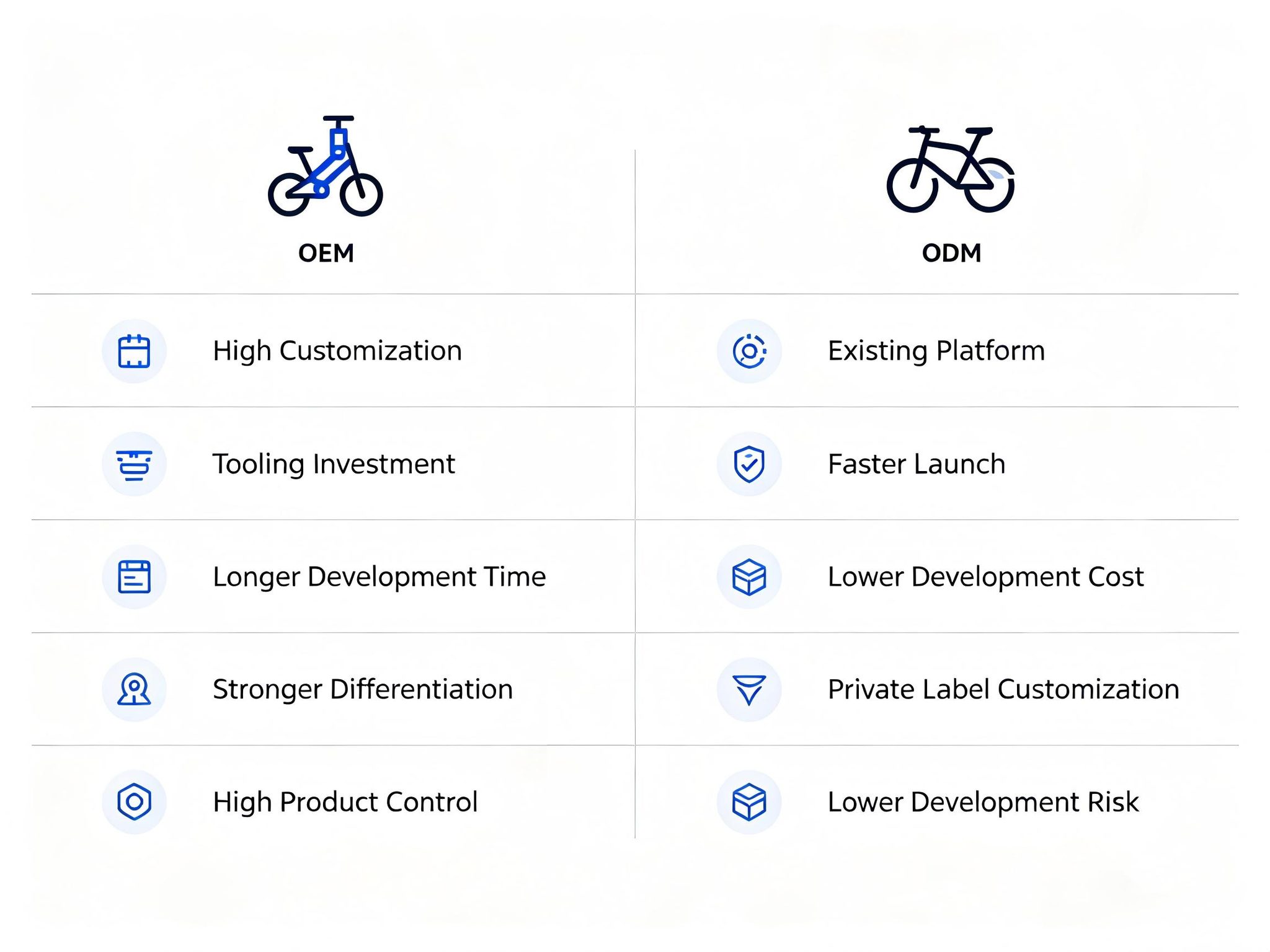
The manufacturing model directly affects project economics.
OEM development may require new tooling if the product structure or appearance is changed substantially.
This increases initial investment and can also affect development time.
ODM projects normally use existing tooling, which can reduce or eliminate mold investment.
The two models can therefore look very different from a purchasing perspective:
| Factor | OEM Bike Pump | ODM Bike Pump |
|---|---|---|
| Product Control | High | Moderate |
| Structural Customization | High | Usually limited |
| Tooling Cost | May be required | Usually lower |
| Development Time | Longer | Faster |
| MOQ | Often higher | Often more flexible |
| Product Differentiation | Stronger potential | Depends on customization |
| Development Risk | Higher | Lower |
| Best Fit | Established brands and custom projects | Private label, retail, faster market entry |
MOQ should also be considered together with customization.
A custom color or packaging change may have a different MOQ from a completely new housing or structural design.
Buyers should therefore ask suppliers to separate the requirements clearly instead of requesting one general “OEM MOQ.”
Sample Approval and Quality Control Matter in Both Models
Choosing ODM does not mean buyers can skip product testing.
Likewise, paying for an OEM project does not automatically guarantee better quality.
Both models need a clear sample approval process.
Before bulk production, buyers should verify:
- inflation performance
- pressure accuracy
- valve compatibility
- air leakage
- hose connection
- material quality
- buttons and display
- charging performance for electric models
- accessories
- logo and color
- packaging
- instruction manual
For OEM projects, buyers should also confirm that the mass-production structure matches the approved engineering sample.
For ODM projects, buyers should check whether changes to accessories, packaging, software settings, or materials affect the final configuration.
A golden sample or approved production sample can help establish a clear reference for quality inspection.
The manufacturing model may change the development process, but quality control remains necessary in both cases.
What Buyers Should Ask Before Choosing OEM or ODM
Before selecting a manufacturing model, buyers should discuss the project scope clearly with the supplier.
Important questions include:
- Which parts are existing and which parts can be customized?
- Does the project require new molds?
- What is the MOQ for each customization level?
- What is the expected sample and production lead time?
- Who pays for and owns any new tooling?
- How many sample revisions are included?
- Which materials and components can be changed?
- Can packaging and manuals be fully customized?
- How will the approved sample be controlled during production?
- What testing is performed before shipment?
- Are spare parts available for repeat orders?
- Can the supplier support future product upgrades?
These questions often reveal more than simply asking whether a factory offers “OEM and ODM.”
A capable manufacturer should be able to explain the actual development boundary, cost structure, sample process, MOQ, and production responsibilities.
 bike pump manufacturer evaluation
Quick OEM vs ODM Decision Checklist
| Buyer Situation | More Likely Fit |
|---|---|
| Need unique product appearance | OEM |
| Need custom structure or function | OEM |
| Want stronger long-term differentiation | OEM |
| Need faster market launch | ODM |
| Want lower initial development cost | ODM |
| Testing a new market | ODM |
| Existing model already fits customer needs | ODM |
| Building an exclusive long-term product platform | OEM |
Conclusion
OEM and ODM can both be effective manufacturing models for bike pump projects.
OEM is usually more suitable when a buyer needs deeper customization, exclusive design, or stronger long-term product differentiation. ODM is often more practical when speed, lower development investment, and use of a proven existing platform are more important.
The decision should not be based on terminology alone.
Buyers should compare tooling requirements, MOQ, development time, product control, sample approval, quality standards, and supplier capability before choosing a model.
For many brands, the best strategy can also change over time. A company may begin with an ODM bike pump to test demand and later develop an OEM model once the market and product requirements become clearer.
YANTU supports both OEM and ODM bike pump projects for brands, distributors, retailers, and private label customers. If you are evaluating the right manufacturing model for a bike pump project, our team can help discuss product configuration, tooling, samples, packaging, customization, and bulk production requirements.