Winter conditions can change how automotive service businesses evaluate emergency starting equipment.
In Northern European markets, auto shops, roadside assistance providers, fleets, and automotive distributors may need jump starters that remain practical during long storage periods and can support vehicles during cold-weather service.
This creates interest in alternative battery technologies, including sodium battery jump starters.
However, adoption should not be treated as automatic. Auto shops and distributors need to evaluate real performance, documentation, storage guidance, safety systems, user training, and supplier support before introducing a new battery technology into their product or service lineup.
Why Northern European Auto Shops Care About Winter-Ready Jump Starters
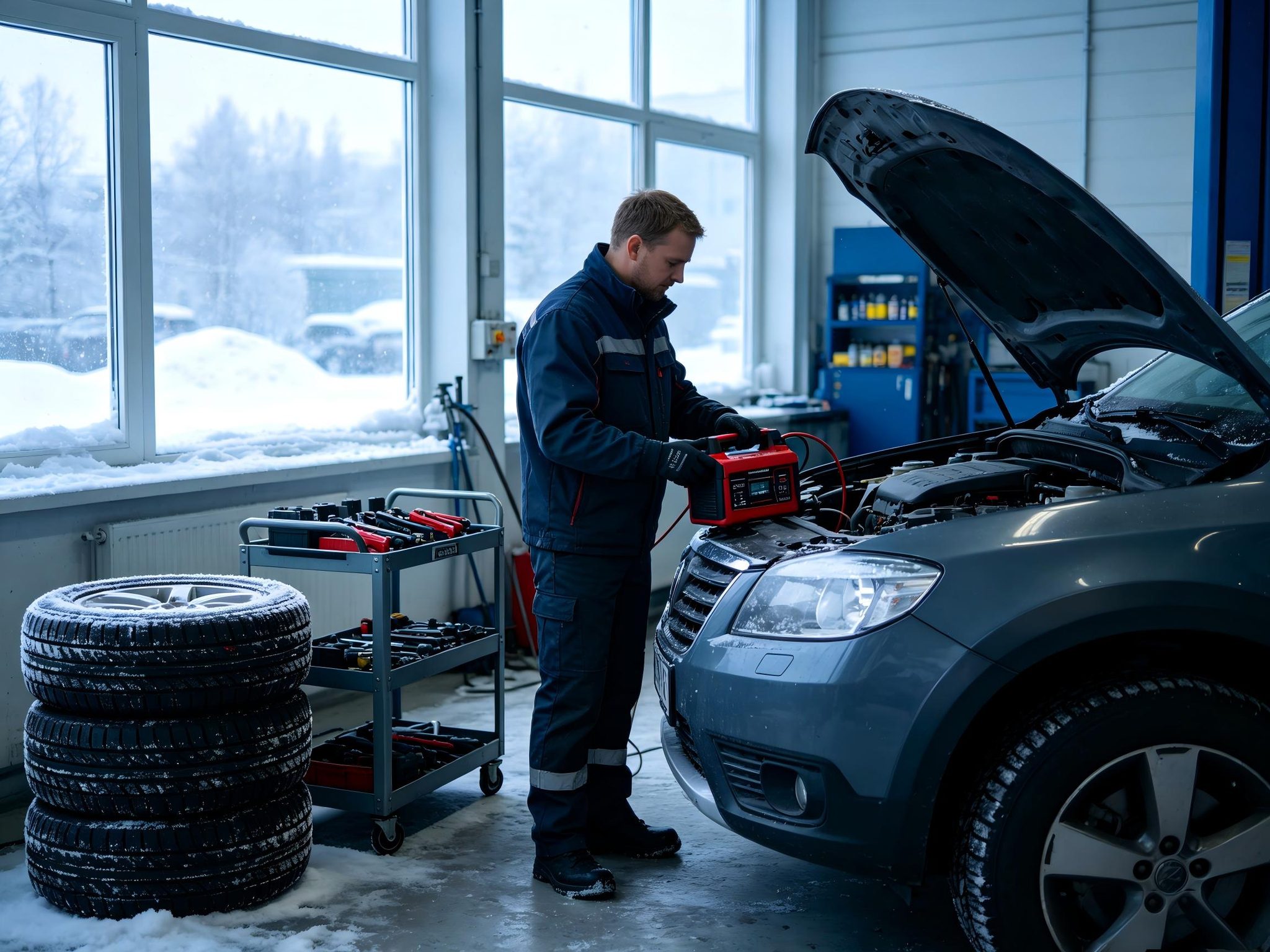
Cold weather creates additional pressure on vehicle starting systems.
Auto shops may see more starting-related service needs during winter, especially when vehicles have been parked for long periods or when batteries are already aged or weak.
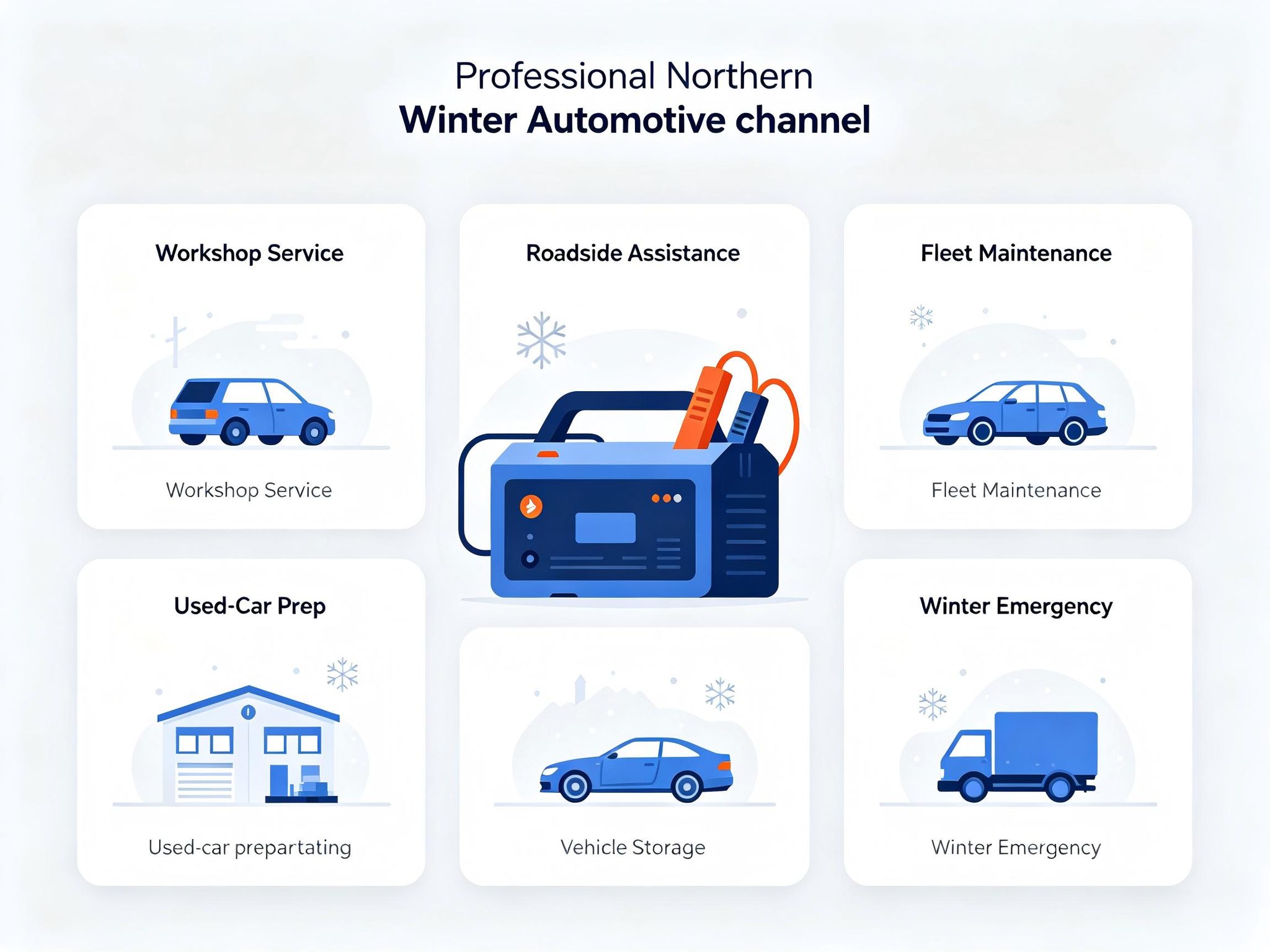
Jump starters can therefore play several roles in automotive service environments:
- workshop vehicle starting
- roadside assistance
- fleet support
- used-car preparation
- vehicle storage facilities
- customer emergency equipment
- winter maintenance programs
For professional users, the buying decision is not only about peak current or compact size.
They may also care about:
- low-temperature usability
- storage readiness
- charging requirements
- smart clamp protection
- cable flexibility
- product durability
- clear operating instructions
- after-sales support
These requirements make winter automotive channels a relevant environment for evaluating new jump starter technologies.
Cold-Weather Service Scenarios in Workshops and Roadside Support
Winter use is not one single scenario.
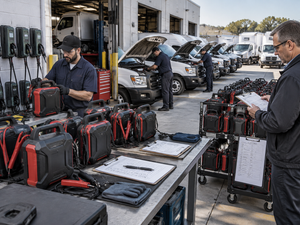
A jump starter may be used inside a heated workshop, outside in a parking area, in a roadside service vehicle, or after being stored in a cold vehicle for an extended period.
These situations create different requirements.
A workshop may mainly need reliable repeated starting support during customer service.
A roadside team may care more about portability, storage readiness, clamp design, and the ability to operate after the product has spent time inside a service vehicle.
Fleet operators may need multiple units distributed across different vehicles or facilities.
For B2B buyers, this means cold-weather evaluation should be based on actual use cases rather than one laboratory number.
Important questions include:
- At what temperature was the product tested?
- Was the jump starter stored at that temperature before use?
- What vehicle or engine type was used?
- What battery condition was simulated?
- How many starts were performed?
- How does performance change after repeated use?
A product described as suitable for winter markets should have clear test conditions behind that positioning.
Sodium Battery Positioning for Winter Automotive Channels
Sodium battery technology creates interest because it can offer a different technical profile from conventional lithium-based products.
For automotive channels, the main discussion often centers on areas such as storage behavior, temperature performance, safety characteristics, and long-term readiness.
However, buyers should avoid turning these characteristics into broad assumptions.
A sodium jump starter should still be evaluated as a complete product.
Battery chemistry alone does not determine the final user experience.
The complete system also includes:
- battery pack design
- battery management system
- smart clamps
- internal electronics
- cable construction
- housing
- charging circuit
- thermal management
- software logic
- quality control
For this reason, a distributor should not choose a product simply because the specification says “sodium battery.”
Sample testing remains important.
The more useful B2B question is whether the complete sodium jump starter offers advantages that match the needs of a particular winter automotive channel.
Auto Shop Adoption Barriers: Training, Trust, Price, and Documentation
New technology usually creates questions before it creates large-scale adoption.
Auto shops are practical environments. Technicians often prefer tools they understand and trust.
If a sodium jump starter looks similar to a conventional product but uses a different battery system, buyers may still want clear answers about:
- charging procedure
- storage instructions
- starting procedure
- protection functions
- temperature range
- warning indicators
- service life
- warranty
- replacement policy
Training is therefore part of adoption.
A distributor introducing sodium jump starters may need simple sales materials, technician guidance, product comparison information, and troubleshooting support.
Price is another factor.
A new technology may attract interest, but professional buyers will still compare total value against established alternatives.
The product needs to offer a clear reason for the channel to test it.
That reason could be related to storage management, winter positioning, service readiness, product differentiation, or another verified benefit.
Documentation is equally important.
Technical claims should be supported by specifications, test information, manuals, and appropriate product documentation rather than marketing language alone.
Distributor Opportunities in Winter Emergency Product Lines
For automotive distributors, sodium jump starters may be considered as part of a broader winter emergency product category.
Instead of positioning the product as a completely separate technology, distributors can evaluate how it fits alongside existing products such as:
- conventional jump starters
- battery chargers
- tire inflators
- emergency lights
- winter vehicle kits
- roadside tools
- fleet maintenance accessories
This can make channel testing easier.
A distributor may begin with selected customers, service shops, fleets, or regional dealers rather than replacing an existing product line immediately.
Feedback from these users can help answer practical questions:
- Do technicians understand the product?
- Does the storage guidance work for the customer?
- Is cold-weather performance consistent with expectations?
- Are the clamps and cables suitable for professional use?
- Does the packaging explain the technology clearly?
- Are customers willing to pay for the product positioning?
For B2B buyers, controlled introduction is often more useful than making broad market assumptions.
 sodium jump starter product options
What Buyers Should Confirm Before Introducing Sodium Jump Starters
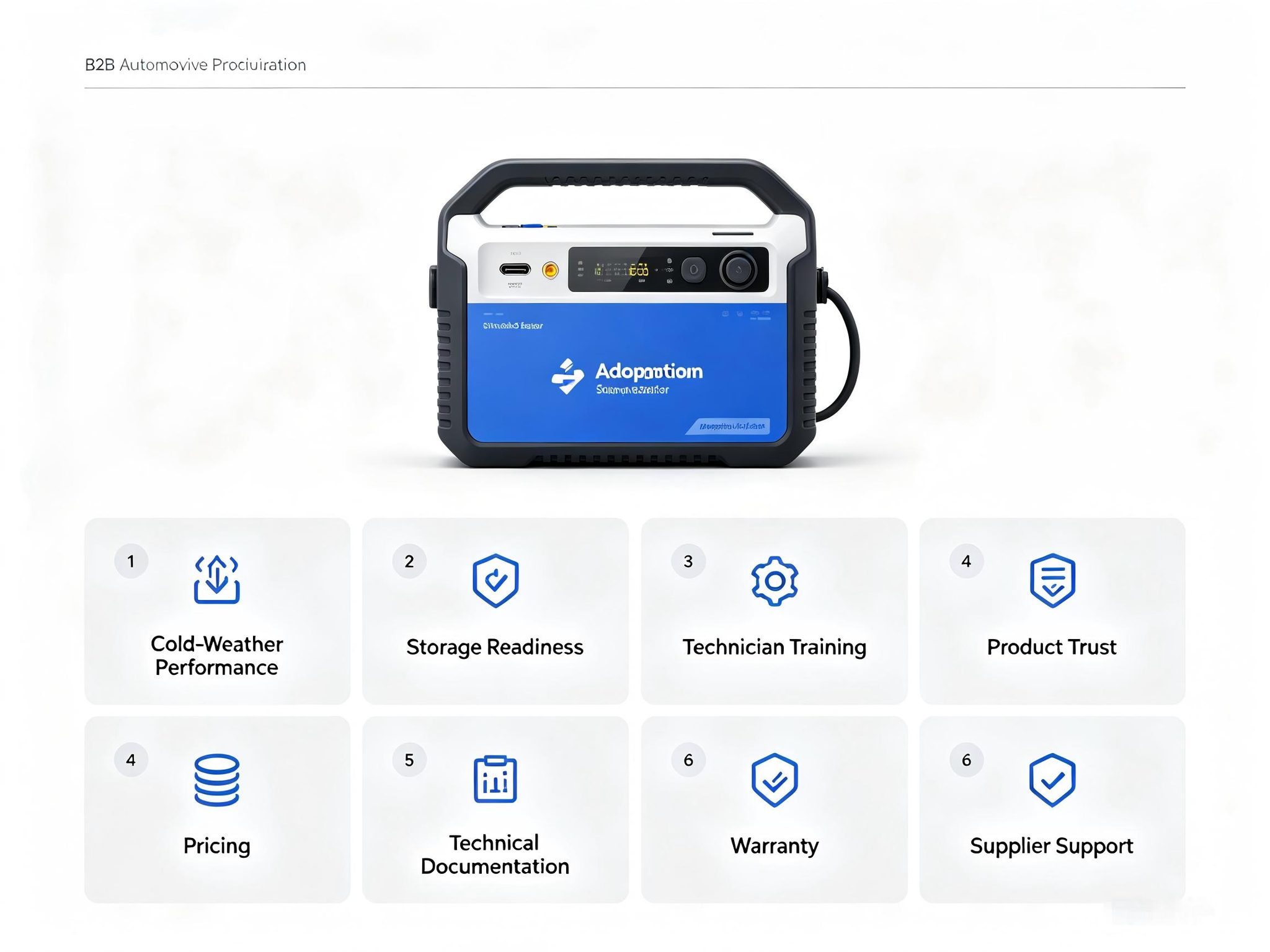
Before introducing sodium jump starters into Northern European automotive channels, buyers should confirm both technical and commercial requirements.
Important questions include:
- What sodium battery chemistry and cell configuration are used?
- What cold-temperature testing has been completed?
- Under what conditions were the tests performed?
- What standby or storage claims are supported?
- What storage temperature is recommended?
- What smart clamp protections are included?
- What engine sizes or vehicle categories are suitable?
- What charging method is required?
- What manuals and technical documents are available?
- What warranty and after-sales support does the supplier provide?
- Can packaging and instructions be localized?
- Can samples be tested in the buyer’s own winter-use scenarios?
These questions help buyers separate an interesting technology story from a practical product opportunity.
Quick Adoption Readiness Checklist
| Area | What Buyers Should Confirm | Why It Matters |
|---|---|---|
| Cold-Weather Testing | Test temperature and conditions | Helps evaluate winter suitability |
| Storage Guidance | Standby and inspection requirements | Supports emergency readiness |
| Smart Clamps | Protection and connection design | Important for workshop users |
| Documentation | Manual, specifications, test information | Builds channel trust |
| Training | Clear product and usage guidance | Supports technician adoption |
| Warranty | After-sales and replacement policy | Reduces distributor risk |
| Packaging | Localized and clear product explanation | Helps retail and professional channels |
| Sample Testing | Real local winter scenarios | Confirms practical performance |
Conclusion
Northern European auto shops and automotive distributors have clear reasons to pay attention to winter-ready jump starter technology.
Sodium battery jump starters may offer an interesting new product direction, especially where long-term storage, winter service readiness, and product differentiation matter.
But adoption should be based on verified product performance rather than battery chemistry alone.
Buyers should review cold-weather test conditions, storage guidance, smart clamp protection, documentation, warranty, training requirements, and sample performance before introducing the product to their market.
For distributors, a controlled trial with selected workshops, fleets, or roadside service customers can provide valuable feedback before a broader rollout.
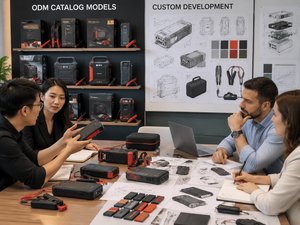
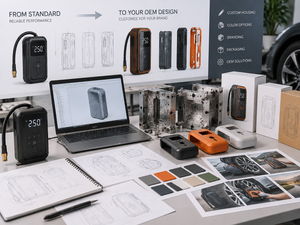
YANTU supports sodium jump starter projects for automotive distributors, workshops, fleets, roadside service channels, and private label brands. If you are evaluating sodium jump starters for Northern European or other cold-weather markets, our team can help discuss specifications, sample testing, documentation, packaging, localization, and bulk order requirements.