Jump starters are emergency products, which means storage performance matters almost as much as starting performance.
A product may remain inside a vehicle, warehouse, service van, retail shelf, or seasonal emergency kit for long periods before it is actually needed.
For B2B buyers, this creates an important purchasing question: how much maintenance is required to keep the jump starter ready?
Lithium jump starters are widely used, but many models require periodic charging during storage. Sodium battery jump starters are now being positioned differently, with some products highlighting much longer standby periods.
However, buyers should compare these claims carefully. Storage performance depends on battery chemistry, product design, temperature, state of charge, electronics, test conditions, and manufacturer instructions.
Why Storage Behavior Matters for Jump Starters
A jump starter is different from a device used every day.
The product may sit unused for months before an emergency occurs.
This creates a readiness problem.
If the battery loses too much charge during storage, the jump starter may not provide the expected performance when the driver finally needs it.
For individual consumers, this can be inconvenient. For fleets, distributors, rental companies, roadside service operators, or seasonal vehicle businesses, the problem can become much larger.
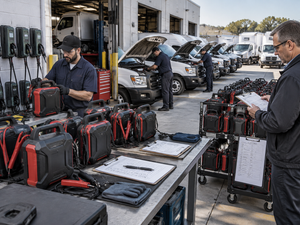
A company managing hundreds of units may need to check:
- battery charge level
- storage temperature
- inspection date
- recharge schedule
- cable and clamp condition
- product assignment
- replacement status
The more frequently a product requires charging, the more maintenance work the organization must manage.
This is why standby performance can become an operational feature, not only a battery specification.
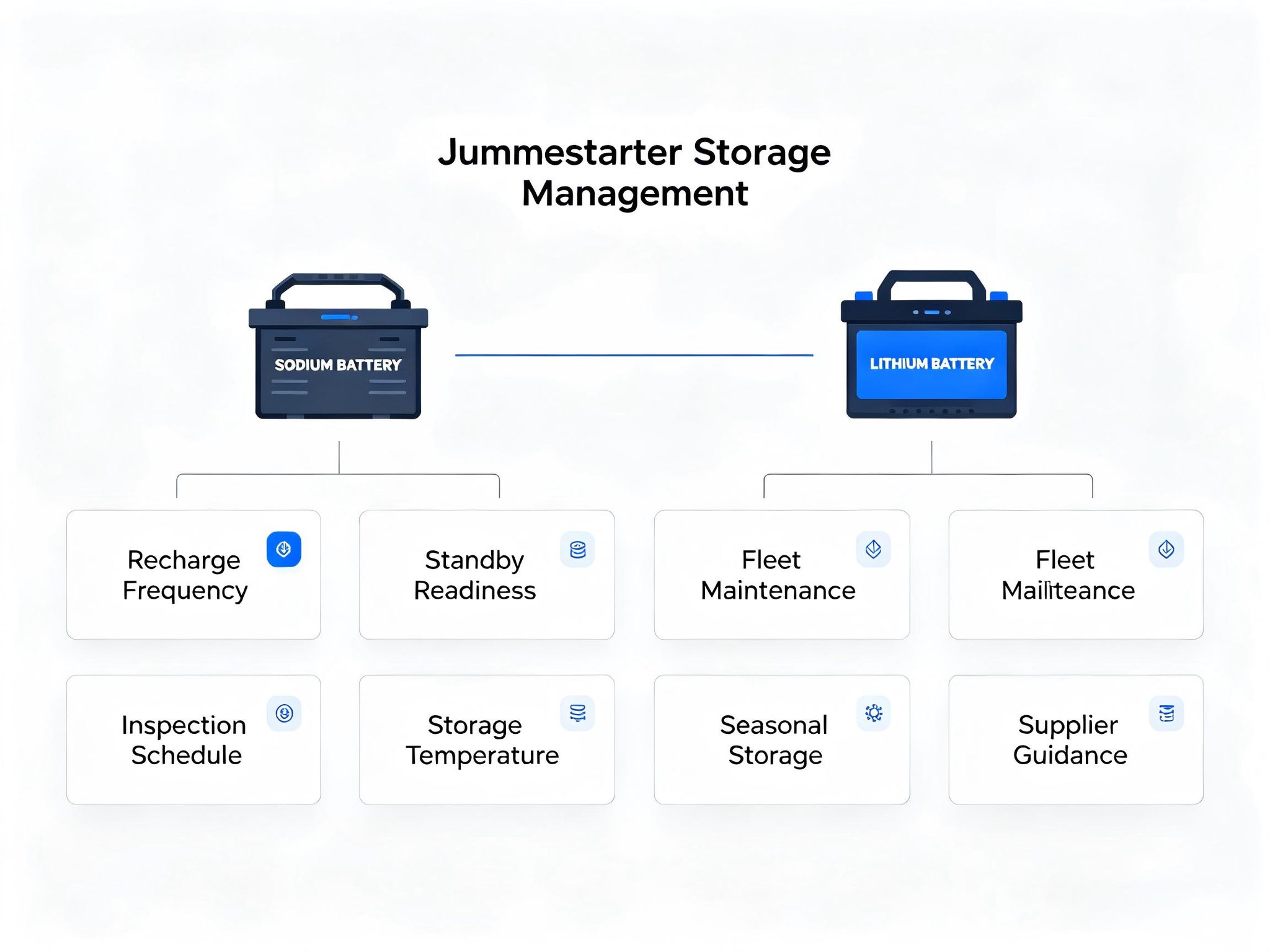
Lithium Jump Starter Storage: Recharge and Readiness Concerns
Lithium jump starters have become common because they can offer compact size, high power output, and convenient portable design.
However, lithium battery products still experience self-discharge and standby power consumption.
The actual storage interval varies by product.
Some manufacturers recommend checking or recharging the jump starter periodically. Depending on the model, storage condition, electronics, battery quality, and manufacturer guidance, the recommended interval may be monthly or less frequent.
For B2B buyers, the important point is not that every lithium jump starter must be charged exactly once per month.
The important point is that many lithium products require a defined maintenance routine to maintain emergency readiness.
This can create additional work for:
- fleet managers
- auto shops
- roadside assistance teams
- seasonal vehicle operators
- warehouse managers
- automotive retailers holding long-term inventory
If the recharge schedule is ignored, the product may gradually lose readiness.
For this reason, buyers should review the actual user manual and storage instructions instead of assuming that all lithium jump starters behave the same way.
Sodium 5-Year Standby Positioning: What Buyers Should Verify
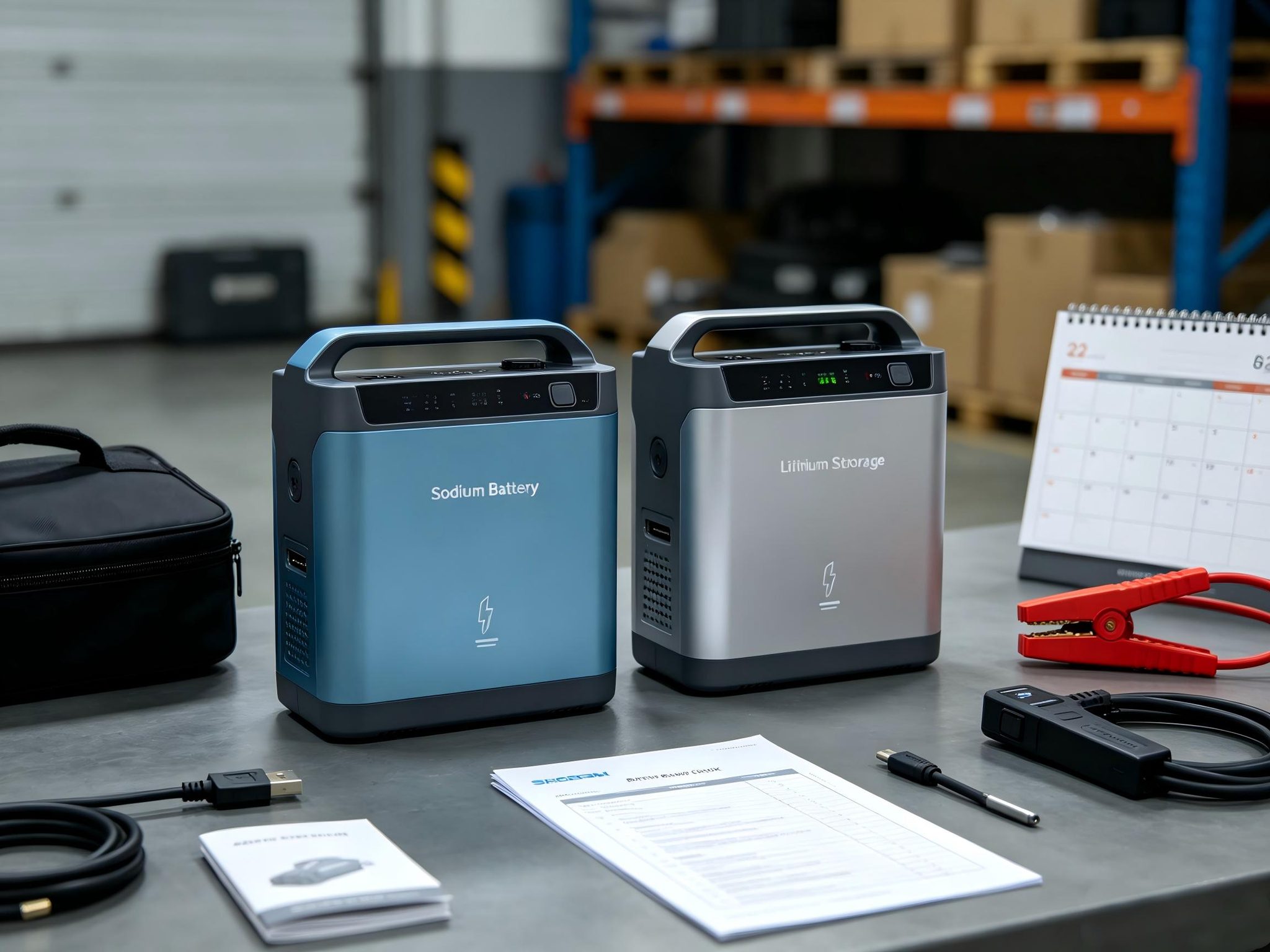
Long standby time is one of the most interesting positioning points for sodium battery jump starters.
A product marketed with a 5-year standby concept can be attractive for emergency applications because it suggests lower maintenance requirements during long-term storage.
But B2B buyers should not treat “5-year standby” as an unconditional promise.
The first question should be:
Under what test conditions was the standby performance measured?
Buyers should verify:
- initial state of charge
- storage temperature
- standby current
- battery capacity retention
- electronic power consumption
- testing duration
- minimum usable charge after storage
- recommended inspection interval
- manufacturer storage instructions
A long-standby product may reduce routine charging requirements, but periodic inspection can still be important.
For example, the battery may remain capable of storing energy while other components such as smart clamps, cables, connectors, or product housing still require inspection.
The value of long standby is therefore not “zero maintenance.”
The stronger B2B message is reduced charging management and improved long-term readiness when stored under the specified conditions.
 sodium vs lithium jump starter technical differences
Fleet, Seasonal, and Winter-Storage Use Cases
Storage behavior becomes especially important in applications where equipment may remain unused for long periods.
One example is fleet emergency equipment.
A company may place jump starters in service vehicles, trucks, vans, or maintenance locations. If every device requires frequent charging, the fleet needs a system to ensure that employees actually perform those checks.
Longer standby intervals can reduce this administrative burden.
Seasonal vehicles create another relevant use case.
Examples include:
- motorcycles
- recreational vehicles
- boats
- agricultural equipment
- construction equipment
- seasonal rental vehicles
- vehicles stored during winter
These vehicles may remain parked for months.
Emergency equipment stored with them should ideally remain ready without requiring constant attention.
Cold-region applications may also increase interest in storage management because vehicles can be more difficult to start during winter.
However, buyers should separate two different questions:
- How well does the jump starter retain charge during storage?
- How well does the jump starter perform when actually used at low temperature?
Long standby performance does not automatically prove low-temperature starting performance. Both should be evaluated separately.
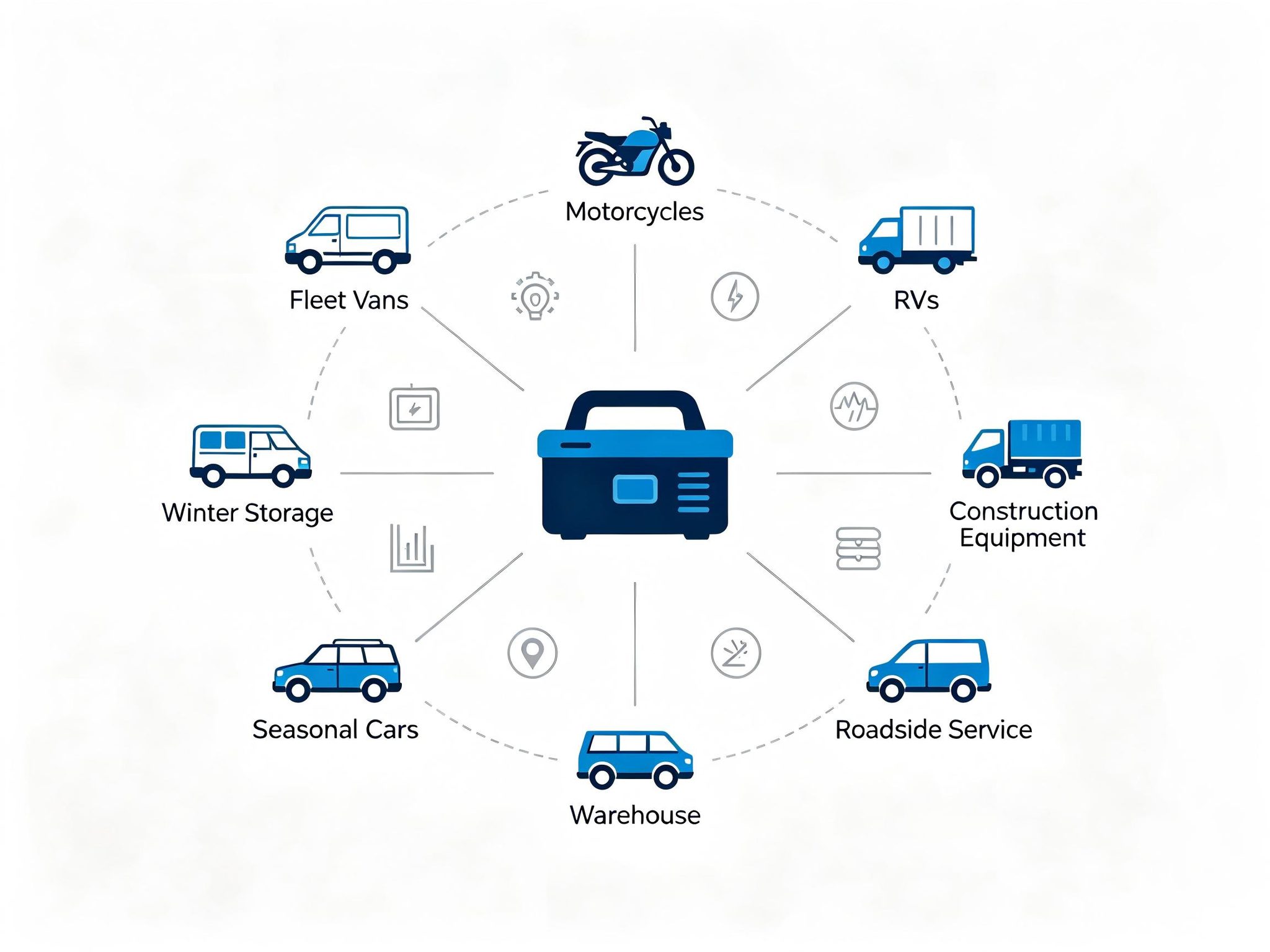
Packaging and Manuals Should Explain Storage Guidance
Storage performance should not exist only in supplier presentations.
It should also be explained clearly to the end user.
For B2B projects, packaging and manuals should communicate:
- recommended storage temperature
- charging instructions
- inspection interval
- long-term storage guidance
- clamp and cable inspection
- warning indicators
- recharge procedure
- product readiness check
This is particularly important when a product is positioned around long standby time.
If the packaging simply says “5-year standby” without explaining the conditions, customers may misunderstand the claim.
Clear communication protects both the brand and the user.
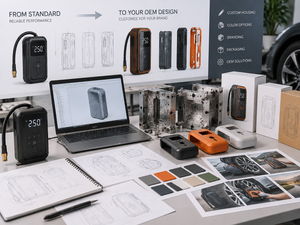
For private label projects, buyers should therefore confirm that the supplier can provide the technical information needed to create accurate manuals, labels, product pages, and sales materials.
What B2B Buyers Should Ask Before Sourcing
Before comparing sodium and lithium jump starters, buyers should ask suppliers for more than the headline standby figure.
Important questions include:
- What battery chemistry is used?
- How is standby time tested?
- At what storage temperature was the test conducted?
- What was the starting state of charge?
- How much capacity remains after the stated storage period?
- Is periodic inspection still recommended?
- What recharge interval is recommended for normal storage?
- How does low temperature affect stored capacity and starting performance?
- What smart clamp and protection system is included?
- What documentation supports the product claims?
- What warranty terms apply during long-term storage?
- Can samples be tested before bulk purchasing?
These questions help buyers compare the practical maintenance burden of different products.
Quick Storage Comparison
| Storage Factor | Lithium Jump Starter | Long-Standby Sodium Positioning |
|---|---|---|
| Recharge Routine | Often requires periodic checking or charging according to manufacturer guidance | Positioned to reduce charging frequency |
| Long-Term Readiness | Depends on charge maintenance and storage conditions | Designed around longer standby capability |
| Inspection | Battery and hardware should be checked | Hardware and product condition should still be checked |
| Temperature | Storage temperature affects battery condition | Storage and low-temperature performance should be verified separately |
| Fleet Management | May require regular recharge schedules | Can potentially reduce charging-management workload |
| Buyer Verification | Confirm actual recharge instructions | Confirm test conditions behind standby claims |
Conclusion
Jump starter storage performance is an important purchasing factor for fleets, distributors, seasonal vehicle operators, automotive retailers, and emergency equipment brands.
Lithium jump starters can provide compact design and strong starting performance, but buyers should understand the recommended recharge and inspection routine for the specific product.
Sodium jump starters with long-standby positioning may offer a different value proposition by reducing the frequency of charging management during storage.
However, claims such as 5-year standby should always be evaluated together with test conditions, storage temperature, remaining usable capacity, inspection guidance, and supplier documentation.
For B2B buyers, the best product is not simply the one with the longest number printed on the specification sheet. It is the product whose storage behavior matches the real operating and maintenance requirements of the target market.
YANTU supports sodium and conventional jump starter projects for distributors, fleets, automotive retailers, and private label brands. If you are evaluating long-standby jump starters for your market, our team can help discuss specifications, sample testing, storage guidance, packaging, documentation, and bulk order requirements.