For heavy duty tire inflators, duty cycle is one of the most important specifications for B2B buyers. It tells buyers how long the inflator can work before it needs time to cool down.
This matters because commercial users often need more than one short inflation task. Fleets, workshops, SUV owners, and outdoor users may need continuous or repeated inflation. If the duty cycle is too weak, the product may overheat, slow down, or fail during real use.
This article explains what duty cycle means and how buyers should evaluate it before choosing a heavy duty tire inflator.

What Duty Cycle Means for Tire Inflators
Duty cycle describes the relationship between working time and rest time.
For example, if a tire inflator can run for a certain number of minutes and then needs a cooling period, that working and cooling pattern is part of its duty cycle. The exact number depends on motor design, cylinder structure, heat dissipation, housing material, and protection system.
For B2B buyers, duty cycle is not just a technical phrase. It helps explain whether a product is suitable for occasional emergency use or more demanding commercial use.
A small portable inflator may be suitable for topping up one tire. A heavy duty tire inflator should usually support longer operation, repeated use, and more demanding tire sizes.
Buyers should always connect duty cycle with real use conditions, not only catalog claims.

Why Continuous Use Matters for Commercial Buyers
Commercial buyers often evaluate tire inflators differently from individual car owners.
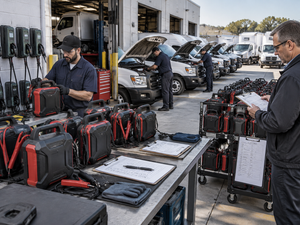
A personal user may only inflate one car tire occasionally. A fleet operator, auto shop, or roadside service provider may need to inflate several tires in a short period. This makes continuous use much more important.
Common continuous-use scenarios include:
- fleet vehicle maintenance
- SUV and pickup tire inflation
- off-road vehicle preparation
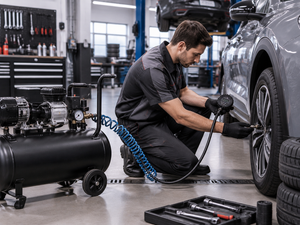
- workshop tire service
- roadside support
- seasonal tire pressure adjustment
If the tire inflator overheats after a short period, it may interrupt work and reduce user confidence. For professional users, this can affect service speed and tool reliability.
For buyers, the purchasing meaning is clear: a heavy duty tire inflator should be evaluated by how it performs under repeated tasks, not only by maximum pressure or appearance.

Heat Control Is a Key Design Factor
Heat is one of the main reasons duty cycle matters.
During inflation, the motor and compression system generate heat. The longer the inflator runs, the more important heat control becomes. If the internal structure cannot manage heat properly, performance may drop and components may wear faster.
Good heat control may involve:
- efficient motor design
- suitable cylinder structure
- ventilation design
- thermal protection
- durable internal materials
- proper housing layout
For B2B buyers, heat control affects product life and after-sales risk. A product that looks powerful but has poor heat management may perform well in a short test but fail under repeated use.
This is why sample testing is important. Buyers should test the product under the expected working conditions, especially if the inflator is marketed for heavy duty or commercial use.
Duty Cycle Is Not the Same as Inflation Speed
Some buyers may confuse duty cycle with inflation speed. They are related, but they are not the same.
Inflation speed tells buyers how quickly the product can inflate a tire. Duty cycle tells buyers how long the product can continue working before it needs rest.
A tire inflator may be fast but not suitable for continuous use. Another model may inflate slightly slower but remain more stable during repeated tasks. For commercial buyers, both factors should be considered together.
For example, an SUV user may care about inflation speed for larger tires. A fleet service buyer may care more about whether the inflator can handle multiple vehicles without overheating.
The best product is not always the fastest one. The better choice is the product that matches the target user’s real work pattern.
For B2B purchasing, this means suppliers should provide both inflation performance and duty cycle information whenever possible.
Different Users Need Different Duty Cycle Levels
Not every buyer needs the same level of duty cycle.
A compact consumer inflator can be acceptable for emergency use. A heavy duty tire inflator should meet higher expectations because the target user usually expects stronger performance and longer operation.
Different channels may need different product positioning:
| User Type | Duty Cycle Requirement | Purchasing Meaning |
|---|---|---|
| Personal car owner | Low to medium | Emergency top-up use |
| SUV or pickup owner | Medium | Larger tires and longer inflation time |
| Off-road user | Medium to high | Repeated tire pressure adjustment |
| Auto shop | High | Frequent daily tool use |
| Fleet operator | High | Multiple vehicles and regular maintenance |
| Industrial distributor | High | Stronger durability expectations |
For buyers, this table helps avoid over-positioning or under-positioning. A light-duty product should not be sold as a commercial inflator. A true heavy duty model should have specifications and structure to support its positioning.
What Buyers Should Ask Suppliers
Before ordering heavy duty tire inflators, buyers should ask suppliers practical questions about duty cycle and continuous use.
Important questions include:
- How long can the inflator run continuously?
- What cooling time is recommended after operation?
- What tire size was used in the test?
- What pressure range was tested?
- Does the product have overheat protection?
- How does performance change during repeated use?
- What motor and cylinder structure is used?
- Can samples be tested before bulk orders?
- Is the product suitable for SUVs, workshops, fleets, or industrial use?
- Can the supplier support packaging and private label requirements?
These questions help buyers avoid unclear claims. A supplier should be able to explain the test condition behind duty cycle data.
For B2B buyers, duty cycle should be part of product verification before mass production, especially when the product is positioned as heavy duty.
Quick Comparison Table
| Factor | Why It Matters | What Buyers Should Check |
|---|---|---|
| Duty Cycle | Shows continuous-use ability | Working time and cooling time |
| Heat Control | Affects product life and safety | Motor, ventilation, protection system |
| Inflation Speed | Affects user efficiency | Time to inflate target tire size |
| Tire Size | Defines real workload | Car, SUV, pickup, or off-road tires |
| Overheat Protection | Reduces failure risk | Automatic protection or shutdown |
| Supplier Test Data | Supports purchasing confidence | Test conditions and sample validation |
Conclusion
Duty cycle is an important specification for heavy duty tire inflators. It helps buyers understand whether the product can support continuous use, repeated inflation, and demanding working conditions.
For B2B buyers, duty cycle should be evaluated together with inflation speed, heat control, motor design, tire size, and user scenario. A product that works well for short emergency use may not be suitable for fleets, auto shops, or off-road users.
Before placing bulk orders, buyers should ask suppliers for clear test conditions and verify samples under real working scenarios.
YANTU supports heavy duty tire inflator projects for distributors, retailers, automotive brands, fleet channels, and OEM customers. If you are selecting continuous-use tire inflators for your product line, our team can help discuss specifications, packaging, sample testing, and bulk order requirements.