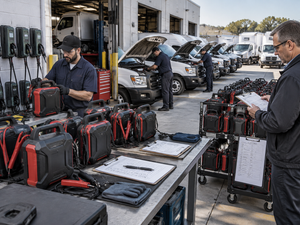
Fleet jump starters are used differently from ordinary consumer jump starters. A private driver may buy one unit for occasional emergency use, but a fleet operator may need multiple units across vehicles, service teams, warehouses, or maintenance stations.
This changes the buying criteria.
For fleet use, the key question is not only whether a jump starter can start a vehicle once. Fleet buyers also need to consider storage time, cold-weather readiness, maintenance frequency, charging discipline, safety, and long-term reliability.
Lithium jump starters are widely used and familiar in the market. Sodium-ion jump starters are a newer option, often positioned around low-temperature performance, safety stability, and long-standby emergency use.
This article compares sodium-ion and lithium battery options for fleet jump starter applications and explains what B2B buyers should check before selecting a product.

Why Fleet Use Is Different from Consumer Use
Fleet applications create more demanding management conditions than personal use.
A consumer jump starter may sit in one car and be used only during an emergency. A fleet jump starter may need to support multiple vehicles, different drivers, and varied storage environments.
Fleet use often involves:
- multiple vehicles across locations
- longer storage periods
- repeated emergency use
- exposure to outdoor or low-temperature conditions
- responsibility for maintenance and charging
- higher consequences if the product is not ready
For a fleet manager, a jump starter is not just an accessory. It is part of an emergency readiness system.
This means the battery type, standby behavior, charging interval, and safety design all become important selection factors.

Lithium Jump Starters for Fleet Use
Lithium jump starters are common because they are compact, lightweight, and supported by a mature supply chain.
For fleet buyers, lithium models can offer several advantages:
- easy portability
- wide model availability
- mature product designs
- familiar specifications
- lower learning curve for users
- good fit for general emergency use
A compact lithium jump starter can be stored in service vehicles, tool kits, or maintenance areas without taking up much space. For fleets operating in moderate climates, a well-designed lithium unit may be a practical choice.
However, lithium products should still be evaluated carefully for fleet use.
Cold weather may reduce battery output depending on cell quality and battery management design. Long storage may also affect readiness if users do not recharge the unit regularly. For fleets with multiple drivers, charging discipline can become a real issue.
If a jump starter is stored for months and not checked, it may not be ready when needed. This is one of the main concerns for commercial use.
For lithium models, fleet buyers should pay attention to low-temperature performance, self-discharge behavior, battery protection system, and recommended recharge intervals.
Sodium-Ion Jump Starters for Fleet Use
Sodium-ion jump starters offer a different positioning opportunity for fleet applications.
They are often considered for scenarios where buyers care about:
- cold-weather emergency readiness
- long standby storage
- safety-oriented battery chemistry
- reduced concern about long-term storage
- differentiated commercial emergency tools
For fleets operating in colder regions, low-temperature performance can be a major concern. Vehicles may be parked outdoors overnight, stored in open yards, or used in winter service environments. In these conditions, a jump starter that is designed for colder use can be more attractive.
Sodium-ion products can also be positioned around long-standby emergency readiness. This is relevant for fleet managers because emergency tools are not used every day, but they must work when needed.
For B2B buyers, sodium-ion should not be treated as a magic solution. Product claims should be supported by test data, clear specifications, and safety documents. But when the product evidence supports the positioning, sodium-ion can be a strong option for commercial and winter-focused use cases.
Sodium vs Lithium for Fleet Buyers
| Factor | Lithium Jump Starter | Sodium-Ion Jump Starter |
|---|---|---|
| Market maturity | Mature and widely recognized | Newer category with differentiation value |
| Weight and size | Usually compact and lightweight | May be slightly heavier depending on design |
| Cold-weather positioning | Depends on cell quality and BMS | Often positioned for stronger low-temperature readiness |
| Long storage | Requires regular charging attention | Suitable for long-standby positioning |
| User familiarity | Easy to explain | May require more education |
| Product differentiation | Strong but common | Stronger technology story for cold markets |
| Best fit | General fleet emergency use | Cold-region fleets and long-storage emergency applications |
 cold weather jump starter comparison
The right choice depends on fleet environment and product purpose. A lithium model may be suitable for general use where lightweight design and familiarity matter. A sodium-ion model may be more suitable when winter readiness, storage reliability, and differentiation are more important.
What Fleet Buyers Should Ask Suppliers
Fleet buyers should ask more detailed questions than ordinary consumers.
1. What is the standby time?
Since jump starters may remain unused for long periods, standby performance is important. Buyers should ask how long the unit can be stored before recharge is recommended.
2. Has the product been tested at low temperature?
For winter markets, room-temperature test data is not enough. Buyers should ask for low-temperature test conditions and available evidence.
3. What safety documents are available?
Battery products require proper documentation for transport, storage, and market entry. Buyers should check available safety and compliance documents before purchase planning.
4. What maintenance routine is required?
Fleet managers need to know whether the product must be recharged monthly, quarterly, or at another interval. A clear maintenance routine helps reduce emergency failure.
5. Is the product easy for drivers to use?
Fleet equipment may be used by different people, not just trained technicians. Clear instructions, simple clamps, status indicators, and safe operation design are important.
6. What after-sales support is available?
For commercial users, after-sales support matters. Buyers should ask about warranty terms, replacement parts, troubleshooting, and supplier response time.

Product Positioning for Commercial Channels
For commercial channels, the product should be positioned around real operating problems rather than only peak current.
Useful positioning angles include:
- winter emergency readiness
- long-storage backup power
- fleet maintenance support
- roadside emergency kits
- vehicle yard and warehouse readiness
- commercial vehicle support tools
For lithium models, messaging can focus on compact emergency use, mature technology, and easy portability.
For sodium-ion models, messaging can focus more on cold-weather use, safety stability, and long-standby reliability.
This distinction helps distributors and fleet buyers understand why both battery types may have a place in the market.
Product Line Strategy for Fleet and Commercial Buyers
A commercial product range does not need to rely on one battery type only.
A possible product strategy could include:
- lithium jump starters for general vehicle emergency use
- sodium-ion jump starters for cold-weather and long-storage applications
- higher-capacity models for larger vehicles or service teams
- compact models for individual drivers
- fleet-ready kits with chargers, storage cases, and user instructions
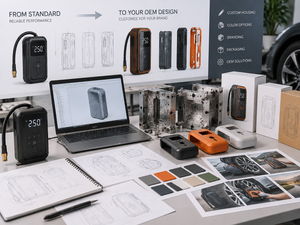
This approach allows buyers to match different fleet needs instead of forcing one model to cover all situations.
Conclusion
Fleet jump starter selection should go beyond peak amps and engine size claims. For commercial use, buyers need to consider storage time, charging discipline, low-temperature readiness, user safety, and maintenance responsibility.
Lithium jump starters remain practical for general fleet applications because they are compact, mature, and familiar. Sodium-ion jump starters offer a newer option for fleets that need stronger cold-weather positioning, long-standby emergency use, and a more differentiated battery story.
For B2B buyers, the best decision depends on where the fleet operates, how the product will be stored, who will use it, and how often it will be maintained.
A good fleet jump starter should not only be powerful. It should be ready when the vehicle needs it.