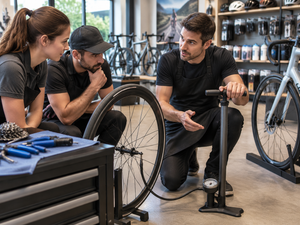
Electric bike pumps and manual bike pumps can both solve the same basic problem, but they offer very different user experiences.
For retailers, marketplace sellers, distributors, and cycling brands, the question is not simply which type is “better.” The more useful question is which pump fits the target customer, price range, riding scenario, and sales channel.
Electric pumps offer convenience and digital functions, while manual pumps remain attractive for simplicity, low maintenance, and dependable use without charging.
This comparison looks at the technical and commercial differences B2B buyers should understand before choosing a product line.
Inflation Method and User Experience
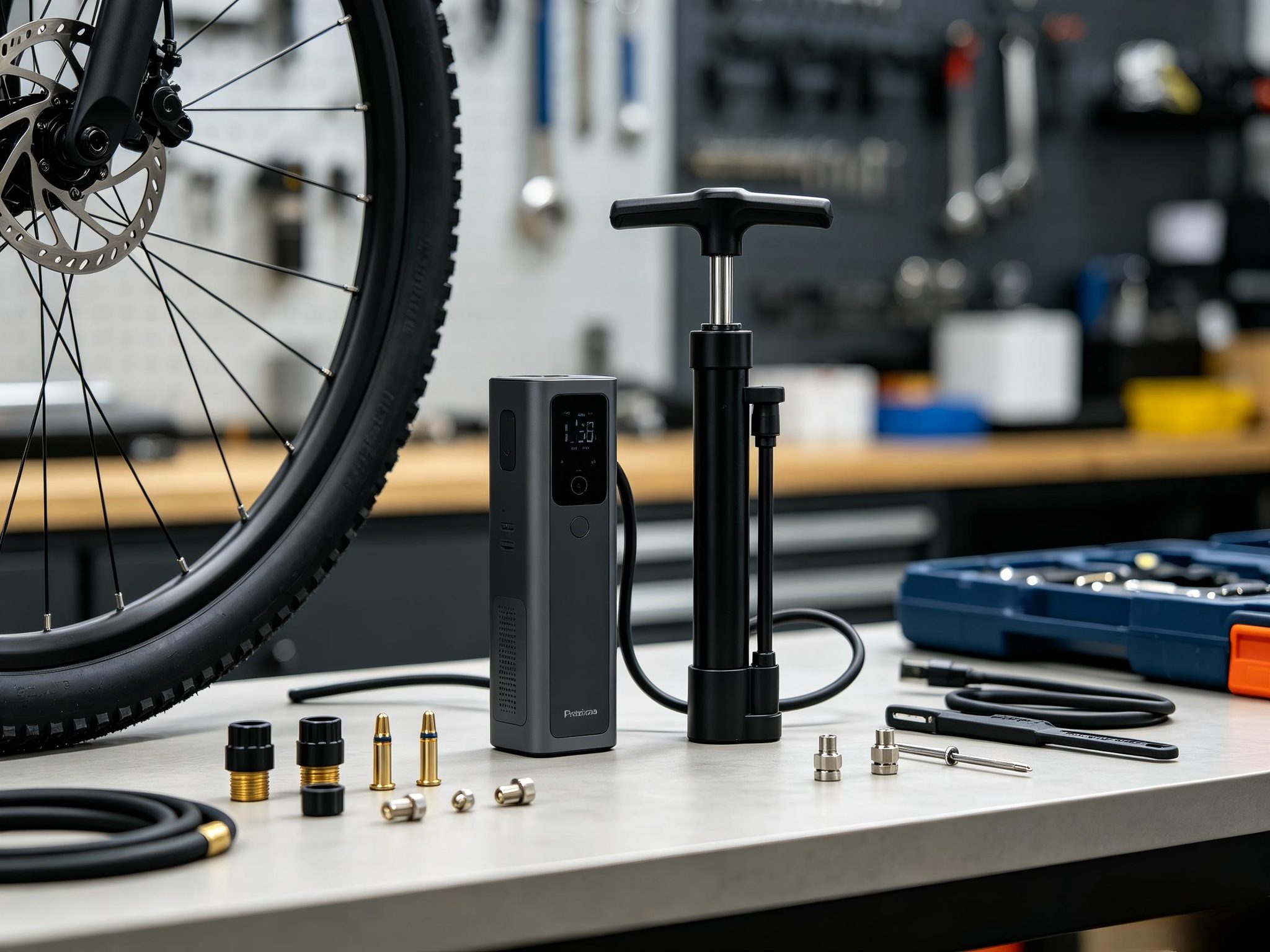
The most obvious difference is how the air is delivered.
A manual bike pump depends on the user to generate pressure through a piston or similar mechanical structure. Depending on the design, this may be a floor pump, mini hand pump, frame pump, or compact emergency pump.
An electric bike pump uses a motor, compressor system, electronics, and rechargeable battery to perform the inflation automatically.
For end users, this changes the experience significantly.
Electric models can reduce physical effort. Users normally connect the hose or pump head, set or monitor the target pressure, and let the unit inflate the tire.
Manual pumps require more physical input but are straightforward and familiar.
For retailers, this means the products appeal to different customers.
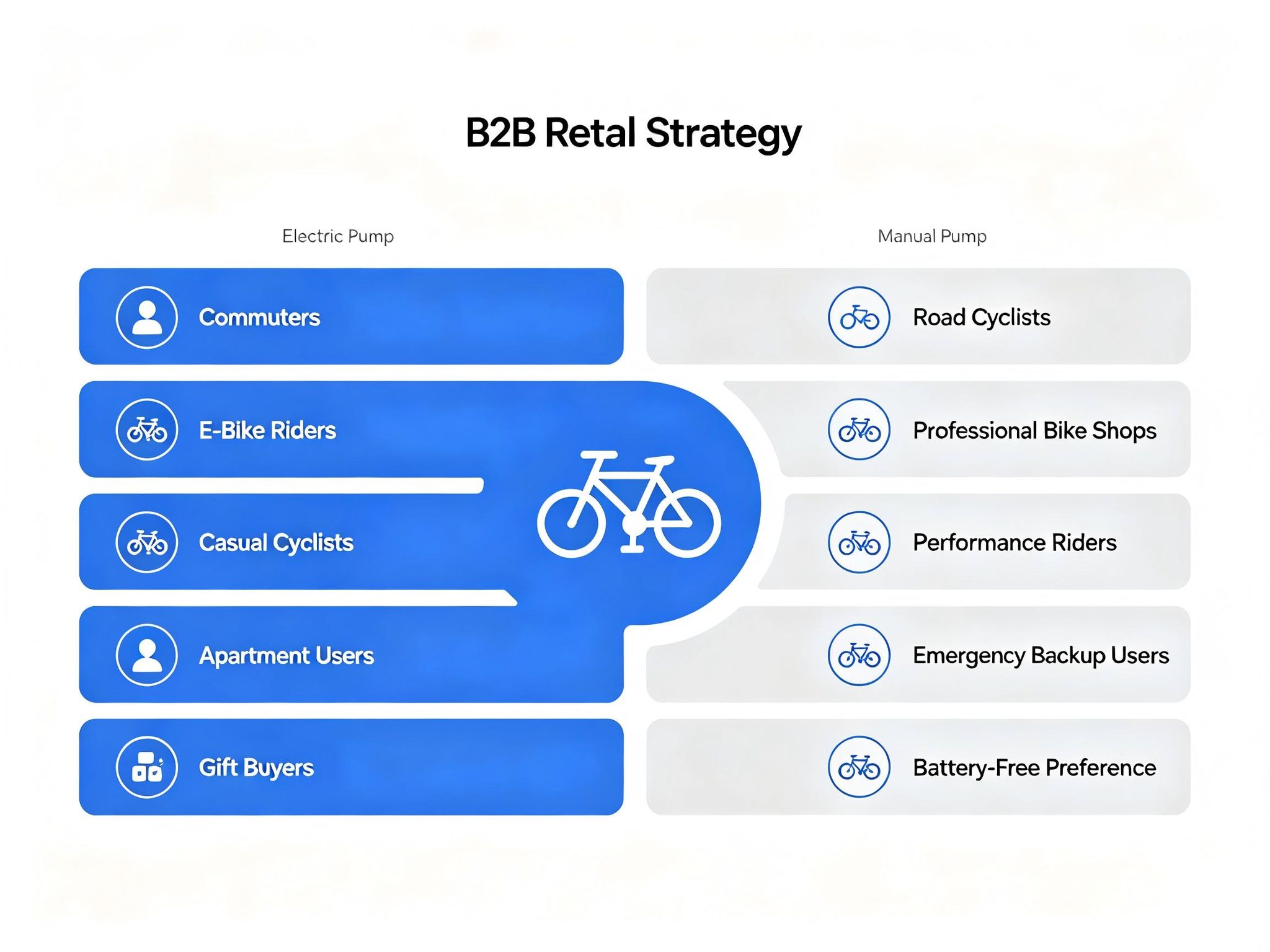
Electric pumps can be attractive to commuters, e-bike riders, casual cyclists, gift buyers, and customers who value convenience.
Manual pumps remain strong for riders who prefer simple equipment, do not want to manage battery charging, or need a dependable backup tool.
Inflation Speed, Pressure, and Air Volume
Maximum PSI alone is not enough to compare bike pumps.
Buyers should also consider how quickly the pump reaches useful pressure and how much air it moves during each inflation cycle.
Manual floor pumps can move relatively high air volume and are well suited to regular workshop or home use. High-pressure manual pumps can also be designed specifically for road bikes.
Compact hand pumps sacrifice some pumping efficiency in exchange for portability.
Electric bike pumps have a different performance profile.
Inflation speed depends on:
- motor performance
- cylinder or compressor design
- battery condition
- tire volume
- starting pressure
- target pressure
- temperature
- heat control
A compact electric pump may be convenient, but buyers should test how long it takes to inflate real bicycle tires rather than relying only on maximum pressure specifications.
Road bike, mountain bike, gravel bike, and e-bike tires can require different combinations of pressure and air volume.
For B2B buyers, realistic sample testing is more useful than comparing headline PSI numbers.
 high-pressure pumps for road bike shops
Pressure Control and Digital Features
Electric bike pumps can offer features that manual models normally do not.
These may include:
- digital pressure display
- PSI / BAR / KPA switching
- preset pressure
- automatic shut-off
- battery indicator
- LED light
- memory functions
- multiple inflation modes
These functions can make the product easier to explain in online listings and retail packaging.
Auto shut-off is particularly useful for customers who want a simple process. The user selects a target pressure and the pump stops automatically when that level is reached.
Manual pumps usually rely on an integrated gauge or a separate pressure gauge.
A high-quality floor pump with a large, readable gauge can still provide excellent pressure control, especially in bike shops and home workshops.
The difference is therefore not simply digital versus analog.
Buyers should evaluate pressure accuracy, display readability, gauge quality, preset logic, and repeatability in real use.
More features only add value when they work consistently.
Portability, Battery, and Maintenance
Manual mini pumps have a major advantage in portability.
They can be lightweight, compact, and stored on the bicycle frame, in a saddle bag, backpack, or repair kit. They also do not need charging.
Electric pumps add a battery, motor, circuit board, and charging system, so even compact models require more product management.
B2B buyers should check:
- battery capacity
- charging interface
- charging time
- standby behavior
- number of useful inflation cycles
- battery protection
- heat management
- storage instructions
Battery performance also becomes part of after-sales service.
A manual pump may mainly require inspection of seals, hose, pump head, or mechanical parts. An electric pump introduces additional areas such as battery condition, electronics, charging port, display, and motor system.
This does not automatically make electric pumps less reliable. It simply means the product has more components that need quality control.
For retailers, clear manuals and realistic battery specifications can reduce customer misunderstanding.
Durability and Different Use Scenarios
Manual pumps remain difficult to replace in some professional environments.
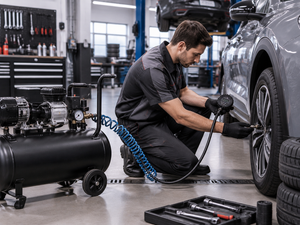
Bike shops often use floor pumps repeatedly throughout the day because they offer stable operation, high air volume, simple maintenance, and no charging downtime.
Electric bike pumps are better viewed as a complementary product in many cases rather than a universal replacement.
They can be particularly suitable for:
- commuting
- roadside bicycle emergencies
- apartment storage
- e-bike users
- casual riders
- travel
- gift products
- premium marketplace listings
Manual pumps remain attractive for:
- professional bike shops
- cyclists carrying emergency backup equipment
- high-frequency home use
- users who prefer mechanical simplicity
- situations where charging access is limited
For distributors, carrying both categories can create a stronger assortment because they solve different customer needs.
Which Pump Fits Different Retail Channels?
Channel positioning should influence the purchasing decision.
Electric bike pumps often work well for online marketplaces because digital features can be demonstrated clearly through photos and video.
A seller can visually explain:
- preset pressure
- automatic shut-off
- rechargeable battery
- compact size
- digital display
- valve compatibility
- multi-purpose nozzles
This creates strong product storytelling.
Traditional bike shops may benefit from carrying both electric and manual pumps.
Manual floor pumps can serve professional or high-frequency users, while compact electric models can be offered to customers looking for convenience.
For outdoor and performance cycling channels, lightweight manual pumps may remain important because battery-free reliability and small size can matter more than automation.
Retail buyers should therefore choose products according to customer segmentation rather than attempting to replace one category with the other.
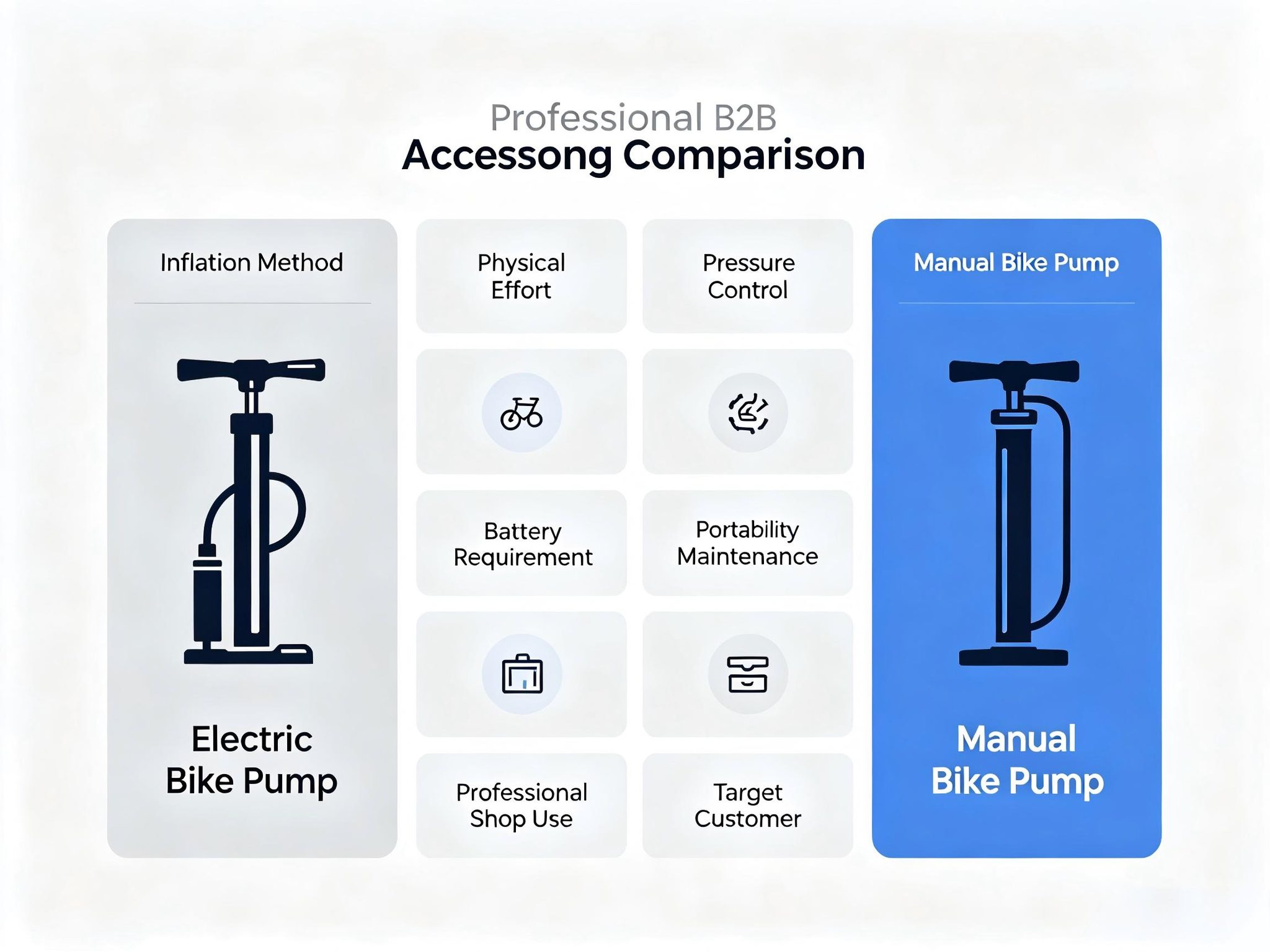
Quick Electric vs Manual Bike Pump Comparison
| Factor | Electric Bike Pump | Manual Bike Pump |
|---|---|---|
| Physical Effort | Low | Requires pumping |
| Power Source | Rechargeable battery | User-powered |
| Pressure Display | Often digital | Gauge on selected models |
| Auto Shut-Off | Common on digital models | Usually not available |
| Portability | Compact, but includes battery | Mini pumps can be extremely light |
| Maintenance | Battery + electronics + air system | Mainly mechanical parts |
| High-Frequency Shop Use | Depends on model and duty cycle | Floor pumps remain strong |
| Online Product Storytelling | Strong | More function-focused |
| Best Fit | Convenience-focused customers | Simplicity and reliability-focused users |
Conclusion
Electric and manual bike pumps serve different customers rather than competing on one simple performance metric.
Electric bike pumps provide convenience, digital pressure control, rechargeable operation, and features that can support premium retail and marketplace positioning.
Manual pumps offer mechanical simplicity, battery-free operation, easy maintenance, and strong suitability for professional shops, cyclists, and users who value dependable basic equipment.
For B2B buyers, product selection should consider inflation performance, real tire compatibility, pressure accuracy, battery performance, portability, durability, maintenance, and channel positioning.
In many markets, the strongest product strategy is not choosing electric or manual exclusively. It is building a product range where each type has a clear customer and use case.
YANTU supports electric and manual bike pump projects for retailers, distributors, marketplace sellers, and private label brands. If you are planning a bike pump product line, our team can help discuss product configuration, sample testing, valve compatibility, packaging, customization, and bulk production requirements.