Accuracy is one of the most important specifications when buyers compare digital and analog tire inflators. For auto shops, retailers, and tool brands, the question is not only which gauge looks better. The real question is which type provides more consistent pressure readings in actual use.
Both digital and analog tire inflators can be useful. The better choice depends on accuracy requirements, working environment, maintenance expectations, and the target customer group.
This article explains what B2B buyers should check when comparing digital tire inflator accuracy with analog tire inflator performance.

Gauge Type Does Not Decide Accuracy Alone
Many buyers assume that digital tire inflators are automatically more accurate than analog models. This is not always true.
A digital display can make the reading easier to see, but the accuracy still depends on the pressure sensor, calibration, internal air path, sealing structure, and manufacturing quality. An analog tire inflator can also provide reliable readings if it uses a quality pressure gauge and is properly calibrated.
For B2B buyers, this means the gauge type should not be the only selection standard. Buyers should ask suppliers about the actual accuracy tolerance, test method, and calibration process. A tire inflator with a digital screen but poor sensor quality may not perform better than a well-made analog gauge.
The purchasing meaning is simple: compare measured performance, not only product appearance.
Digital Displays Improve Readability
One clear advantage of digital tire inflators is readability.
A digital screen shows pressure values directly, which can reduce reading errors. This is useful in busy auto shops, roadside service, and retail products designed for general consumers. Users do not need to judge needle position or read small scale marks.
Digital displays are especially helpful when the product is used in low-light environments or when operators need faster readings. Some models also include backlight displays, preset pressure values, or auto shut-off functions.
For buyers, this can improve user experience and reduce complaints caused by misunderstanding the pressure reading. If the target market includes ordinary car owners, new users, or retail consumers, digital tire inflators may be easier to promote.
However, readability is not the same as technical accuracy. A clear display helps users read the number, but the number still needs to come from a reliable pressure sensor.
Analog Gauges Offer Simple and Familiar Operation
Analog tire inflators remain common in auto shops because they are simple, familiar, and easy to understand for professional users.
Many mechanics and shop operators are used to reading analog gauges. For professional environments, the needle movement can give a quick visual sense of pressure changes during inflation or pressure release.
Analog models may also be preferred when buyers want a simple structure without batteries, screens, or electronic components. This can be useful for workshops that value durability, easy maintenance, and lower replacement cost.
From a purchasing perspective, analog tire inflators can still be a strong choice for professional users if the gauge is well-built and clearly marked. The key is to check the gauge quality, pressure range, and accuracy tolerance instead of assuming analog means outdated.
Calibration Matters More Than Display Style
For both digital and analog tire inflators, calibration is one of the most important factors behind accuracy.
A tire inflator may be accurate when it leaves the factory, but pressure readings can shift over time due to vibration, impact, frequent use, temperature changes, or internal wear. This is especially important for auto shops where tools are used repeatedly every day.
B2B buyers should ask suppliers several practical questions:
- What is the stated accuracy tolerance?
- Is the inflator tested before shipment?
- Can the supplier provide inspection standards?
- Is calibration required during long-term use?
- How should the product be handled if the reading becomes inaccurate?
For retailers and brands, these questions help reduce after-sales risk. For auto shops, calibration affects daily service quality. A tire inflator that cannot hold consistent readings may cause customer complaints or rework.
In a precise tire inflator comparison, calibration support is often more important than whether the display is digital or analog.

Working Environment Affects the Better Choice
The right tire inflator depends on where and how it will be used.
For retail customers, a digital tire inflator may be easier to sell because it looks modern and gives clear pressure readings. For online sellers, digital features such as LCD display, preset pressure, and auto shut-off are also easier to explain in product images and listing bullet points.
For auto shops, the decision may be different. Shops may value durability, fast operation, pressure release control, and repairability. Some operators prefer analog inflators because they are simple and familiar. Others may prefer digital models if they improve speed and reduce reading errors.
For distributors, this means both types can fit different channels:
| Buyer Type | Better Fit | Purchasing Reason |
|---|---|---|
| Retail consumers | Digital tire inflator | Easy reading and modern appearance |
| Auto shops | Digital or analog | Depends on workflow and durability needs |
| Tool brands | Both options | Different models for different price levels |
| Online sellers | Digital tire inflator | Easier to explain in listing content |
| Regional distributors | Mixed product line | Covers different customer preferences |
Instead of choosing one type for every market, buyers can build a product line with both digital and analog options.

What Buyers Should Check Before Ordering
Before placing bulk orders, buyers should compare more than the display type.
Important points include:
- pressure range
- accuracy tolerance
- gauge or sensor quality
- calibration method
- display readability
- durability of the housing
- air hose and connector quality
- pressure release function
- packaging and instruction clarity
For digital tire inflators, buyers should also check battery or power requirements, screen visibility, and electronic component reliability. For analog tire inflators, buyers should check scale clarity, needle stability, and gauge protection.
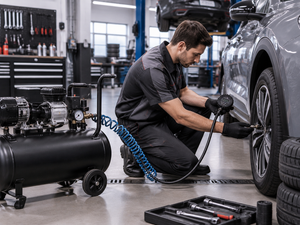
Sample testing is important. Buyers should test the inflator under real working conditions instead of relying only on catalog specifications. If the product is intended for auto shops, repeated use testing is especially important.
 professional tire inflator with gauge
Quick Comparison Table
| Factor | Digital Tire Inflator | Analog Tire Inflator |
|---|---|---|
| Readability | Clear number display | Requires reading scale marks |
| User Experience | Easier for general users | Familiar for professional users |
| Accuracy Source | Sensor and calibration | Gauge quality and calibration |
| Maintenance | May involve electronic parts | Simpler mechanical structure |
| Retail Appeal | Stronger modern appearance | More traditional tool image |
| Best Fit | Retail, online sales, mixed users | Shops, workshops, professional users |
Conclusion
Digital and analog tire inflators can both be accurate if they are well-designed and properly calibrated. The key difference is not only the display style, but how the product performs in real use.
For B2B buyers, digital tire inflator accuracy should be evaluated together with sensor quality, calibration, readability, durability, and target customer needs. Analog tire inflators should also be judged by gauge quality, scale clarity, and long-term stability.
The best choice depends on the sales channel. Retail and online customers may prefer digital models because they are easier to understand. Auto shops may choose digital or analog depending on workflow, durability needs, and operator preference.
YANTU supports tire inflator projects for retailers, distributors, auto tool brands, and OEM customers. If you are comparing digital and analog tire inflator options for your product line, our team can help discuss specifications, packaging, sample testing, and bulk order requirements.