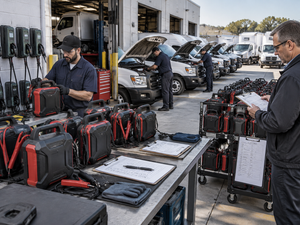
When sourcing a sodium jump starter, buyers do not always need to begin with a completely new product design.
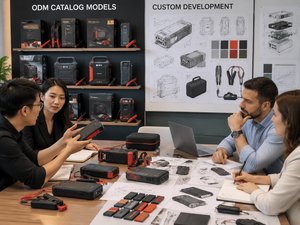
Many ODM manufacturers already have existing product platforms that can be selected from a catalog and adapted with branding, packaging, accessories, or selected configuration changes.
For other brands, however, an existing catalog model may not provide enough differentiation.
This creates an important sourcing decision:
Should the buyer launch from an existing ODM catalog platform, or invest in deeper custom development?
The answer depends on launch timing, budget, expected order volume, product positioning, engineering resources, and how much differentiation the brand actually needs.
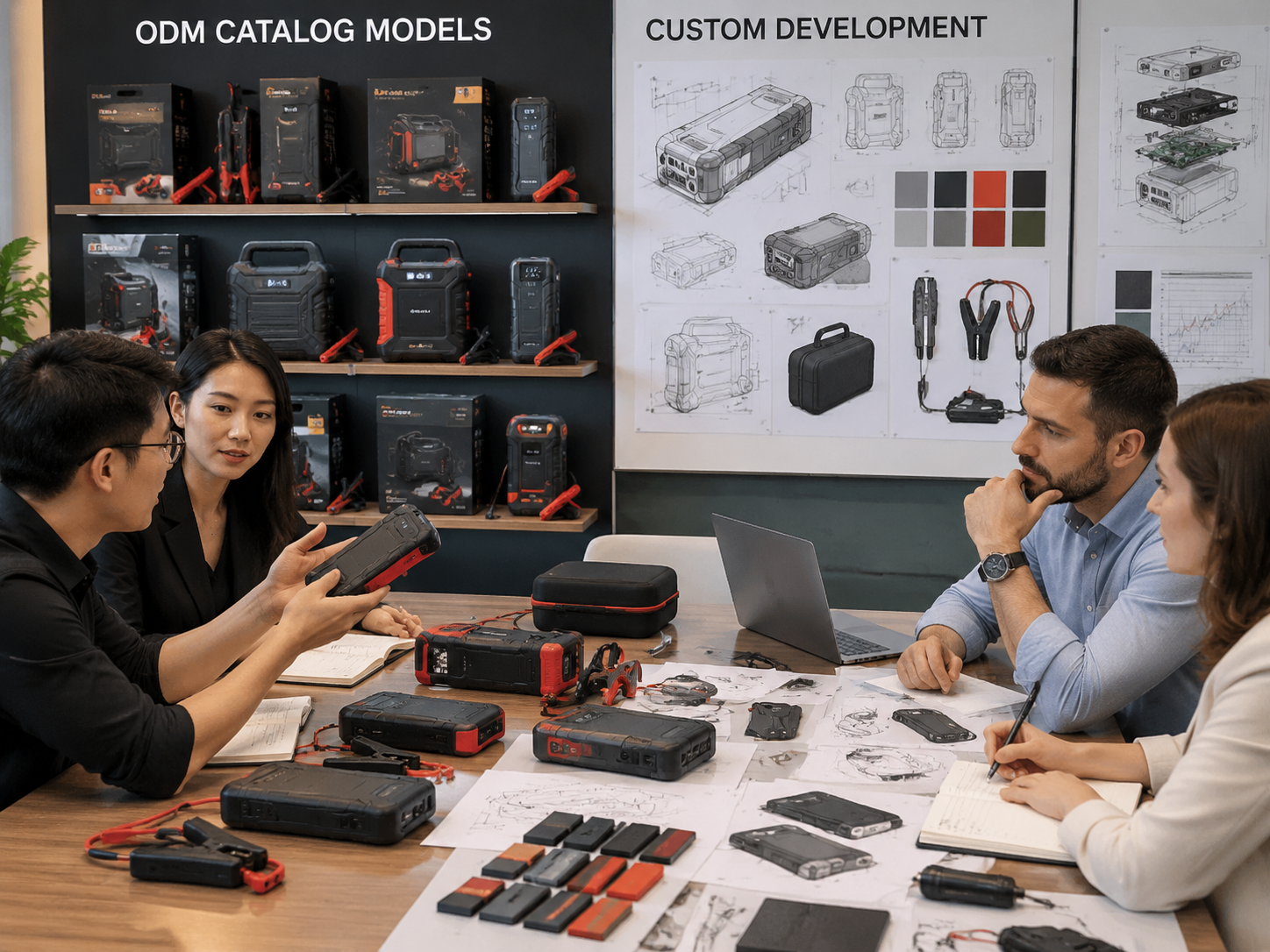
What a Catalog ODM Sodium Jump Starter Means
A catalog ODM product is based on a platform the manufacturer has already developed.
The main product architecture already exists. Depending on the model, this may include:
- battery system
- housing
- PCB and protection circuit
- smart clamps
- cables
- charging interface
- display or indicators
- emergency light
- output ports
- accessory configuration
The buyer selects a suitable model and then discusses which commercial elements can be customized.
This approach is particularly useful when the main objective is to enter the market without creating an entirely new engineering project.
The product still needs sample evaluation, specification confirmation, packaging approval, and appropriate documentation. “Catalog product” should not mean ordering without testing.
For B2B buyers, the advantage is that development begins from an existing platform instead of a blank page.
Catalog Does Not Mean No Customization
A common misunderstanding is that an off-the-shelf ODM product must remain completely standard.
In practice, many catalog projects can still include private label customization.
Depending on the supplier and order quantity, possible options may include:
- logo
- housing color
- retail packaging
- instruction manual
- warning labels
- barcode labels
- storage case
- accessory kit
- charging cable
- clamp or cable options
- carton markings
- selected software or interface settings where supported
This can be enough differentiation for many retailers, distributors, and marketplace sellers.
For example, two brands may use the same basic product platform but create different commercial products through packaging, accessory configuration, color, channel positioning, and after-sales support.
The important question is not whether the base platform already exists.
It is whether the final configuration fits the buyer’s customer and sales channel.
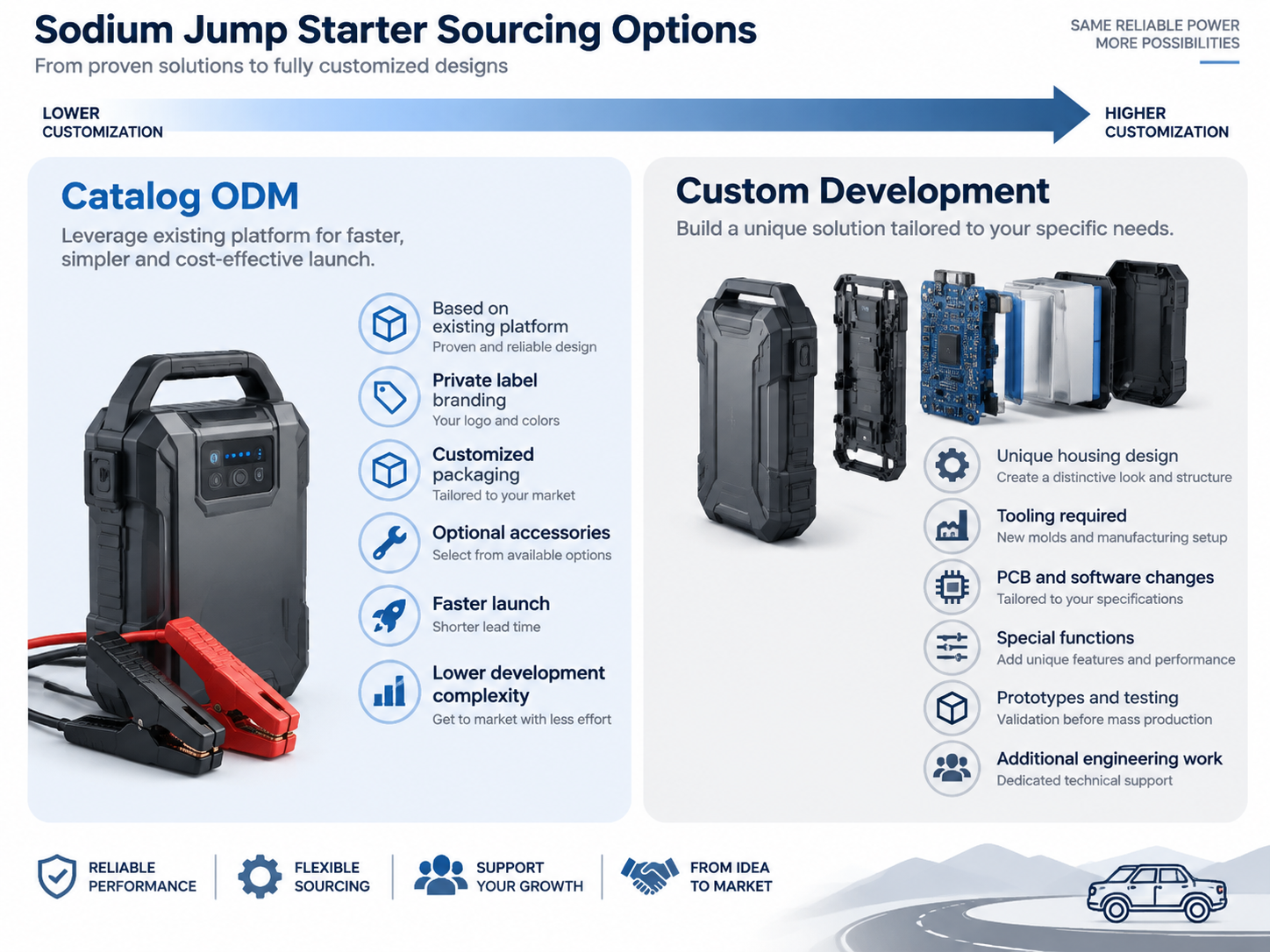
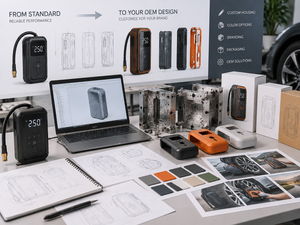
When Custom Development Becomes Necessary
Deeper development begins when the buyer requests changes that the existing platform cannot support easily.
Examples may include:
- unique outer housing
- exclusive industrial design
- different internal layout
- new display position
- new button structure
- custom smart clamp
- different cable architecture
- new charging interface
- additional output functions
- PCB modification
- software changes
- different battery configuration
- proprietary accessory storage
At this point, the project moves beyond normal catalog selection.
The supplier may need engineering work, prototypes, tooling, component changes, trial production, and additional validation.
For buyers, this is where the discussion should change from:
“Can you customize this model?”
to:
“Which requested changes use existing solutions, and which changes require new development?”
That distinction helps prevent unexpected cost and lead-time changes later.
Battery Products Require More Than Cosmetic Development
A sodium jump starter is not simply a molded plastic product.
The finished unit combines several systems, including:
- battery pack
- battery management and protection
- PCB
- charging circuit
- starting output
- smart clamps
- cables
- connectors
- housing
- controls
- lighting
- device-charging outputs
Changing one area can affect another.
For example, a new housing may change the available battery space or internal mounting structure. A different output function may require electrical or software changes. A new clamp or cable configuration may affect the complete starting system.
Because of this, custom development should be evaluated at the finished-product level.
B2B buyers should not assume that changing one visible feature is automatically isolated from the rest of the design.
Catalog vs Custom: Cost, MOQ, and Lead Time
The deeper the development, the more resources the project normally requires.
A useful comparison is:
| Factor | Catalog ODM Platform | Deeper Custom Development |
|---|---|---|
| Product Base | Existing platform | Existing platform modified or new design |
| Launch Speed | Generally faster | Generally longer |
| Development Cost | Lower | Higher |
| Tooling | Often limited or unnecessary | May require new tooling |
| MOQ | Usually more flexible | May increase with custom components |
| Product Uniqueness | Moderate | Stronger |
| Engineering Work | Limited | More extensive |
| Sample Process | Configuration confirmation | Prototype + trial + validation |
| Project Risk | Lower if platform is mature | Higher as changes increase |
| Best Fit | Market testing, private label, distributors | Long-term brand differentiation |
These are general project patterns rather than fixed rules.
Actual requirements depend on the model, requested modifications, supplier capability, component availability, tooling, and production planning.
This is why buyers should request a clear customization breakdown instead of assuming that all ODM projects follow the same MOQ or lead time.
A Hybrid Strategy Can Be More Practical
The decision does not always need to be catalog or custom from the beginning.
Some brands can use a staged approach.
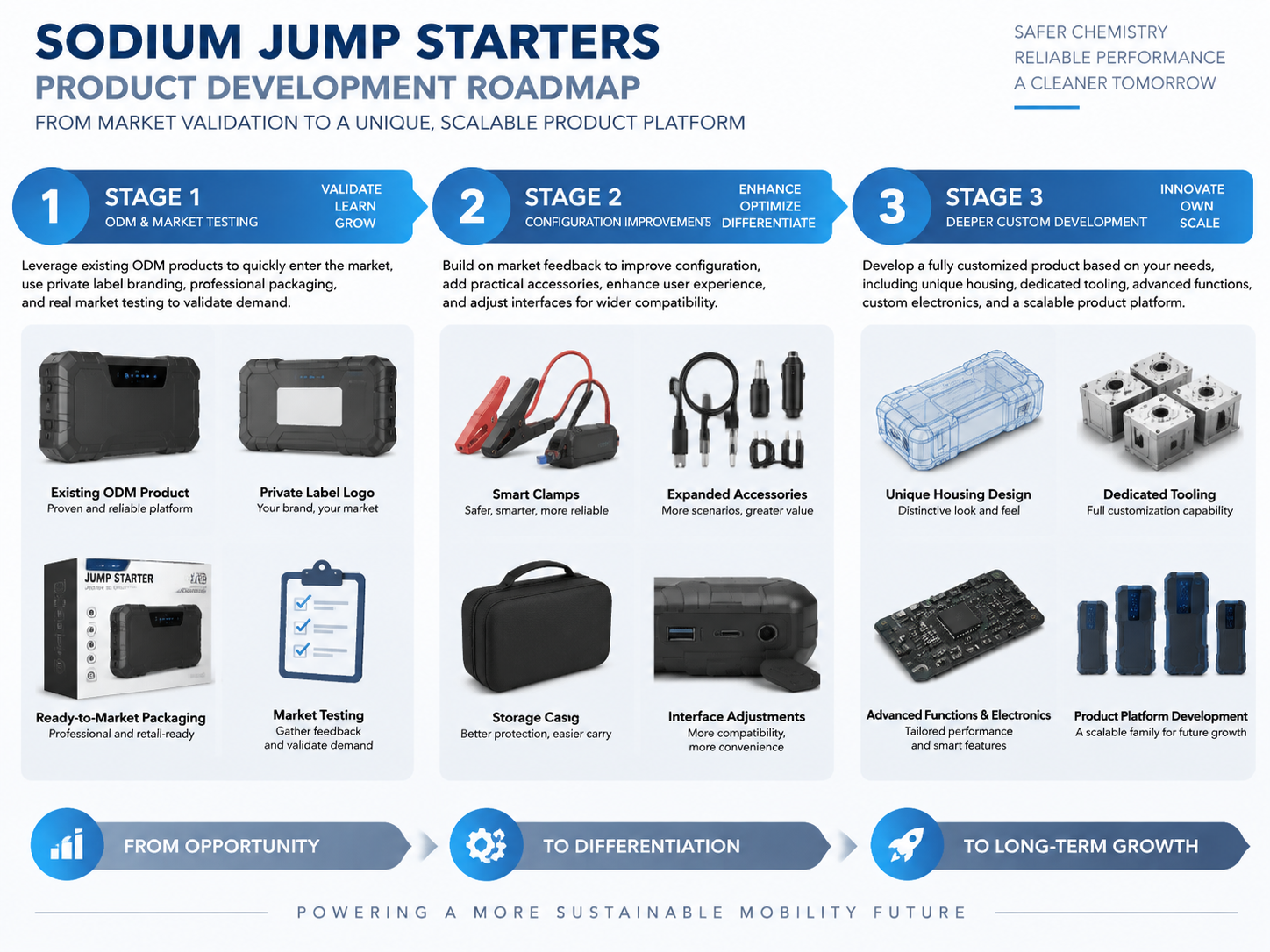
Stage 1: Launch from an existing platform
Select an existing sodium jump starter, then customize areas such as:
- logo
- packaging
- manual
- accessories
- color
- listing content
The goal is to test the channel and collect market feedback.
Stage 2: Improve the commercial configuration
After initial sales, the brand may adjust:
- clamps
- accessories
- case
- interface
- packaging
- product positioning
Stage 3: Invest in deeper development
If volume and customer feedback justify it, the brand may then develop:
- exclusive housing
- custom interface
- special functions
- proprietary accessories
- deeper structural changes
This approach can reduce the risk of investing heavily before the market has been validated.
For buyers entering a newer product category, it can be more practical than trying to create a completely exclusive product immediately.
Product Differentiation Is More Than a New Housing
Brands sometimes assume that custom development must mean creating a visibly different shell.
But differentiation can come from several areas.
A product may become more competitive through:
- better accessory selection
- clearer packaging
- stronger clamp usability
- better storage organization
- improved instructions
- suitable charging outputs
- channel-specific configurations
- reliable product data
- consistent after-sales support
For marketplace sellers, product-page clarity and accessory configuration may be more important than a completely exclusive structure.
For established automotive brands, unique appearance and long-term platform control may justify deeper development.
Customization should therefore follow the commercial strategy rather than become the objective by itself.
 sodium jump starter listing audit
What Buyers Should Ask an ODM Supplier
Before choosing between catalog and custom development, buyers should ask:
- Which sodium jump starter platforms are already available?
- Which configurations are already in production?
- What can be customized without new tooling?
- Which color, packaging, and accessory options already exist?
- Which requests require engineering work?
- Which changes require a new mold?
- Which changes require PCB or software modification?
- Can the existing battery and starting system remain unchanged?
- What sample process applies to catalog customization?
- What prototype process applies to custom development?
- How does customization affect MOQ?
- How does customization affect lead time?
- What testing needs to be repeated after major changes?
- How will the final approved configuration be controlled during production?
- Can the platform support future upgrades?
These questions help buyers understand what they are actually paying for.
Quick Decision Guide
Choose a catalog ODM platform when:
- speed is important
- the market is still being tested
- budget is controlled
- private label differentiation is sufficient
- existing performance meets the product requirement
Consider deeper custom development when:
- product exclusivity matters
- the brand needs a unique structure
- existing models cannot support required functions
- expected volume can justify tooling and development
- the product is part of a longer-term brand roadmap
Neither approach is automatically better.
The correct choice is the one that matches the business case.
Conclusion
Catalog ODM sodium jump starters can provide a practical route for brands that need faster market entry and lower development complexity.
Existing products can still support meaningful differentiation through branding, packaging, accessories, color, and selected configurations.
Deeper custom development becomes more relevant when the buyer needs exclusive appearance, structural changes, new electronics, different functions, or long-term product control.
For B2B buyers, the key is to separate commercial customization from engineering development before asking for pricing and MOQ.
That makes it easier to compare cost, lead time, project risk, and the real value of each requested change.
YANTU supports sodium jump starter projects ranging from catalog-based private label solutions to deeper product development. If you are deciding between an existing ODM platform and a customized sodium jump starter project, our team can help discuss product configuration, samples, packaging, accessories, engineering requirements, and bulk production planning.