Camping power products are becoming more diverse. Some buyers choose portable power stations for campsite energy, while others consider multi-function jump starters for car emergency use and small-device charging.
For B2B buyers, the key question is not which product is “better” in general. The real question is which product fits the target customer, sales channel, price level, and use scenario.
This article compares sodium jump starters and portable power stations from a practical camping power purchasing perspective.

Why Camping Power Products Need Clear Positioning
Camping power products can serve different needs. Some customers want to power laptops, lights, fans, or small appliances for a full campsite. Others mainly want emergency starting support, phone charging, and a compact backup tool for vehicle-based travel.
If these needs are mixed together, product positioning becomes unclear.
A sodium jump starter should not be presented as a full replacement for a large portable power station. At the same time, a portable power station is usually not the most compact solution for emergency vehicle starting.
For B2B buyers, clear positioning helps avoid wrong customer expectations. It also helps sellers decide what to emphasize in product images, packaging, and listing content.
The purchasing meaning is simple: match the product with the real camping use case before comparing specifications.
Sodium Jump Starter: Emergency Starting Plus Small-Device Charging
A sodium jump starter is mainly designed for vehicle emergency starting. In camping scenarios, this is useful for drivers who travel by car, SUV, van, or off-road vehicle.
Many jump starters also support small-device charging through USB outputs and may include emergency lighting. This makes them suitable for short camping trips, roadside emergencies, winter travel, and vehicle emergency kits.
For camping channels, the key value of a sodium jump starter is not large energy storage. Its value is compact emergency readiness.
Typical use cases include:
- starting a vehicle battery in an emergency
- charging a phone or small device
- supporting roadside lighting
- storing in a vehicle emergency kit
- preparing for cold-weather travel
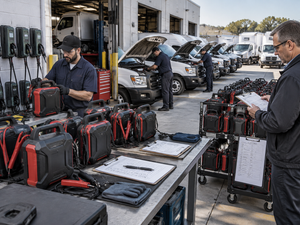
- supporting fleet or service vehicles during outdoor work
For B2B buyers, sodium battery technology can add a stronger safety and low-temperature story. This can help differentiate the product from standard lithium jump starters in safety-sensitive or winter-focused markets.

Portable Power Station: Larger Capacity for Campsite Power
A portable power station is usually designed for larger energy needs.
It can support camping lights, laptops, cameras, fans, small appliances, and other devices depending on capacity and output configuration. For customers who stay at a campsite for longer periods, a portable power station may be more suitable than a jump starter.
The main advantage is capacity. A power station can usually provide longer power supply and more output options than a compact jump starter.
However, this also means larger size, higher weight, higher cost, and different channel positioning. A portable power station is often purchased as outdoor power equipment, not as a simple automotive emergency accessory.
For B2B buyers, this difference is important. If the target channel is outdoor camping stores, a portable power station may be easier to explain as campsite power. If the target channel is automotive emergency, a sodium jump starter may be more relevant.
Size, Weight, and Storage Differences
Size and weight strongly affect how customers use camping power products.
A sodium jump starter is usually more compact and easier to keep in a vehicle. It can fit into a glove box, trunk, emergency kit, or service vehicle storage space. This makes it suitable for drivers who want a backup tool without carrying a larger power device.
A portable power station is usually larger and heavier. It may be acceptable for planned camping trips, RV use, outdoor work, or family camping, but it is less convenient as a small emergency tool.
For purchasing teams, size affects:
- retail shelf placement
- shipping cost
- packaging design
- storage convenience
- product photography
- customer use scenarios
A smaller product is easier to position as an emergency accessory. A larger product can support premium outdoor power positioning but needs clearer capacity and output explanation.

Which Product Fits Different Sales Channels?
Different channels may need different camping power products.
| Sales Channel | Better Fit | Purchasing Meaning |
|---|---|---|
| Automotive accessory stores | Sodium jump starter | Strong vehicle emergency use |
| Outdoor camping retailers | Portable power station | Clear campsite power positioning |
| Amazon sellers | Both options | Depends on listing angle and price segment |
| Fleet emergency kits | Sodium jump starter | Compact vehicle backup tool |
| RV and overlanding channels | Both options | Jump starter for emergency, power station for power supply |
| Gift and promo channels | Sodium jump starter | More compact and easier to bundle |
For B2B buyers, the strongest strategy may not be choosing only one category. A distributor or brand can position sodium jump starters and portable power stations for different customer needs.
The jump starter can cover emergency starting and compact vehicle preparedness. The power station can cover longer campsite power supply.
What Buyers Should Check Before Ordering
Before choosing a sodium jump starter or portable power station for camping-related channels, buyers should compare real use requirements.
Important questions include:
- Is the main use vehicle emergency or campsite power?
- What devices should the product support?
- How much capacity is required?
- Is vehicle jump starting necessary?
- What size and weight will the customer accept?
- What safety features are included?
- What temperature range is required?
- What accessories are included?
- Can the supplier support packaging or private label requirements?
- Can samples be tested before bulk orders?
For sodium jump starters, buyers should confirm starting capability, battery chemistry, output ports, safety protections, lighting function, and storage guidance.
For portable power stations, buyers should confirm capacity, output types, charging methods, runtime, and battery management.
The best purchasing decision depends on the target scenario, not only the largest capacity or the lowest price.
Quick Comparison Table
| Factor | Sodium Jump Starter | Portable Power Station |
|---|---|---|
| Main Function | Vehicle emergency starting | Campsite power supply |
| Secondary Use | Phone charging, light, emergency backup | Device charging and appliance power |
| Size and Weight | Compact and vehicle-friendly | Larger and heavier |
| Best Scenario | Road trips, emergency kits, winter travel | Camping, RV, outdoor work |
| Channel Fit | Automotive, fleet, marketplace, emergency | Outdoor, RV, camping, premium retail |
| Buyer Focus | Starting power, safety, portability | Capacity, outputs, runtime |
 sodium jump starter product options
Conclusion
Sodium jump starters and portable power stations serve different camping power needs. A sodium jump starter is best positioned as a compact vehicle emergency tool with small-device charging and safety-focused battery technology. A portable power station is better positioned as a larger campsite power supply for longer outdoor use.
For B2B buyers, the right choice depends on the sales channel and customer expectation. Automotive channels may prefer sodium jump starters for emergency readiness, while outdoor camping channels may need portable power stations for extended power supply.
Instead of comparing only capacity or price, buyers should compare function, portability, storage, battery safety, and channel fit.
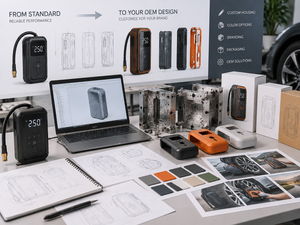
YANTU supports sodium jump starter projects for marketplace sellers, automotive retailers, distributors, fleet channels, and OEM customers. If you are developing multi-function jump starter products for camping, emergency, or outdoor channels, our team can help discuss specifications, packaging, sample testing, and bulk order requirements.