For auto shops, tire inflation is not only about adding air. In many daily service situations, technicians also need to reduce pressure, fine-tune readings, or adjust tires after overinflation.
This is where a bleeder valve becomes useful. A tire inflator with bleeder valve allows the operator to release air in a controlled way without removing the chuck from the tire valve.
This article explains what a bleeder valve does, why auto shops may need it, and what B2B buyers should check before choosing professional tire inflators for shop use.

What Is a Bleeder Valve on a Tire Inflator?
A bleeder valve is a pressure release feature built into a tire inflator or tire pressure tool. Its function is simple: it lets the user release air from the tire while monitoring the pressure reading.
Without a bleeder valve, a technician may need to disconnect the inflator, press the tire valve manually, then reconnect the tool to check pressure again. This process can be slow and less accurate, especially when a shop handles many vehicles every day.
With a bleeder valve, the technician can inflate, release, and fine-tune tire pressure in one connected workflow.
For B2B buyers, the purchasing meaning is clear. A bleeder valve is not just an extra button. It can improve pressure adjustment speed and make the tool more suitable for professional service environments.

Why Auto Shops Need Controlled Pressure Release
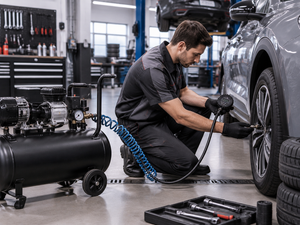
In real shop use, tires are not always inflated perfectly on the first attempt. A technician may slightly overinflate a tire, then release air to reach the correct pressure. This is common when working quickly or when adjusting multiple tires.
Controlled pressure release helps in several situations:
- correcting overinflation
- matching pressure across four tires
- preparing vehicles after tire repair
- adjusting pressure for customer preference
- checking tire pressure during routine service
For auto shops, small workflow details matter. If pressure adjustment is slow, technicians lose time. If pressure adjustment is rough, the final reading may be less consistent.
A pressure release inflator for shop use can help technicians work more smoothly. It allows fine adjustment instead of repeated disconnecting and reconnecting.
For purchasing, this means buyers should consider how often the tool will be used, not only whether it can inflate a tire.
Bleeder Valves Improve Shop Workflow
In a professional shop, tools are used repeatedly throughout the day. A small feature can become valuable if it saves time on every vehicle.
A bleeder valve can make the workflow cleaner:
- connect the chuck to the tire valve
- inflate to the target pressure
- release small amounts of air if needed
- confirm the final reading
- move to the next tire
This is faster than removing the tool each time pressure needs adjustment.
For shops that handle tire rotation, tire repair, fleet maintenance, or seasonal tire service, this function can be especially useful. It supports a more efficient service process and reduces repeated manual steps.
For B2B buyers, the value is not only technical. It is also operational. A tire inflator with bleeder valve may help improve service speed, technician convenience, and overall tool usability.
Accuracy Still Depends on the Gauge and Calibration
A bleeder valve helps control pressure, but it does not guarantee accuracy by itself.
The final pressure reading still depends on the gauge quality, pressure sensor, calibration, air sealing, and connector design. If the gauge is inaccurate, the bleeder valve only helps the user adjust toward an unreliable reading.
This is important for buyers comparing professional tire inflators.
Before ordering, buyers should ask:
- What is the pressure accuracy tolerance?
- Is the gauge analog or digital?
- How is the product calibrated before shipment?
- Is the hose connection stable?
- Does the bleeder valve release air smoothly?
- Is the gauge easy to read during pressure release?
For auto shops, a good bleeder valve should work together with a reliable gauge. The feature is most valuable when the user can release air gradually and read the pressure clearly at the same time.
Not Every Market Needs the Same Configuration
A bleeder valve is useful, but not every tire inflator buyer needs the same product configuration.
For professional auto shops, service centers, and tire repair businesses, a bleeder valve can be an important feature. These users care about speed, pressure consistency, and repeated use.
For casual retail consumers, the feature may be less important. Many home users only need simple inflation, digital display, and auto shut-off. They may not understand or use a bleeder valve frequently.
For distributors and tool brands, this creates different product positioning options:
| Buyer Type | Bleeder Valve Value | Purchasing Meaning |
|---|---|---|
| Auto shops | High | Supports faster pressure adjustment |
| Tire service centers | High | Useful for repeated daily work |
| Fleet maintenance teams | Medium to high | Helps standardize tire pressure |
| Retail consumers | Medium or low | May prefer simple operation |
| Tool brands | Depends on product tier | Suitable for professional model lines |
For B2B buyers, the best choice depends on target users. A bleeder valve can help position the product as a more professional tire inflator, but it should match the channel and customer expectations.
What Buyers Should Check Before Ordering
Before selecting a tire inflator with bleeder valve, buyers should evaluate the complete tool design.
Important points include:
- bleeder valve position
- pressure release control
- gauge readability
- hose length and flexibility
- chuck quality
- handle comfort
- air sealing performance
- housing durability
- packaging and instruction clarity
The bleeder valve should be easy to operate with one hand. It should release air smoothly, not suddenly. The gauge should remain visible while the user adjusts pressure.
For bulk orders, sample testing is important. Buyers should test whether the valve feels durable, whether the pressure release is stable, and whether the tool is comfortable for repeated shop use.
For brands and distributors, it is also useful to decide whether the bleeder valve should be highlighted on packaging. If the product targets professional users, this feature can become a clear selling point.
 professional tire inflator with gauge
Quick Comparison Table
| Factor | Tire Inflator with Bleeder Valve | Tire Inflator without Bleeder Valve |
|---|---|---|
| Pressure Adjustment | Easier fine-tuning | May require disconnecting |
| Shop Workflow | Faster for repeated service | Simpler but less efficient |
| Professional Use | Strong fit for auto shops | Better for basic inflation |
| User Skill | Suitable for trained operators | Easier for casual users |
| Product Positioning | Professional tool feature | Entry-level or consumer feature |
| Buyer Focus | Accuracy, control, durability | Simplicity, cost, convenience |
Conclusion
Bleeder valves can be a valuable feature for professional tire inflators, especially in auto shops and tire service environments. They help technicians release air in a controlled way, fine-tune pressure, and work more efficiently during repeated service tasks.
For B2B buyers, the key is to match the feature with the target user. Auto shops and service centers may benefit from a tire inflator with bleeder valve, while basic retail customers may prefer simpler operation.
Buyers should also remember that a bleeder valve is only one part of the tool. Gauge accuracy, calibration, hose quality, chuck design, and durability are equally important.
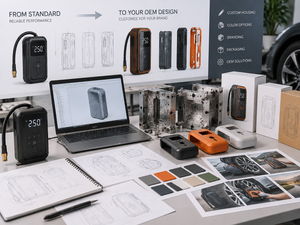
YANTU supports tire inflator projects for auto shops, distributors, retailers, and tool brands. If you are comparing professional tire inflator configurations, our team can help discuss bleeder valve options, gauge types, packaging, sample testing, and bulk order requirements.