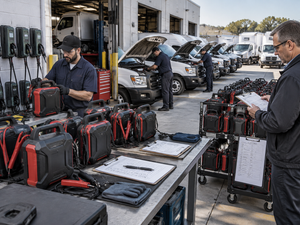
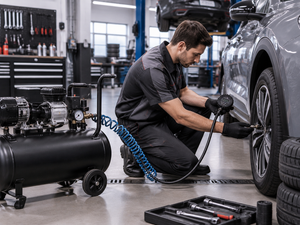
Analog tire inflators are still widely used in workshops, garages, tire shops, fleet service points, and automotive retail channels. Even as digital inflators become more popular, many buyers still choose analog models because they are simple, familiar, and easy to operate.
For B2B buyers, analog tire inflator maintenance is not only a user-side topic. It affects product lifespan, customer satisfaction, spare parts planning, warranty cost, and supplier evaluation.
This guide explains what buyers should know about analog tire inflator repair and maintenance before sourcing for commercial or retail channels.

Why Analog Tire Inflators Still Matter
Analog tire inflators use a dial gauge to show tire pressure. Many workshop users and mechanics are familiar with this structure. The product is usually easy to understand, does not depend on a digital display, and can be suitable for daily tire service when properly maintained.
For distributors and retailers, analog inflators can still be useful in several channels:
- tire shops
- auto repair workshops
- garage tool sets
- fleet maintenance rooms
- roadside service teams
- industrial tool distributors
- cost-sensitive retail channels
The key advantage is simplicity. Many users can understand the dial gauge quickly. For some commercial buyers, this reduces training difficulty.
However, simple does not mean maintenance-free. Analog inflators still require attention to the gauge, hose, chuck, seals, and air path. If these parts are damaged or poorly maintained, pressure readings may become unreliable or air leakage may increase.
For B2B buyers, analog tire inflators should be evaluated as repairable working tools, not only as low-cost accessories.
 digital vs analog tire inflator accuracy
Common Maintenance Points: Gauge, Hose, Chuck, and Seals
The main maintenance points of an analog tire inflator are usually external and easy to identify.
The dial gauge is the most visible part. If the gauge face is damaged, the needle does not return properly, or the reading seems unstable, users may lose trust in the product. For workshops, pressure readability is directly connected to service confidence.
The hose is another important part. It may be pulled, bent, stepped on, or exposed to dust, oil, and heat. Over time, hose wear can reduce air flow and cause leakage.
The chuck connects the inflator to the tire valve. A poor chuck seal can make inflation slower and less accurate. Users may think the inflator is weak when the real problem is air loss at the connection point.
Seals and gaskets are small parts, but they are critical for air tightness. If they wear out, the inflator may leak even when the main body is still usable.
For B2B buyers, these parts should be checked during sample testing and after-sales planning. A good analog inflator should be easy to inspect and support with replacement parts when needed.

Air Leakage and Pressure Reading Issues
Air leakage is one of the most common problems in analog tire inflators.
Leakage may come from the hose connection, chuck, valve connector, internal seal, or gauge assembly. Small leakage may not be obvious at first, but it can affect inflation efficiency and pressure accuracy.
Pressure reading issues may also appear when the gauge is damaged, poorly calibrated, or affected by rough handling. In workshops, inflators may be dropped, stored under tools, or used in dusty environments. These conditions can affect the dial gauge over time.
B2B buyers should ask suppliers how air leakage and gauge performance are tested before shipment.
Useful checks include:
- gauge reading inspection
- air leakage test
- hose connection test
- chuck sealing test
- pressure holding check
- visual inspection of gauge face
- packaging protection for the gauge
For distributors, these checks help reduce returns and customer complaints. For workshop users, they help maintain trust in the tool.
A low-cost analog inflator without proper gauge protection or sealing control may create more after-sales cost than expected.
Cleaning, Storage, and Daily Handling
Maintenance is also related to how the product is used and stored.
Analog tire inflators are often used in environments with dust, oil, moisture, vibration, and rough handling. These conditions can affect the hose, gauge, chuck, and seals.
Users should avoid dropping the gauge, bending the hose sharply, storing the inflator under heavy tools, or leaving it in dirty or wet conditions for long periods. The chuck should be kept clean, and the hose should be stored without strong twisting.
For B2B buyers, product design can make daily handling easier. Useful design features include:
- protected gauge housing
- flexible hose
- durable chuck
- strong trigger or valve control
- hanging hole or storage hook
- clear pressure scale
- simple accessory layout
- protective packaging
Packaging and manuals should also explain basic care instructions. For retail customers, short and clear maintenance guidance can reduce misuse. For workshop channels, a simple service checklist can help extend product life.
Maintenance should not be complicated. It should be easy enough for real users to follow.
Spare Parts and Repair Support for Distributors
Analog tire inflators are often easier to support when spare parts are available.
For distributors, this can be a major advantage. Instead of replacing the whole product, users may replace the hose, chuck, seal, or gauge part when the design allows it.
Common spare parts may include:
- replacement dial gauge
- air hose
- tire chuck
- sealing gasket
- valve connector
- trigger part
- nozzle adapter
- instruction manual
- storage hook or accessory part
Not every analog inflator needs full repair support. Entry-level retail products may be replaced more often than repaired. Commercial or workshop-focused models, however, benefit from spare parts planning.
Before bulk orders, buyers should ask suppliers whether spare parts can be ordered separately, whether parts are shared across different models, and what minimum quantity applies.
For B2B buyers, spare parts support can improve customer satisfaction and reduce warranty pressure. It also helps distributors build a stronger service relationship with local customers.

What Buyers Should Ask Suppliers Before Ordering
Before sourcing analog tire inflators, buyers should confirm both product quality and maintenance support.
Important questions include:
- What pressure range does the gauge support?
- How is gauge accuracy checked?
- Is the gauge protected during shipping?
- What hose material is used?
- Is the chuck replaceable?
- Are sealing gaskets available as spare parts?
- How is air leakage tested before shipment?
- Does the manual include maintenance guidance?
- Can packaging be customized for retail or workshop channels?
- Can spare parts be supplied for repeat orders?
These questions help buyers understand whether the supplier is prepared for long-term product support.
For analog tire inflators, the best sourcing decision is not only about unit price. Buyers should consider gauge reliability, leakage control, spare parts, packaging protection, and after-sales readiness.
Quick Analog Inflator Maintenance Checklist
| Maintenance Area | What Buyers Should Check | Why It Matters |
|---|---|---|
| Dial Gauge | Readability, protection, accuracy check | Supports user trust and pressure control |
| Hose | Flexibility, wear resistance, connection strength | Reduces leakage and damage risk |
| Chuck | Sealing, grip, replaceability | Improves inflation stability |
| Seals | Gasket quality and spare availability | Maintains air tightness |
| Storage | Hook, packaging, hose protection | Reduces damage during daily use |
| Spare Parts | Gauge, hose, chuck, gasket, connector | Supports distributors and after-sales service |
Conclusion
Analog tire inflators remain useful for workshops, tire shops, fleets, garages, and automotive retail channels. Their simple dial gauge design is familiar to many users, but proper maintenance and repair support are still important.
For B2B buyers, analog inflator sourcing should include more than unit price. Buyers should evaluate gauge quality, hose durability, chuck sealing, air leakage control, spare parts availability, packaging protection, and supplier support.
A good analog tire inflator should be easy to use, easy to inspect, and practical to maintain in real service environments.
YANTU supports tire inflator projects for distributors, workshops, automotive brands, retailers, and OEM customers. If you are evaluating analog tire inflators for your product line, our team can help discuss specifications, packaging, sample testing, spare parts, and bulk order requirements.