For tire inflator sellers, product images are not only visual assets. They help customers understand size, power type, pressure range, accessories, and real use scenarios before purchase.
A portable tire inflator may have strong specifications, but if the images do not explain the product clearly, customers may hesitate. For Amazon sellers and private label brands, image planning should be part of the sourcing and launch process.
This article explains what B2B buyers should consider when preparing tire inflator Amazon images.

Main Image: Keep It Clean and Product-Focused
The main image is usually the first visual customers see in search results. For tire inflators, it should present the product clearly and professionally.
A good main image should show the tire inflator itself without visual confusion. The product should be easy to recognize, and key physical parts such as the body, hose, display, cable, or air chuck should be visible when relevant.
For marketplace sellers, the purchasing meaning is simple: the product design must be suitable for clean photography. If the body shape is unclear, the cable layout is messy, or the accessories are difficult to arrange, the main image may look less professional.
B2B buyers should confirm with the supplier whether high-quality product photos can be provided. If the seller needs to shoot images separately, the product sample, packaging, accessories, and labels should be finalized before photography.
Feature Images Should Explain the Selling Points
After the main image, feature images should explain why the tire inflator is worth buying.
For a portable tire inflator, important feature images may show:
- pressure range
- digital display
- auto shut-off
- inflation speed
- power source
- hose length
- LED light
- included nozzles
- storage design
- charging method
These images should not simply repeat the product from different angles. Each image should answer one customer question.
For example, if the product is a digital tire inflator, one image can explain pressure setting and automatic stop. If it is a 12V tire inflator, one image can show the car power connection. If it is rechargeable, one image can explain battery and charging use.
For B2B buyers, this affects product selection. A model with clear visual selling points is easier to present online than a product whose advantages are hidden inside the specification sheet.

Use Scenario Images Help Customers Understand Fit
Tire inflators are practical products. Customers want to know whether the product fits their vehicle and real emergency needs.
Use scenario images can show where and how the product is used. Common scenarios include:
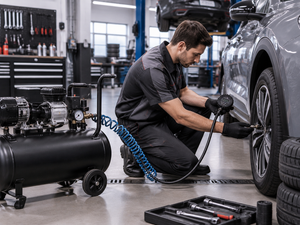
- inflating a car tire
- SUV tire emergency use
- roadside pressure top-up
- trunk storage
- garage use
- night emergency support
- outdoor travel or camping preparation
These images help customers imagine the product in real life. They also reduce uncertainty about whether the inflator is suitable for their vehicle.
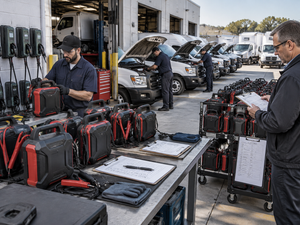
For marketplace sellers, use scenario images are especially important because customers cannot touch the product before buying. For suppliers, this means product samples should be tested and photographed in realistic conditions.
However, scenario images should remain accurate. If the inflator is designed mainly for passenger cars, it should not be presented as a heavy-duty truck inflator unless the specifications support that use.

Size and Storage Images Reduce Buyer Uncertainty
Size is one of the most common questions for portable tire inflators.
Customers may want to know whether the inflator fits in a trunk, glove box, tool bag, or emergency kit. A product that looks compact in one image may still feel large without a clear size reference.
Useful size images may include:
- product in hand
- product beside a car tire
- product inside a trunk
- product next to its storage bag
- product with cable and hose organized
- box size or accessory layout
For Amazon sellers, size images can reduce wrong expectations. If customers understand the real size before purchase, they are less likely to feel surprised after delivery.
For B2B buyers, size images also connect with logistics. A compact inflator may support smaller packaging, better shelf display, and lower shipping pressure. Larger models may need stronger packaging and clearer explanation of performance value.
Accessory and Packaging Images Support Conversion
Tire inflator buyers often check what is included in the box.
Accessory images should clearly show the hose, power cable, charging cable, nozzle adapters, storage bag, user manual, and retail packaging when relevant. This helps reduce after-sales questions such as “Is the adapter included?” or “Does it work for balls and bicycles?”
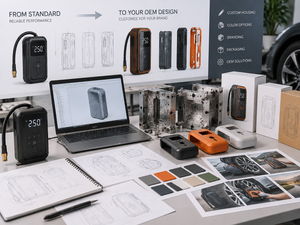
For private label tire inflator sellers, packaging images are also important. Good packaging can communicate pressure range, power type, application scenarios, and included accessories.
For retail and marketplace channels, packaging is part of the customer experience. A product with unclear packaging may feel less professional, even if the inflator itself works well.
Before placing bulk orders, buyers should ask the supplier whether packaging files, accessory layouts, and product details can be prepared for image production.
What Suppliers Should Provide for Marketplace Sellers
A tire inflator supplier should support more than product manufacturing. For marketplace sellers, supplier information can directly affect listing quality.
Useful supplier support includes:
- Product dimensions and weight
- Pressure range and power type
- Accessory list
- Packaging dimensions
- Product photos or sample support
- User manual information
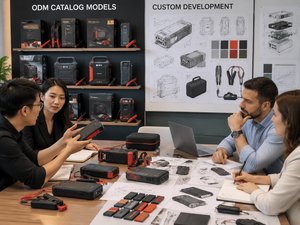
- OEM or private label packaging files
- Test data for key selling points
These materials help sellers create accurate product images and avoid misleading claims.
For B2B buyers, this should be discussed early. If the supplier cannot provide clear specifications, the seller may struggle to create strong images and listing content. A well-prepared supplier can reduce launch time and make the product easier to sell.
 portable tire inflator product options
Quick Image Planning Checklist
| Image Type | What to Show | Purchasing Meaning |
|---|---|---|
| Main Image | Clean product view | Supports search and first impression |
| Feature Image | Pressure, power, auto shut-off, display | Explains product value |
| Use Scenario | Car tire, roadside, garage, trunk | Helps customers understand fit |
| Size Image | Handheld view, trunk storage, box size | Reduces wrong expectations |
| Accessory Image | Nozzles, cable, hose, bag, manual | Reduces after-sales questions |
| Packaging Image | Retail box and key information | Supports private label sales |
Conclusion
Amazon product images for tire inflators should do more than make the product look attractive. They should explain product function, size, power type, accessories, packaging, and real use scenarios.
For B2B buyers and private label sellers, image planning should start before bulk orders. The product, packaging, accessories, and specifications must be clear enough to support accurate visual content.
A good tire inflator listing needs a clean main image, useful feature images, realistic use scenarios, size explanation, and complete accessory presentation. These elements help customers understand the product faster and reduce purchase hesitation.
YANTU supports portable tire inflator projects for Amazon sellers, retailers, automotive brands, and distributors. If you are preparing tire inflator product images for marketplace sales, our team can help discuss product specifications, packaging, sample testing, and private label support.