Power type is one of the most important differences between portable tire inflators. A cordless tire inflator, a 12V tire inflator, and a rechargeable tire inflator may all serve similar users, but they are not positioned the same way.
For B2B buyers, the right choice depends on target customers, sales channel, product size, performance expectations, and retail price segment.
This article compares cordless, 12V, and rechargeable tire inflators from a practical purchasing perspective.
Why Power Type Affects Product Positioning
Power type affects how customers understand and use a tire inflator.
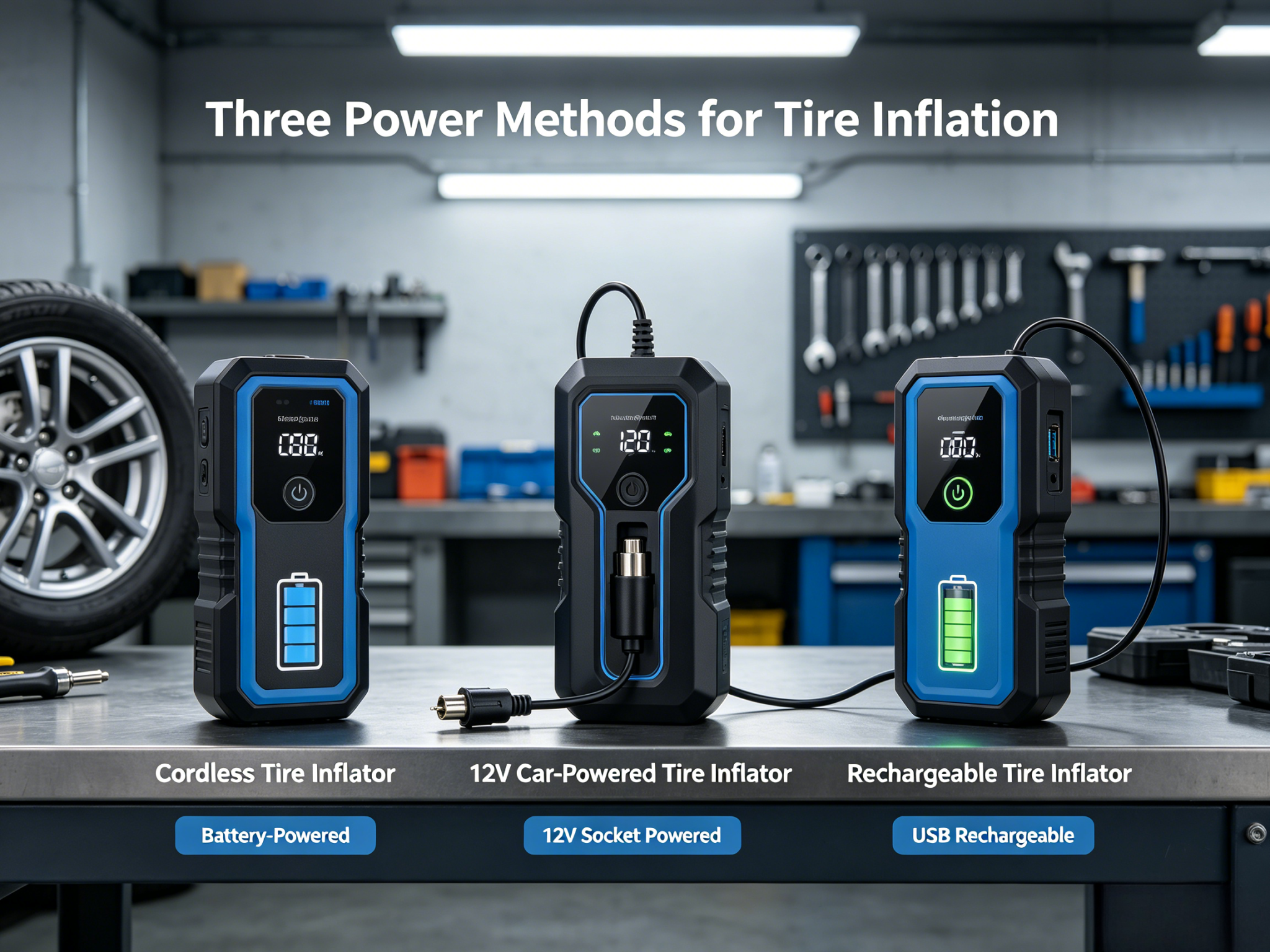
A 12V tire inflator is usually connected to the vehicle’s cigarette lighter socket. A cordless tire inflator is designed for easier movement without a cable connection during use. A rechargeable tire inflator usually includes a built-in battery and can be charged before use.
These differences influence product positioning. A 12V tire inflator can be positioned as a reliable car emergency tool. A cordless or rechargeable model can be positioned around convenience, portability, and multi-scenario use.
For B2B buyers, this means power type should not be treated as a small specification. It affects packaging claims, product images, sales channels, and customer expectations.
Cordless Tire Inflators: Convenience and Portability
Cordless tire inflators are attractive because they are easy to carry and operate. Users do not need to keep the product connected to the car power socket during inflation, which makes the experience feel simpler and more modern.
This type of product is suitable for:
- personal car owners
- emergency kits
- online retail
- giftable automotive accessories
- users who value convenience
- customers who want compact storage
For Amazon and independent store sellers, cordless tire inflators are easy to explain through product images. The selling message can focus on portability, simple operation, compact design, and use outside the vehicle.
However, buyers should check battery capacity, inflation performance, heat control, and charging time. A cordless design is only valuable if the product can still complete realistic inflation tasks.
For B2B buyers, the purchasing meaning is clear: cordless models are strong for convenience-focused channels, but performance claims should be tested carefully before bulk orders.
12V Tire Inflators: Stable Car-Powered Use
12V tire inflators remain popular because they use the vehicle as the power source. This makes them suitable for car emergency use, especially when buyers want a simple and familiar product.
A 12V tire inflator does not rely on a built-in battery for inflation. As long as the vehicle power source is available, the product can operate without worrying about whether the inflator was charged in advance.
This is useful for:
- car emergency kits
- traditional automotive retail
- roadside preparation
- budget-friendly product lines
- customers who prefer simple tools
- distributors serving mass-market channels
For B2B buyers, 12V models can provide stable positioning and easier cost control. They may also avoid some concerns related to battery storage and recharge habits.
The main limitation is cable use. Buyers should check cable length, hose length, plug quality, and storage design. If the cable is too short or difficult to organize, the user experience may be poor.
Rechargeable Tire Inflators: Flexible Multi-Scenario Value
Rechargeable tire inflators overlap with cordless models, but they often emphasize built-in battery use, charging convenience, and multi-scenario applications.
These products can be used not only for car tires, but also for bicycles, motorcycles, balls, and small inflatables, depending on product specifications and included accessories.
For marketplace sellers, this creates a broader sales story. A rechargeable tire inflator can be positioned as a car accessory, travel tool, home-use inflator, or multi-purpose portable air pump.
For B2B buyers, the key is to check whether the product configuration supports the claimed use scenarios. Important points include:
- battery capacity
- charging port type
- pressure range
- inflation speed
- included nozzles
- auto shut-off function
- display readability
- heat control
A rechargeable tire inflator can support higher perceived value, but it also requires clearer specifications, better packaging, and more accurate customer education.
Which Type Fits Different Sales Channels?
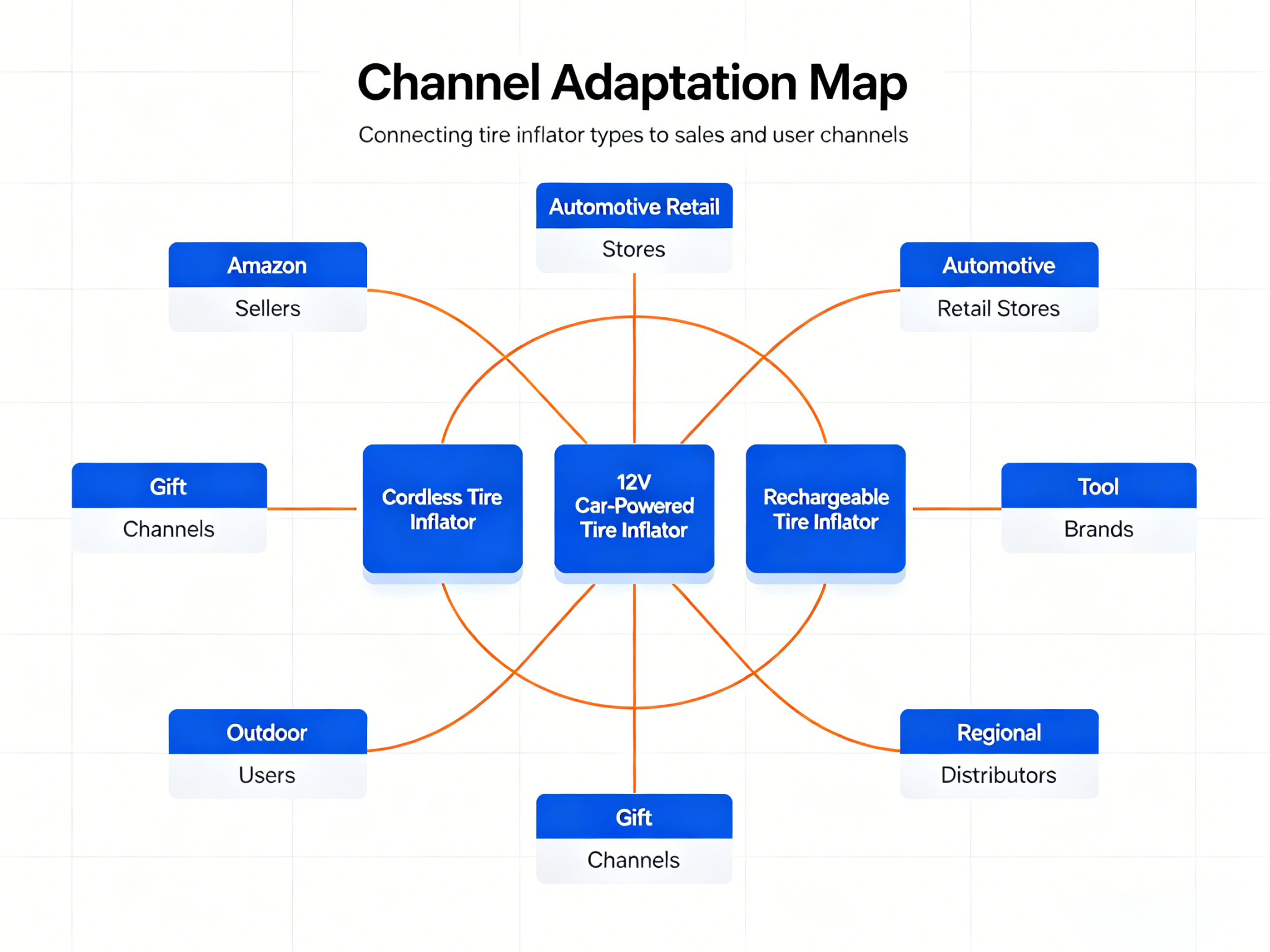
Different sales channels may prefer different tire inflator types.
| Channel | Better Fit | Purchasing Meaning |
|---|---|---|
| Amazon sellers | Cordless or rechargeable | Easy to explain with images and feature points |
| Automotive retail stores | 12V or rechargeable | Familiar car emergency positioning |
| Tool brands | 12V and heavy-duty models | Stable product line and clear use case |
| Gift or promo channels | Cordless compact models | Better appearance and portability |
| Outdoor and travel channels | Rechargeable models | Multi-scenario use and portable storage |
| Regional distributors | Mixed product line | Covers different price levels and user groups |
For B2B buyers, one power type does not need to replace the others. A stronger product strategy may include several models: an entry-level 12V inflator, a compact cordless model, and a higher-value rechargeable version.
This helps buyers serve different customers without forcing every user into one product type.
What Buyers Should Check Before Choosing
Before selecting a tire inflator product line, buyers should evaluate the power system together with actual use conditions.
Important questions include:
- Who is the target customer?
- Is the product mainly for emergency use or regular use?
- What tire types should it support?
- How long is the cable or hose?
- What is the battery capacity for cordless or rechargeable models?
- How long does it take to inflate a standard car tire?
- Does the product have auto shut-off?
- How is heat managed during repeated use?
- Can the supplier support packaging and private label requirements?
- Can samples be tested before bulk orders?
Sample testing is important because catalog descriptions may not show real user experience. A product may look compact but inflate too slowly. Another model may have strong performance but poor cable storage.
For B2B buyers, the best choice should balance performance, convenience, cost, packaging, and target channel.
Quick Comparison Table
| Factor | Cordless Tire Inflator | 12V Tire Inflator | Rechargeable Tire Inflator |
|---|---|---|---|
| Main Advantage | Easy movement and compact use | Stable car-powered operation | Flexible multi-scenario use |
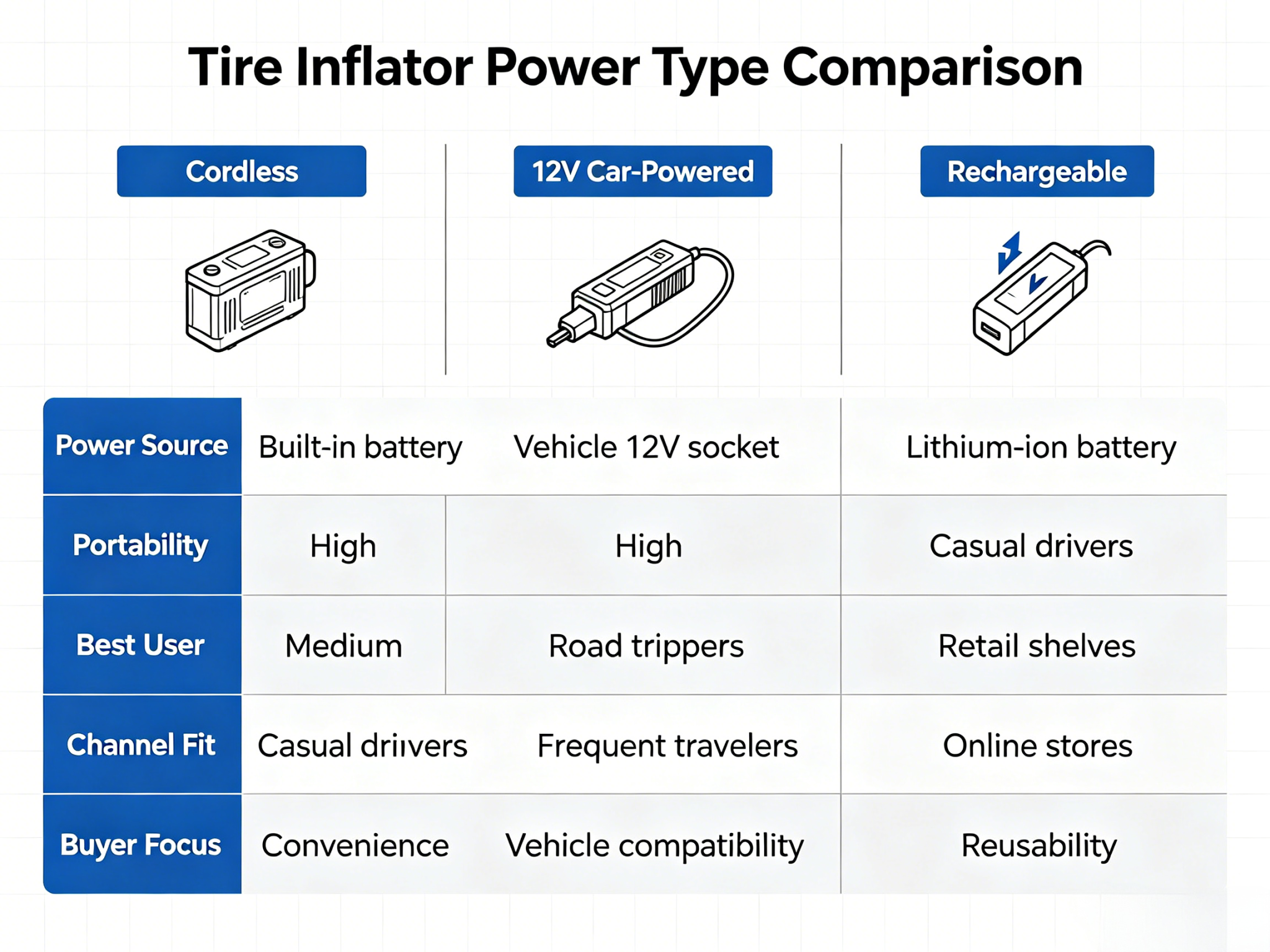
| Power Source | Built-in battery | Vehicle 12V socket | Rechargeable battery |
| Best Fit | Online sales and convenience users | Car emergency and retail channels | Premium portable product lines |
| Key Risk | Battery capacity and heat control | Cable length and storage | Charging time and real endurance |
| Product Positioning | Modern and portable | Reliable and familiar | Multi-purpose and higher value |
| Buyer Focus | Portability and usability | Cost and stability | Battery, accessories, and claims |
 portable tire inflator product options
Conclusion
Cordless, 12V, and rechargeable tire inflators each have clear advantages. The best choice depends on the buyer’s target market, channel, price segment, and product positioning.
Cordless tire inflators are strong for convenience and portability. 12V tire inflators are familiar and stable for car emergency use. Rechargeable tire inflators provide broader multi-scenario value, but they require clear specifications and stronger customer education.
For B2B buyers, power type should be part of the product strategy, not just a technical detail. Buyers should test samples, compare real performance, and confirm whether the supplier can support packaging, private label, and product line planning.
YANTU supports portable tire inflator projects for marketplace sellers, retailers, distributors, and automotive brands. If you are comparing cordless, 12V, and rechargeable tire inflator options, our team can help discuss specifications, packaging, sample testing, and bulk order requirements.