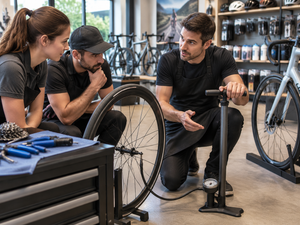
Even with the growing popularity of compact electric bike pumps, professional bike shops often continue to rely on commercial floor pumps. High-frequency operations, multiple users, and varied bicycle types make reliability, durability, and consistent performance essential in a shop setting.
For B2B buyers, understanding why floor pumps remain preferred helps position portable or electric pumps correctly within the product line and provides insight for retail and workshop clients.

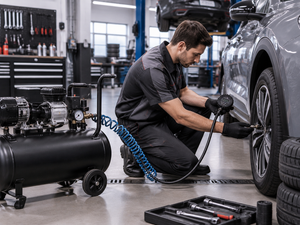
Commercial Use Is Different from Home Use
Shops face significantly different conditions than home users:
- Continuous inflation tasks throughout the day
- Multiple users handling the same equipment
- Varied tire types: road, MTB, gravel, e-bike
- Frequent high-pressure top-ups and deflation
A floor pump must withstand repeated mechanical stress while maintaining accuracy and reliability. Compact electric pumps may complement these tasks but cannot entirely replace the workflow requirements of a professional shop.
Why Floor Pumps Remain Popular in Shops
Floor pumps offer several advantages for commercial use:
- Stability: Wide base and long hose allow steady operation
- Durability: Designed for repeated daily use with minimal wear
- Large gauge: Clear analog or digital display for accurate pressure reading
- No charging required: Eliminates downtime from battery recharge
- Ease of maintenance: Simple components reduce risk of failure
These factors make floor pumps reliable tools for workshops and bike shops where high-frequency use is routine.
Key Features of Shop-Friendly Floor Pumps
When selecting floor pumps for professional shops, buyers often look for:
- Large pressure gauge for easy reading
- Stable base and ergonomic handle for operator comfort
- Long, flexible hose to reach all tire positions
- Dual-valve head for Presta and Schrader compatibility
- Robust materials capable of withstanding repeated use
These features ensure consistent performance and minimal maintenance issues in commercial settings.
Floor Pumps vs Electric Mini Pumps
While floor pumps remain essential for workshop use, electric mini pumps offer portability and emergency use:
- Floor pumps: Heavy-duty, high-frequency use, workshop or service station
- Electric mini pumps: Portable, compact, emergency roadside or retail-ready products
Professional shops often use both: floor pumps for daily service tasks and mini pumps for retail sale or demonstration purposes. Understanding this division helps B2B buyers plan product placement and inventory for different sales channels.

 electric bike pump battery life
How Retailers Can Use Both
B2B buyers can implement a complementary strategy:
- Floor pumps for in-store or workshop servicing
- Portable electric pumps for retail shelves, e-commerce, or emergency kits
- Clear signage or product differentiation to educate end users
- Training staff to explain advantages and proper use scenarios
This dual approach maximizes both service efficiency and retail revenue potential.
Conclusion
Commercial floor pumps remain a critical tool for professional bike shops. Their stability, durability, and accurate pressure reading make them ideal for high-frequency service. Electric mini pumps complement floor pumps by offering portability and emergency-ready options.
For B2B buyers, understanding why floor pumps are preferred helps:
- Position electric mini pumps correctly within a product line
- Provide training and guidance to workshop clients
- Educate retail buyers and end users about appropriate pump use
By combining floor pumps with portable electric pumps, shops and retailers can meet both operational and consumer needs efficiently.