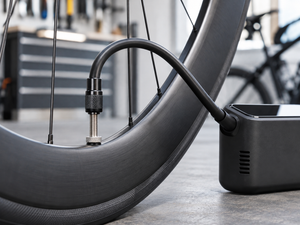
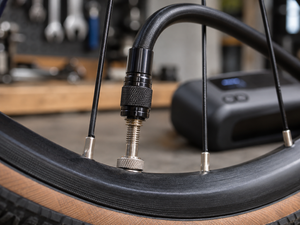
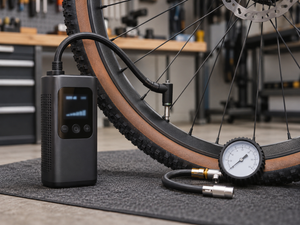
A digital electric bike pump that displays pressure in very small increments can look highly precise.
That does not automatically mean the pressure measurement itself is equally accurate.
For product managers and B2B buyers, this distinction matters because display resolution, measurement accuracy, repeatability, and automatic shut-off control describe different parts of the product.
A pump can show many decimal places and still finish away from the selected tire pressure.
Another pump may use a simpler display but provide more consistent real-tire results.
When buyers compare electric bike pumps, the question should therefore be broader than how finely the screen displays pressure.
The more useful question is how well the complete system measures, controls, and repeats the intended result.
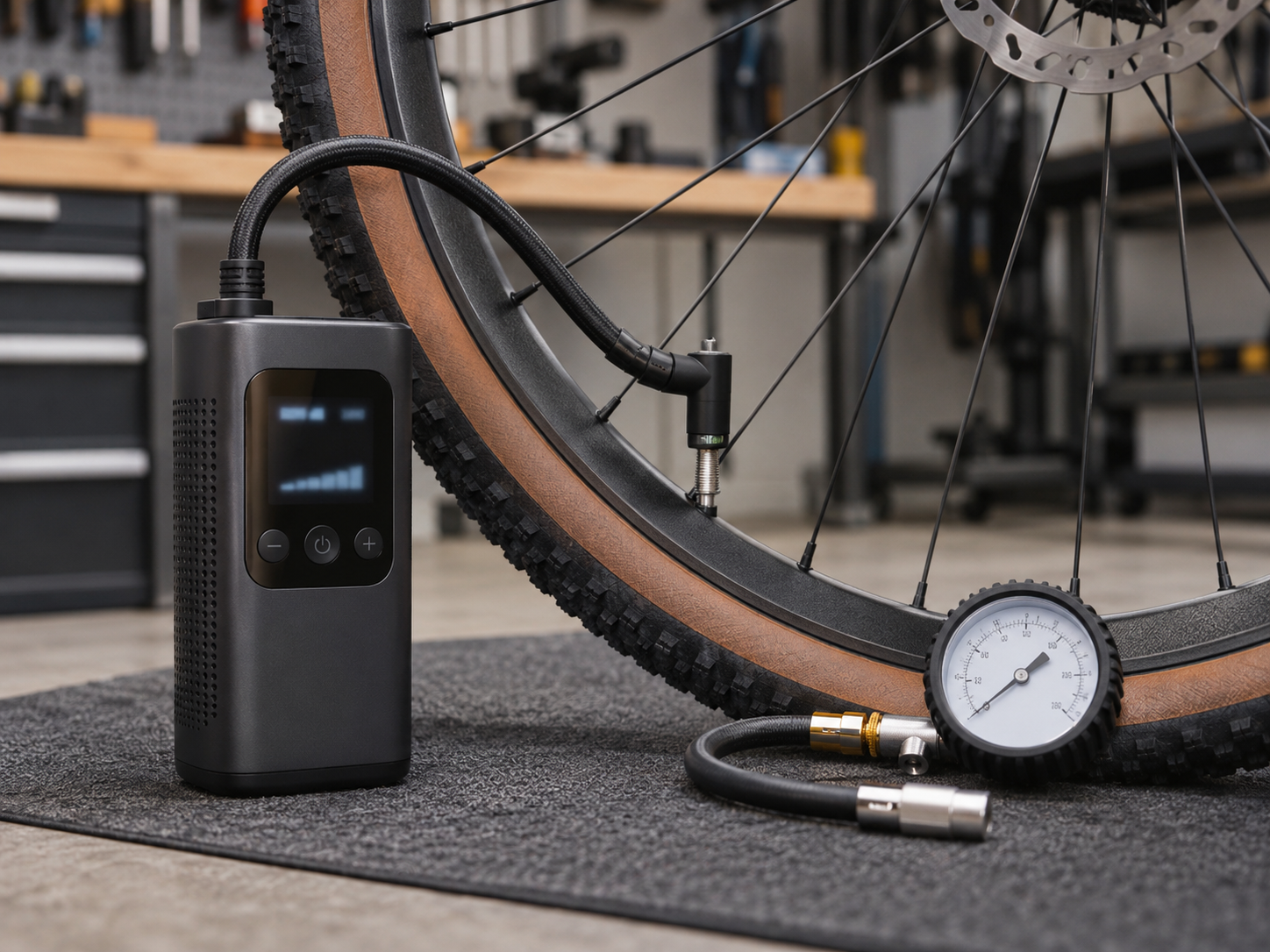
The Spec-Sheet Trap: More Digits Can Look More Accurate
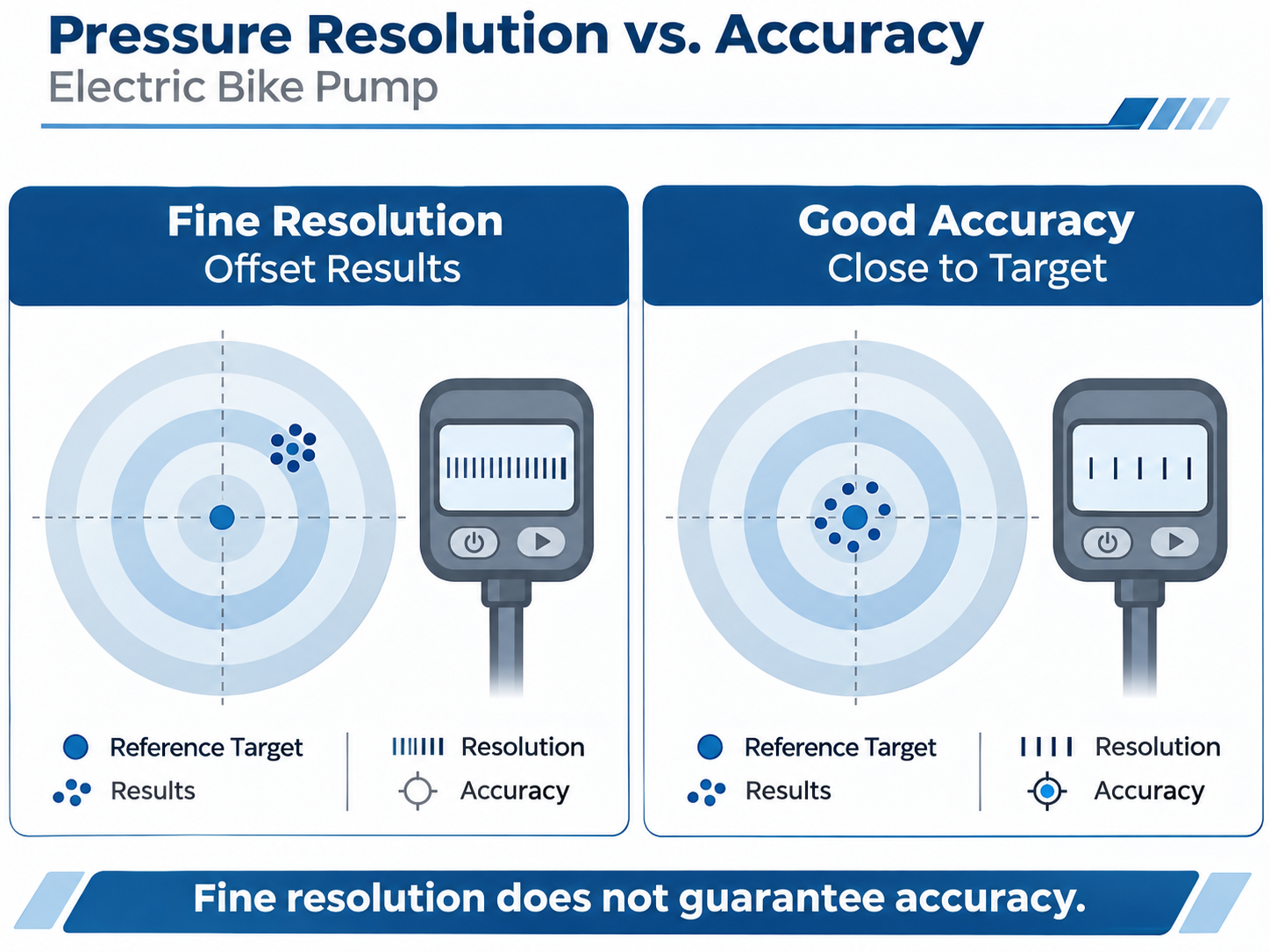
A display with smaller increments often appears more advanced.
For example, one pump may update pressure in relatively fine steps while another uses larger display increments.
From a marketing perspective, the first screen may look more precise.
Technically, however, this mainly describes display resolution.
Resolution tells the user how small a change the display can show.
It does not, by itself, tell the buyer how close the displayed number is to the real tire pressure.
This is why resolution should not be used as a substitute for an accuracy specification.
Four Different Questions Are Hidden Behind One Pressure Number
When a buyer sees a pressure value on an electric bike pump, several different performance questions are involved.
| Concept | What It Describes |
|---|---|
| Display Resolution | How finely the screen can show pressure changes |
| Measurement Accuracy | How close the displayed reading is to a reference pressure |
| Repeatability | Whether repeated tests produce similar results |
| Control Accuracy | How closely the pump stops relative to the selected target |
These four characteristics can influence each other, but they are not interchangeable.
A product may have a high-resolution display and weaker repeatability.
Another product may measure pressure accurately but stop slightly beyond the selected target because of control logic or pressure equalization.
For procurement, separating these concepts makes comparison much clearer.
What the Customer Actually Experiences
The customer does not use the pressure sensor in isolation.
They use the complete pump.
That means the final tire result depends on several parts of the system:
- pressure sensor
- sensor calibration
- firmware
- display behavior
- automatic shut-off logic
- hose volume
- valve connector
- air loss during disconnection
- tire volume
- pressure stabilization after stopping
This is why a sensor specification alone cannot fully describe finished-product pressure performance.
A buyer needs to know what happens from the moment the user selects a target pressure until the pump is removed from the valve.
Low-Pressure Applications Make the Difference Easier to Notice
Pressure-control behavior becomes especially important in applications where relatively small changes in pressure matter to the rider.
Gravel tires, wider bicycle tires, and other lower-pressure setups can make variation easier to notice than a simple maximum-pressure specification suggests.
The issue is not that every small difference represents a product failure.
The issue is that a product positioned for these applications should behave predictably.
For a gravel-oriented electric pump, buyers may therefore care about:
- final stabilized pressure
- consistency between repeated inflations
- auto-stop behavior
- air loss when disconnecting
- performance at several target zones
This gives a much more useful product picture than maximum PSI alone.
Use One Tire Before Comparing Two Displays
If two pumps are being compared, the tire should remain the same.
Changing tire size, valve type, starting pressure, or connection method can make the display comparison misleading.
A controlled comparison can use:
- the same tire
- the same valve
- the same starting pressure
- the same target pressure
- the same reference gauge
- the same stabilization time
- the same connection procedure
The objective is not to create a universal test for every bicycle pump.
The objective is to make sure the difference comes from the products rather than from different test conditions.
Look at the Error Pattern, Not Only the Error Size
One result can tell the buyer whether a sample was close to the target.
Several results reveal how the product behaves.
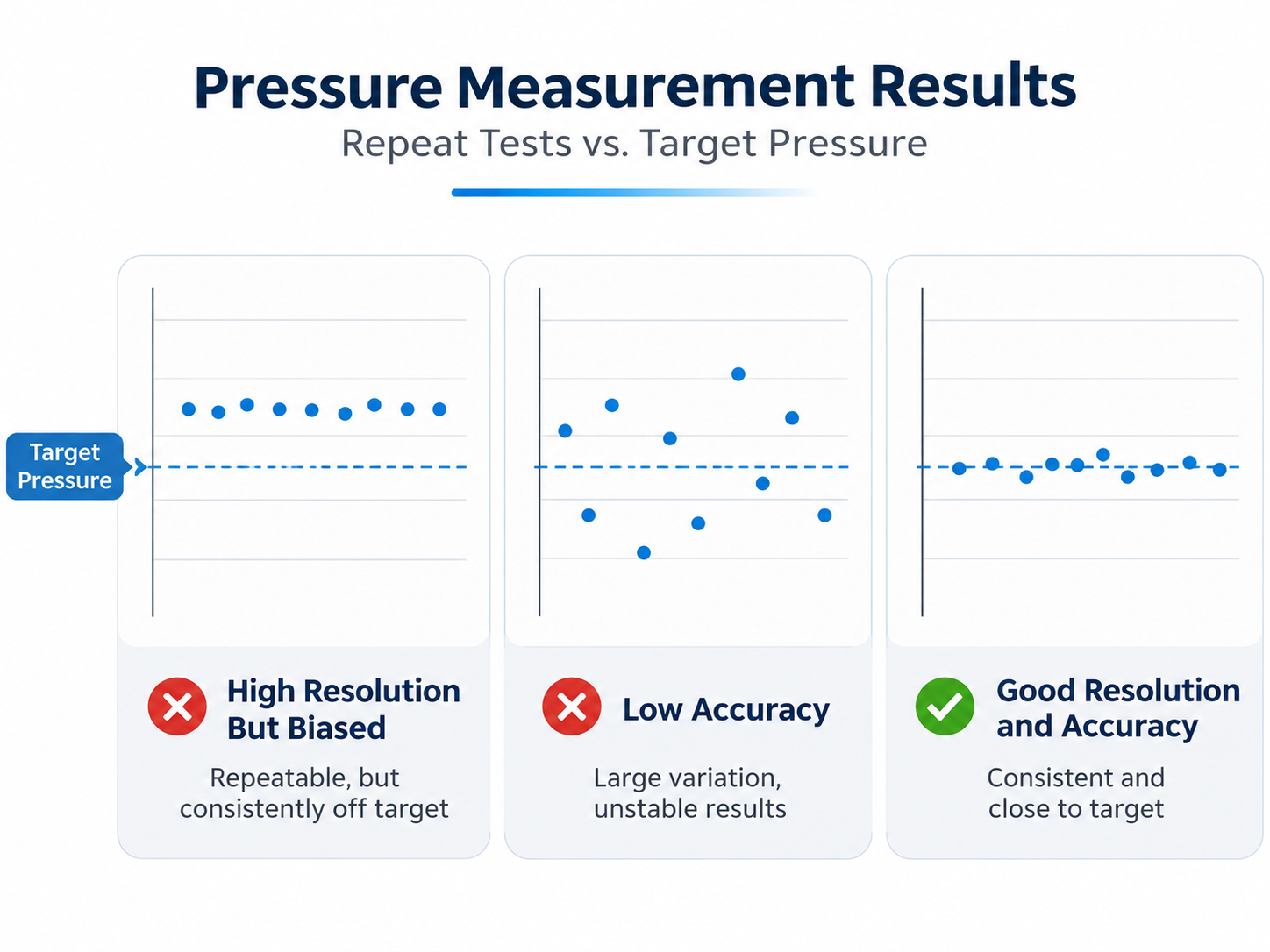
Imagine three different patterns.
One pump repeatedly finishes slightly above the target.
Another pump produces results scattered both above and below the target.
A third produces a tight cluster close to the reference result.
These patterns mean different things.
A consistent offset may suggest calibration or control behavior that can potentially be understood and adjusted.
A wide random spread may suggest weaker repeatability.
For OEM buyers, the pattern can therefore be more useful than one isolated reading.
A Reference Gauge Also Needs a Defined Role
When validating pump accuracy, the independent reference measurement should be clearly defined.
The buyer should know:
- which reference device is used
- when the reading is taken
- whether pressure is allowed to stabilize
- whether the pump remains connected
- whether pressure is checked after disconnection
This matters because different measurement sequences can produce different results.
If one supplier measures pressure while the hose is still pressurized and another measures the tire after disconnecting, the two numbers are not directly comparable.
A useful acceptance method should therefore define the measurement sequence as well as the target pressure.
Automatic Shut-Off Adds Another Layer
Electric bike pumps often allow the user to set a target pressure and rely on automatic shut-off.
This creates a control problem in addition to a measurement problem.
The pump needs to:
- sense the current pressure,
- interpret the selected target,
- continue inflating,
- decide when to stop,
- account for system behavior around shut-off.
A pump can display the correct pressure at one moment and still finish slightly differently after the motor stops and pressure stabilizes.
For buyers, this means auto-stop performance deserves its own evaluation.
The question is not only whether the feature exists.
It is whether the final result is predictable.
 bike pump automatic shut-off overshoot
Why Resolution Still Matters
Display resolution is not meaningless.
A finer display can improve the user interface, particularly when the product is designed for applications where users adjust pressure in smaller steps.
It can make target selection easier and give the user clearer feedback.
But resolution should be treated as a user-interface characteristic.
It becomes more valuable when it is supported by appropriate sensor performance, calibration, firmware, and repeatable control.
A detailed display without corresponding system performance can create an impression of precision that the finished product does not actually deliver.
What Should Go Into the Product Specification?
A buyer preparing an OEM specification should avoid describing pressure performance with one ambiguous line.
It can be more useful to separate:
- display increment or resolution
- pressure measurement requirement
- target-pressure control behavior
- automatic shut-off
- repeatability
- intended tire application
- approved test condition
This gives the engineering and quality teams a clearer target.
It also helps marketing teams understand which claims are genuinely supported.
Product Pages Should Not Turn Resolution Into an Accuracy Claim
This distinction matters beyond engineering.
If a product page states that the display changes in very small increments, customers may interpret that as a claim of extremely high accuracy.
Brands should avoid making that implication unless the accuracy itself has been validated.
A safer product communication strategy separates:
- what the screen can display
- what the pump has been tested to measure
- how the automatic target function behaves
This helps prevent a specification from becoming more ambitious in marketing than it was during product validation.
Turn the Approved Result Into a Repeatable Standard
Once the buyer has selected the product, pressure testing can become part of the OEM acceptance method.
A useful record may include:
| Acceptance Item | Defined Condition |
|---|---|
| Test Tire | Approved bicycle tire setup |
| Valve | Defined connection type |
| Starting Pressure | Consistent starting condition |
| Target Pressure | Defined test point |
| Reference Measurement | Approved gauge and method |
| Stabilization | Consistent measurement timing |
| Repetitions | Defined repeat sequence |
| Auto-Stop Result | Recorded final behavior |
| Final Pressure Pattern | Compared with agreed acceptance criteria |
The exact acceptable range should come from the product design and agreed test results.
It should not be invented from a generic number used by another pump.
Conclusion
Pressure display resolution and pressure accuracy are not the same thing.
Resolution describes how finely a digital bike pump can show pressure.
Accuracy describes how closely the reading reflects the reference condition.
Repeatability describes whether the product behaves consistently.
Control accuracy describes how closely the final tire pressure follows the selected target.
For B2B buyers, these characteristics should be evaluated separately and then considered together as part of the finished product.
The best electric bike pump is not necessarily the one showing the most digits.
It is the one whose display, sensor, firmware, automatic shut-off, connector, and real-tire performance work together in a predictable way for the intended bicycle application.
YANTU supports electric bike pump projects for cycling brands, distributors, retailers, and private-label customers. We can work with buyers on pressure-control requirements, product specifications, sample validation, low-pressure testing, OEM acceptance criteria, packaging, and production planning.