Cold weather is one of the most important real-world conditions for jump starter performance. When temperatures drop, vehicle batteries become weaker, engines become harder to start, and emergency power tools are expected to work reliably after sitting unused for a long time.
For B2B buyers, this creates an important question: which battery type is more suitable for cold-weather jump starter applications?
Lead-acid, lithium, and sodium-ion jump starters can all be used for emergency starting, but they are not the same in low-temperature conditions. They differ in weight, storage behavior, discharge performance, maintenance needs, and product positioning.
This article compares sodium-ion, lithium, and lead-acid jump starters from a cold-weather perspective, helping automotive retailers, tool brands, fleet buyers, and distributors understand which option may fit different markets.

Why Cold Weather Changes Jump Starter Performance
Cold weather affects both the vehicle battery and the jump starter itself.
At low temperatures, chemical reactions inside batteries slow down. Internal resistance can increase, available output may decrease, and the battery may not deliver power as efficiently as it does at room temperature.
This matters because a jump starter is often stored for months before use. In winter, it may be kept in a vehicle trunk, garage, warehouse, or roadside emergency kit. If the unit loses charge quickly, performs poorly in the cold, or requires frequent maintenance, the end user may find that it is not ready when needed.
For B2B buyers, cold-weather performance should not be judged only by peak current printed on the box. It should also be evaluated through:
- low-temperature discharge ability
- standby performance
- self-discharge behavior
- charging and maintenance needs
- safety design
- real use condition testing

Lead-Acid Jump Starters in Cold Weather
Lead-acid jump starters are one of the older and more traditional options in the automotive emergency power category.
Their main advantage is familiarity. Many workshops, garages, and traditional automotive channels have used lead-acid booster packs for years. They can be cost-effective and suitable for certain professional or basic tool environments.
However, lead-acid products usually have clear limitations.
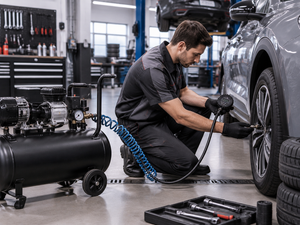
They are generally heavier and bulkier than modern lithium or sodium-ion options. This makes them less attractive for consumer retail, e-commerce, and compact emergency kits.
Lead-acid batteries also require more attention during storage. If not charged regularly, they may lose capacity or become less reliable over time. For products that may sit unused for months, this creates a higher maintenance burden.
In cold-weather markets, lead-acid jump starters may still work for some shop or garage use, but they are often less suitable for modern portable consumer positioning.
Lithium Jump Starters in Cold Weather
Lithium jump starters became popular because they are compact, lightweight, and easy to sell in consumer channels.
For online marketplaces, automotive retail stores, and general emergency accessory categories, lithium models offer several advantages:
- smaller size
- lighter weight
- mature supply chain
- strong consumer awareness
- wide price range
- easy product design flexibility
However, cold weather can reduce lithium battery performance, depending on cell quality, battery design, and BMS control. A well-designed lithium jump starter can still perform well, but buyers should not assume that every lithium model has the same low-temperature reliability.
For cold-weather positioning, B2B buyers should check whether the product has been tested under defined low-temperature conditions. They should also confirm storage recommendations, charging behavior, and protection design.
Lithium jump starters remain a strong mainstream choice, but for winter-heavy markets, buyers should evaluate real low-temperature data rather than relying only on peak current claims.
Sodium-Ion Jump Starters in Cold Weather
Sodium-ion jump starters are a newer option in the market. Their main appeal is not that they replace lithium in every situation, but that they can offer a different technical and marketing angle.
For cold-weather applications, sodium-ion products are often positioned around:
- low-temperature readiness
- long standby emergency use
- improved safety stability
- reduced concern around long storage
- winter roadside backup
This positioning can be useful for distributors and retailers serving colder markets, especially where end users may keep a jump starter in the car for emergency use during winter.
Sodium-ion products can also create differentiation in a category where many lithium jump starters look similar. Instead of competing only on peak amps, USB output, flashlight design, or housing style, sodium-ion gives brands a more technology-driven story.
However, B2B buyers still need to be careful. Sodium-ion is a newer category in this application, so buyers should ask for test evidence, product specifications, battery documentation, and safety-related information before launching.
Side-by-Side Cold Weather Comparison
| Factor | Lead-Acid Jump Starter | Lithium Jump Starter | Sodium-Ion Jump Starter |
|---|---|---|---|
| Low-temperature performance | Traditional but can be heavy and maintenance-sensitive | Depends strongly on cell quality and BMS design | Strong potential for cold-weather positioning |
| Weight and portability | Heavy and bulky | Usually light and compact | May be heavier than lithium but more portable than lead-acid |
| Long-term storage | Requires more maintenance | Depends on battery quality and self-discharge | Suitable for long-standby emergency positioning |
| Market maturity | Mature but older category | Highly mature and widely accepted | Emerging category with differentiation value |
| Retail appeal | Lower for modern consumer retail | Strong mainstream appeal | Strong for winter and safety-focused positioning |
| Best fit | Workshops, basic tool channels | General retail and online sales | Cold climate markets and emergency backup positioning |
This comparison shows that the best battery type depends on the sales channel and target market. There is no single winner for every buyer.
Which Battery Type Fits Which Buyer?
For traditional workshops or basic tool channels, lead-acid jump starters may still have a place, especially when portability and modern retail appeal are not the top priorities.
For mainstream consumer retail and online marketplaces, lithium jump starters remain practical. They are familiar, lightweight, and easy to explain to consumers.
For cold climate distributors, winter emergency product programs, and brands looking for differentiation, sodium-ion jump starters may offer a stronger story. The positioning is not only about power, but about emergency readiness under harsher storage and temperature conditions.
For B2B buyers, the best approach may be to build a product line rather than choose one chemistry for everything. A lithium model can cover mainstream demand, while a sodium-ion model can target cold-weather or long-standby applications.
What B2B Buyers Should Ask Suppliers
Before selecting a jump starter for cold-weather markets, buyers should ask several practical questions:
- What low-temperature test conditions have been used?
- What is the recommended storage temperature range?
- How long can the product remain on standby?
- What safety and transport documents are available?
- What battery protection system is used?
- How does the unit perform after long storage?
- What warranty and after-sales support are available?
These questions are more useful than asking only for peak current or engine size coverage. Peak current is important, but it does not fully explain winter reliability.
Conclusion
Cold-weather jump starter selection requires more than a simple battery comparison.
Lead-acid jump starters are traditional and familiar, but they are heavy and require more storage maintenance. Lithium jump starters remain the mainstream choice because they are compact, mature, and widely accepted. Sodium-ion jump starters provide a newer option for buyers who want to focus on winter reliability, long standby use, and product differentiation.
For B2B buyers, the key is to match battery chemistry with market demand. A general retail channel may still prefer lithium. A cold-region distributor or automotive emergency program may find sodium-ion more suitable. A workshop or basic tool channel may still consider lead-acid in specific use cases.
The right decision should be based on low-temperature performance, storage behavior, safety documentation, product positioning, and the real expectations of end users in cold climates.