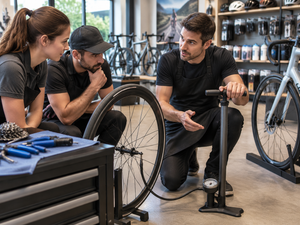
For busy bike shops, a floor pump is not just a simple accessory. It is a frequently used service tool that affects daily workflow, customer experience, and shop organization.
When floor pumps are placed randomly around the shop, they can slow down service, create clutter, and increase damage risk. A better storage setup helps shops keep pumps accessible, protected, and ready for repeated use.
This article explains practical floor pump storage solutions for bike shops and what B2B buyers should consider when selecting professional floor pumps for retail and service environments.

Why Floor Pump Storage Matters in Bike Shops
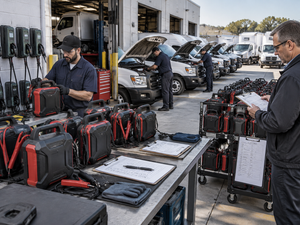
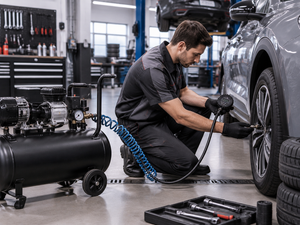
In a bike shop, floor pumps are often used many times a day. Staff may use them for test rides, repairs, tire checks, new bike preparation, and customer service.
If the pump is not stored in a fixed location, employees may waste time looking for it. If the hose is dragged across the floor, it may be stepped on or damaged. If the gauge is knocked against other tools, accuracy and appearance may be affected.
For shop owners, storage is not only about neatness. It affects service speed, tool lifespan, and customer perception.
A well-organized pump area helps the shop look more professional. It also reduces unnecessary replacement costs caused by poor handling. For B2B buyers, this means floor pump design should be evaluated together with storage and daily workflow.
Keep Pumps Near High-Frequency Work Areas
The best storage location depends on how the shop uses the pump.
For repair-focused bike shops, the floor pump should usually be placed near the service bench or tire repair area. This allows mechanics to inflate tires quickly during maintenance. For retail stores, one pump may also be placed near the bike display area for pre-sale checks or customer demonstrations.
In larger shops, using more than one floor pump may be more efficient than moving a single pump between different areas.
Common storage points include:
- repair bench area
- tire and tube replacement station
- new bike assembly area
- customer service counter
- test ride preparation zone
For purchasing, this means one pump model may not serve every location equally well. A heavy-duty professional floor pump may fit the workshop, while a cleaner retail-style pump may be better for customer-facing areas.

Use Fixed Storage to Reduce Tool Loss and Damage
Busy shops often lose time because tools are not returned to the same place. Floor pumps are large enough to notice, but their hoses, heads, and gauges can still be damaged if storage is careless.
Fixed storage can help solve this problem.
A shop may use a wall hook, floor stand, service corner, or marked storage zone. The goal is simple: every staff member should know where the pump belongs after use.
This reduces:
- hose damage
- gauge impact
- pump tipping
- clutter around service areas
- staff time spent searching for tools
For B2B buyers, this also creates product selection requirements. A professional floor pump for bike shops should have a stable base, durable hose, strong gauge protection, and a structure that can handle frequent movement.
If the product is too light, unstable, or poorly protected, it may not be suitable for daily shop use even if it works well for home users.
commercial floor pump durability
Consider Hose Management and Gauge Protection
Two of the most vulnerable parts of a floor pump are the hose and the pressure gauge.
In a busy bike shop, the hose may be pulled, twisted, stepped on, or caught under wheels. If the hose does not store neatly, it can create a messy workspace and increase damage risk.
Good hose management can include:
- hose clips
- hose wrap points
- flexible but durable hose material
- stable pump head holder
- clear storage position after use
Gauge protection is also important. A large gauge is helpful for reading pressure quickly, but it can be damaged if exposed to impact. For commercial bike pump use, buyers should check whether the gauge position is practical for shop environments.
A floor pump with a readable gauge, protected structure, and organized hose design can reduce after-sales issues and improve daily user experience.

Match Storage Design with Shop Layout
Different bike shops have different layouts. A small neighborhood repair shop may have limited floor space. A larger retail store may need a cleaner tool display. A workshop may prioritize speed and durability over appearance.
This means floor pump storage should match the shop layout.
| Shop Type | Storage Priority | Recommended Focus |
|---|---|---|
| Small repair shop | Save space | Compact footprint and fixed corner storage |
| Busy service workshop | Fast access | Durable pump near repair bench |
| Retail bike store | Clean appearance | Neat display and professional design |
| Multi-staff shop | Tool control | Fixed return position and strong structure |
| Distributor showroom | Product presentation | Attractive packaging and visible features |
For retailers and distributors, this is useful when planning product assortment. A shop-focused floor pump should not be positioned only as a home accessory. Its storage, stability, and durability should support daily professional use.
What Buyers Should Check Before Ordering
Before choosing a floor pump for bike shops, B2B buyers should check more than PSI rating and price.
Important questions include:
- Is the base stable enough for frequent shop use?
- Is the hose durable and easy to organize?
- Is the gauge easy to read and protected from impact?
- Does the pump head support common valve types?
- Is the handle comfortable for repeated use?
- Is the product suitable for retail display or workshop use?
- Can the supplier support packaging, manuals, or private label requirements?
These questions help buyers avoid selecting a consumer-level pump for a professional shop environment.
For bike shops, the best floor pump is not always the smallest or cheapest model. It should be easy to access, easy to store, durable under daily use, and suitable for the shop’s service workflow.
Quick Comparison Table
| Storage Factor | Why It Matters | What Buyers Should Check |
|---|---|---|
| Fixed Location | Reduces search time | Wall hook, floor stand, or marked storage zone |
| Stable Base | Prevents tipping during use | Base width, material, and weight |
| Hose Management | Reduces clutter and damage | Hose clip, holder, and flexible hose |
| Gauge Protection | Supports long-term accuracy and appearance | Gauge position and protective structure |
| Shop Layout Fit | Improves workflow | Workshop, retail, or small shop usage |
| Product Durability | Reduces replacement cost | Materials, pump head, handle, and hose quality |
Conclusion
Floor pump storage is an important detail for busy bike shops. A well-organized pump setup can improve service speed, reduce tool damage, and make the shop look more professional.
For B2B buyers, storage should be part of floor pump selection. A professional floor pump should not only inflate tires accurately. It should also fit real shop workflows, support repeated daily use, and remain easy to store after each task.
When choosing floor pumps for bike shops, buyers should consider stability, hose management, gauge protection, valve compatibility, and layout fit.
YANTU supports bike pump projects for retailers, bike shops, distributors, and OEM customers. If you are selecting professional floor pumps or planning a bike pump product line, our team can help discuss product options, packaging, sample testing, and bulk order requirements.