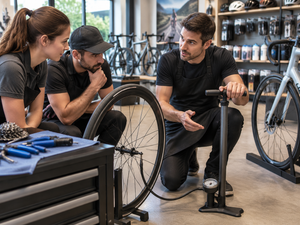
Electric bike pumps and CO2 inflators both solve the same basic problem: helping cyclists inflate a tire when they need air. But for retailers, these two products are not positioned the same way.
A CO2 inflator is fast, compact, and useful for emergency tire inflation. An electric bike pump is rechargeable, reusable, and easier for many everyday riders to understand. Each product has its own value depending on the target customer, retail channel, and use scenario.
This article compares electric bike pumps and CO2 inflators from a practical retail and B2B purchasing perspective.

Why Retailers Should Compare Use Cases First
Retailers should not compare electric bike pumps and CO2 inflators only by size or inflation speed. The better question is: what kind of customer is buying the product?
A road cyclist may want a very compact emergency solution for race days or long rides. A commuter may want a simple tool that can be reused without buying cartridges. A beginner rider may prefer a product with a display and automatic pressure control because it feels easier to operate.
For retailers, this means the two products can serve different shelf positions.
A CO2 inflator is usually positioned as a lightweight emergency accessory. An electric bike pump can be positioned as a modern rechargeable tire-care tool for daily riding, travel, and home storage.
For B2B buyers, the purchasing meaning is clear: the right product depends on customer education, channel positioning, and expected after-sales support.
Electric Bike Pumps: Convenience and Repeat Use
Electric bike pumps are attractive because they are reusable and easy to explain.
Most models allow users to set or monitor pressure, inflate different bike tires, and recharge the product after use. For customers who do not want to learn how CO2 cartridges work, an electric pump can feel more straightforward.
This makes electric bike pumps suitable for:
- commuters
- e-bike riders
- beginner cyclists
- family bike users
- urban riders
- Amazon and marketplace sellers
- retail customers who prefer convenience
From a retailer’s perspective, electric bike pumps also support stronger product storytelling. Sellers can explain pressure display, rechargeable battery, auto shut-off, compact storage, valve compatibility, and multi-use accessories.
However, buyers should check battery capacity, inflation speed, heat control, pressure range, charging method, and real inflation performance. A small electric pump may look attractive but still needs to perform well under actual riding conditions.
For B2B buyers, electric bike pumps are strong when the target customer values convenience and repeat use.
CO2 Inflators: Fast Emergency Inflation
CO2 inflators are popular among experienced cyclists because they are very compact and can inflate a tire quickly.
They are commonly used by road cyclists, gravel riders, and riders who want to save space during long-distance rides. A small inflator head and CO2 cartridge can fit easily into a saddle bag or jersey pocket.
The main advantage is speed and size. For riders who already understand how to use cartridges, a CO2 inflator can be a very efficient emergency tool.
However, CO2 inflators also require customer education. Users need to know which cartridge size to buy, how to attach the cartridge safely, how to control inflation, and whether the cartridge is single-use. Some beginners may find the product less intuitive than an electric pump.
For retailers, CO2 inflators can be positioned as performance accessories for more experienced cyclists. They may work well in bike shops, road cycling channels, racing accessories, and compact emergency kits.
For B2B buyers, the key issue is not whether CO2 inflators are useful. The issue is whether the customer group understands the product.
Technical Differences Retail Buyers Should Understand
Electric bike pumps and CO2 inflators differ in several important technical areas.
| Factor | Electric Bike Pump | CO2 Inflator |
|---|---|---|
| Inflation Source | Rechargeable motor and battery | Compressed CO2 cartridge |
| Repeat Use | Reusable after charging | Cartridge is usually single-use |
| Inflation Speed | Depends on motor and tire type | Usually very fast |
| Pressure Control | Often easier with display or preset function | Depends on user control |
| Storage Size | Compact but larger than CO2 inflator | Very small |
| Customer Education | Easier for general users | Requires cartridge knowledge |
| Best Customer | Commuters, beginners, e-bike riders | Road cyclists, racers, experienced riders |
For B2B buyers, the important point is that each product has a different strength. Electric bike pumps are easier to position as daily-use tools. CO2 inflators are easier to position as emergency performance tools.
Retailers can also carry both products if they serve different customer groups.

Valve Compatibility and Accessory Requirements
Valve compatibility is important for both electric bike pumps and CO2 inflators.
Road bikes usually use Presta valves. Mountain bikes, city bikes, kids’ bikes, and some e-bikes may use Schrader valves. Retailers serving mixed customers should make sure the product clearly supports the right valve types.
For electric bike pumps, buyers should check:
- Presta compatibility
- Schrader compatibility
- included adapters
- hose or direct connection design
- pressure unit display
- charging cable
- storage bag
- instruction manual
For CO2 inflators, buyers should check:
- cartridge compatibility
- Presta and Schrader support
- trigger or control design
- cartridge size guidance
- insulation sleeve if needed
- safety instructions
- packaging explanation
Small accessories can affect customer satisfaction. If adapters are unclear or cartridges are not explained well, customers may think the product is difficult to use.
For retailers, packaging and manuals should reduce confusion before after-sales problems happen.
Which Product Fits Different Retail Channels?
Different retail channels may prefer different products.
Amazon sellers may find electric bike pumps easier to explain through product images and videos. Features such as digital display, rechargeable battery, compact design, and auto shut-off can be shown clearly in listing content.
Bike shops may carry both products. Electric pumps can be recommended to commuters and everyday riders, while CO2 inflators can be sold to road cyclists and performance riders.
Gift and promotional channels may prefer electric bike pumps because they feel more complete and easier for non-expert users to understand. Racing and road cycling channels may prefer CO2 inflators because of their compact size and fast inflation.
For regional distributors, a mixed product line may be stronger. Electric bike pumps can cover daily-use customers, while CO2 inflators can cover experienced riders and emergency kits.
The best choice depends on the customer profile, not only product cost.

What Buyers Should Ask Before Ordering
Before choosing electric bike pumps or CO2 inflators, B2B buyers should ask practical questions.
Important questions include:
- Who is the target cyclist?
- Is the product for daily use or emergency use?
- What valve types should it support?
- Does the product require customer education?
- Are accessories clearly included and explained?
- Is the packaging suitable for retail display?
- Can the supplier support private label packaging?
- Can samples be tested with real road and city bike tires?
- What after-sales questions are customers likely to ask?
- Should the buyer carry both product types?
For electric bike pumps, sample testing should include battery performance, charging time, inflation speed, and heat control.
For CO2 inflators, sample testing should include cartridge connection, valve fit, control feel, and packaging clarity.
Conclusion
 electric bike pump product options
Electric bike pumps and CO2 inflators are both useful cycling accessories, but they serve different customer needs.
Electric bike pumps are better for customers who want convenience, repeat use, pressure visibility, and a modern rechargeable tool. CO2 inflators are better for experienced cyclists who value fast emergency inflation and compact storage.
For retailers and B2B buyers, the decision should be based on target customers, sales channel, accessory configuration, packaging clarity, and after-sales risk.
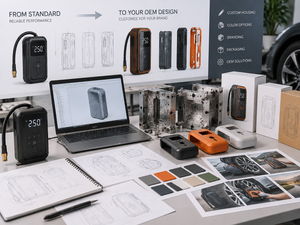
YANTU supports bike pump projects for retailers, distributors, marketplace sellers, and private label brands. If you are comparing electric bike pumps and compact inflation solutions for your product line, our team can help discuss specifications, packaging, sample testing, and bulk order requirements.