For commercial tire inflator buyers, durability is one of the most important purchasing factors. A product may look powerful in photos, but real value depends on how it performs after repeated use.
Commercial users such as auto shops, fleet operators, distributors, and automotive tool brands need tire inflators that can handle more demanding working conditions than ordinary consumer models.
This article explains how B2B buyers should evaluate tire inflator durability, testing standards, and expected lifespan before placing bulk orders.

Why Durability Matters for Commercial Tire Inflators
Commercial tire inflators are often used more frequently and under more pressure than basic emergency inflators.
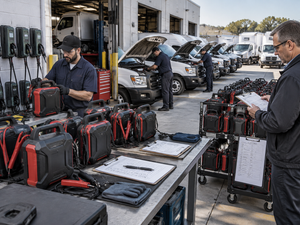
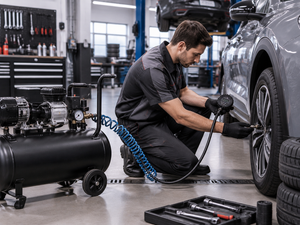
A personal car owner may use a portable inflator only a few times a year. An auto shop or fleet maintenance team may use the product many times in a week, sometimes several times a day. This repeated use can stress the motor, hose, chuck, cable, housing, and internal air system.
For B2B buyers, durability affects more than product performance. It also affects customer complaints, warranty cost, replacement frequency, and brand reputation.
A low-cost inflator with weak durability may create short-term savings, but it can increase long-term after-sales risk. For commercial channels, buyers should evaluate durability as part of total product value, not only as a technical specification.
Motor, Cylinder, and Heat Control Testing
The motor and cylinder are core parts of a tire inflator. They directly affect inflation performance, working stability, and service life.
During operation, the motor drives the compression system and generates heat. If heat is not controlled properly, the product may slow down, shut off, or wear faster. This is especially important for heavy duty tire inflators used for SUVs, workshops, or fleet maintenance.
Buyers should ask suppliers how the motor and cylinder are tested. Useful checks may include:
- continuous running test
- repeated inflation test
- temperature rise test
- motor load test
- pressure stability test
- overheat protection test
For B2B buyers, the key point is whether the product can perform under realistic use conditions. A short showroom test is not enough for commercial tire inflator durability evaluation.
Sample testing should include the target tire type, expected pressure range, and repeated use pattern.

Hose, Chuck, and Cable Durability
Durability is not only about the motor. Many tire inflator problems come from external parts.
The air hose may bend, twist, or become damaged after repeated use. The chuck may wear out or leak air. The power cable may be pulled, folded, or stored incorrectly. These parts directly affect user experience.
For commercial users, weak accessories can create frequent interruptions. A strong motor is not useful if the hose leaks or the chuck does not connect securely.
B2B buyers should check:
- hose flexibility and material
- hose connection strength
- chuck sealing performance
- cable length and thickness
- plug quality
- storage design
- replacement part availability
For distributors and brands, these details can reduce after-sales complaints. A commercial tire inflator should be evaluated as a complete tool system, not only by its maximum PSI or inflation speed.
Continuous-Use Testing and Duty Cycle
Duty cycle is closely connected with durability. It describes how long the inflator can work before it needs cooling time.
For commercial tire inflators, duty cycle matters because users may need repeated inflation tasks. Auto shops may service several vehicles. Fleet teams may adjust tire pressure across multiple cars or vans. Outdoor users may inflate larger tires after off-road driving.
If the product is not designed for continuous use, heat buildup can reduce performance and shorten product life.
When discussing durability with suppliers, buyers should ask:
- How long can the inflator run continuously?
- What cooling time is recommended?
- What tire size was used during the test?
- What pressure range was tested?
- Does the product include overheat protection?
- How does performance change after repeated use?
For commercial buyers, duty cycle data should be connected to real use scenarios. A product that is suitable for occasional emergency top-ups may not be suitable for professional or heavy-duty positioning.
Expected Lifespan Depends on User Scenario
There is no single expected lifespan for every tire inflator. Lifespan depends on how often the product is used, what tire sizes it handles, how long it runs each time, and how well users follow operating instructions.
A compact portable tire inflator used occasionally by a personal driver may last a long time under light use. The same product may wear quickly if used every day in a repair shop.
Different scenarios create different durability expectations:
| User Scenario | Durability Requirement | Purchasing Meaning |
|---|---|---|
| Personal car owner | Low to medium | Occasional emergency use |
| SUV or pickup owner | Medium | Larger tires and longer inflation time |
| Auto shop | High | Frequent daily operation |
| Fleet maintenance | High | Repeated use across vehicles |
| Industrial distributor | High | Stronger quality and warranty expectations |
For B2B buyers, expected lifespan should be matched with target users. A light-duty model should not be sold as a commercial tire inflator. A true heavy-duty model should have the structure and testing support to justify its positioning.

What Buyers Should Ask Suppliers Before Ordering
Before placing bulk orders, buyers should ask suppliers practical durability questions.
Important questions include:
- What durability tests are performed before shipment?
- What motor and cylinder structure is used?
- What is the recommended duty cycle?
- What tire size and pressure range were used in testing?
- How is heat control managed?
- What materials are used for the hose and chuck?
- Are replacement parts available?
- Can the supplier provide inspection records or test standards?
- Can samples be tested before mass production?
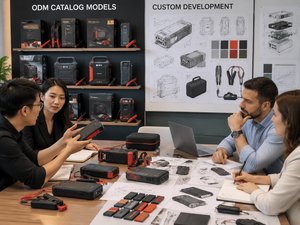
- Can the product be customized for commercial channels?
These questions help buyers avoid vague claims such as “heavy duty” without proof. A reliable commercial tire inflator supplier should be able to explain the product’s test conditions, material choices, and suitable use scenarios.
For B2B buyers, durability verification should happen before bulk orders, not after customer complaints.
Quick Durability Checklist
| Durability Area | What Buyers Should Check | Why It Matters |
| Motor | Load test and continuous use | Affects power and lifespan |
| Cylinder | Pressure stability and structure | Affects inflation performance |
| Heat Control | Temperature rise and protection | Reduces failure risk |
| Hose | Flexibility and connection strength | Prevents leakage and damage |
| Chuck | Sealing and repeated connection | Supports stable inflation |
| Duty Cycle | Working time and cooling time | Defines commercial suitability |
 heavy duty tire inflator product options
Conclusion
Commercial tire inflator durability should be evaluated through real use conditions, not only product appearance or maximum pressure claims.
For B2B buyers, the most important factors include motor quality, cylinder structure, heat control, hose durability, chuck sealing, duty cycle, and supplier testing support. These details affect product lifespan, after-sales risk, customer satisfaction, and long-term brand value.
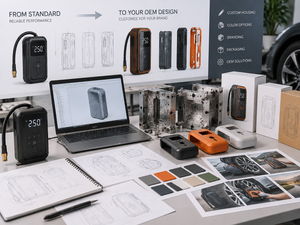
Before choosing a commercial tire inflator supplier, buyers should request clear specifications, test information, sample verification, and packaging support.
YANTU supports tire inflator projects for distributors, retailers, automotive brands, fleet channels, and OEM customers. If you are selecting commercial tire inflators for your product line, our team can help discuss durability requirements, sample testing, packaging, and bulk order solutions.