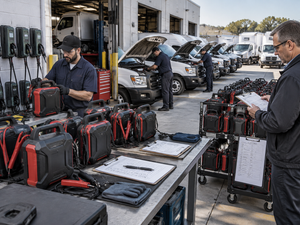
Fleet vehicles need reliable emergency starting support. Whether the fleet includes service vans, delivery vehicles, taxis, seasonal vehicles, or light commercial trucks, a dead battery can create downtime and service delays.
For fleet buyers, a commercial jump starter should be safe, stable in storage, easy to use, and suitable for repeated emergency situations. Sodium battery technology offers a new option for buyers who want stronger safety positioning and better low-temperature performance.
This guide explains what fleet and commercial buyers should consider when evaluating sodium jump starters.

Why Fleets Need a Different Jump Starter Standard
Fleet use is different from personal car use.
A consumer jump starter may be used only a few times a year. A fleet jump starter may need to support multiple vehicles, different drivers, long storage periods, and emergency use in unpredictable conditions.
For commercial buyers, the key concern is not only peak current. The product must also be reliable, simple to manage, and suitable for operational use.
Fleet buyers should consider:
- vehicle types in the fleet
- battery size and starting requirements
- storage location
- driver training level
- climate conditions
- frequency of emergency use
- replacement and maintenance plans
This is why commercial jump starters should be evaluated as operational tools, not only as automotive accessories.
Why Sodium Technology Matters for Fleet Buyers
Sodium jump starters offer a different value proposition from traditional lithium jump starters.
One important advantage is safety positioning. Sodium battery technology can support a stronger non-flammable safety story, which may reduce concerns related to storage and long-term inventory.
Another advantage is low-temperature performance. Fleets operating in cold regions often face battery problems during winter. A jump starter that performs better in low temperatures can be valuable for emergency response and seasonal vehicle operation.
For fleet buyers, these advantages can support:
- safer vehicle storage
- more reliable winter use
- stronger driver confidence
- lower emergency downtime
- clearer differentiation from standard lithium products
The purchasing meaning is practical. Sodium technology may be especially useful when vehicles are stored outdoors, used in cold climates, or managed across multiple locations.
 sodium vs lithium jump starter technical differences

Match Jump Starter Capacity with Fleet Vehicle Types
Commercial buyers should not select a jump starter only by product name or appearance. The device must match the vehicles it is expected to support.
A fleet may include compact cars, vans, SUVs, diesel vehicles, or light trucks. Different vehicles require different starting power and cable durability.
Before ordering, buyers should confirm:
- supported engine types
- peak current and starting capability
- clamp quality
- cable length
- battery capacity
- operating temperature range
- number of starts under defined conditions
For commercial use, overpromising specifications can create serious problems. If the product cannot support the target vehicle type, drivers may lose trust in the tool.
For B2B buyers, sample testing with real fleet vehicles is strongly recommended before bulk orders.
Storage Stability Is Important for Fleet Operations
Fleet jump starters may be stored in vehicles, workshops, depots, warehouses, or service vans. They may remain unused for months before being needed.
This makes storage stability a key purchasing factor.
A commercial jump starter should remain safe and ready during long storage periods. Buyers should check self-discharge performance, recommended recharge intervals, temperature tolerance, and storage instructions.
Sodium technology can be attractive for buyers who care about storage safety and long-term emergency readiness. A stronger safety profile can be useful for fleets that keep jump starters in multiple vehicles or service locations.
For purchasing teams, this means battery chemistry, storage guidance, and safety documentation should be part of supplier evaluation.
Ease of Use Matters for Drivers and Technicians
A commercial jump starter may be used by professional technicians, but it may also be used by drivers with limited technical training. This makes ease of use important.
Buyers should check whether the product has:
- clear operating instructions
- safe clamp design
- reverse polarity protection
- overcurrent protection
- visible indicator lights
- simple charging method
- durable carrying case or storage bag
If the product is difficult to understand, drivers may avoid using it or use it incorrectly. This can reduce the value of the purchase.
For fleets, a good commercial jump starter should be easy to train, easy to store, and easy to check before use.
What Buyers Should Ask Suppliers
Before placing bulk orders, fleet buyers should ask suppliers practical questions.
Important questions include:
- What vehicle types is the jump starter designed for?
- What battery chemistry is used?
- What is the operating temperature range?
- How long can the product remain stored before recharge?
- What safety protections are included?
- Can the supplier provide product specifications and test information?
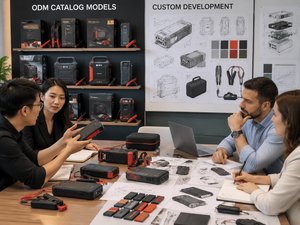
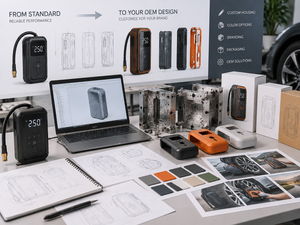
- Is OEM or private label packaging available?
- Can the product be supplied with a case, manual, or accessory kit?
For commercial sodium jump starter projects, supplier support matters. Buyers may need packaging, manuals, product labels, carton details, and sample testing before final approval.
A reliable jump starter supplier should be able to support these requirements clearly.

Quick Comparison Table
| Purchasing Factor | Why It Matters for Fleets | What Buyers Should Check |
|---|---|---|
| Battery Chemistry | Affects safety and storage confidence | Sodium or lithium battery system |
| Starting Power | Must match vehicle types | Peak current and real vehicle testing |
| Temperature Range | Important for winter and outdoor storage | Low-temperature performance |
| Storage Stability | Supports emergency readiness | Recharge interval and self-discharge |
| Ease of Use | Reduces driver error | Instructions, indicators, protection functions |
| Supplier Support | Helps bulk purchasing | Samples, packaging, manuals, test data |
Conclusion
Commercial jump starters for fleets should be evaluated differently from consumer emergency products. Fleet buyers need reliable starting power, safety, storage stability, low-temperature performance, and simple operation.
Sodium technology offers a strong option for buyers who care about safety positioning and cold-weather readiness. It can be especially useful for fleets, service providers, seasonal vehicles, and regional distributors serving harsh climates.
For B2B buyers, the best approach is to match the jump starter with real fleet requirements. Vehicle type, storage environment, driver usage, and supplier support should all be part of the sourcing decision.
YANTU supports sodium jump starter projects for fleets, automotive retailers, distributors, tool brands, and marketplace sellers. If you are evaluating commercial sodium jump starters for your product line or fleet customers, our team can help discuss specifications, packaging, sample testing, and bulk order requirements.