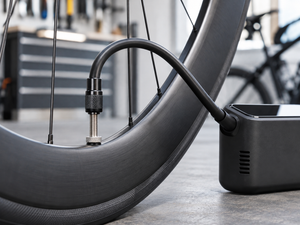
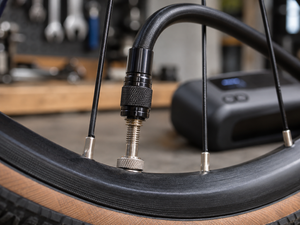
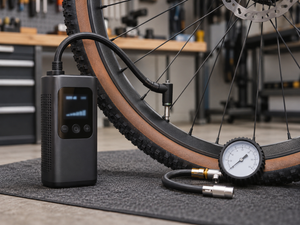
A supplier benchmark report can make an electric bike pump look highly competitive.
It may show fast inflation time, high target pressure, good battery endurance, or favorable comparisons against other products.
But for B2B procurement, the first question should not be:
Which pump has the best number?
The better question is:
Were all products tested under conditions that make those numbers comparable?
A useful bike pump benchmark report should allow the buyer to understand the test setup, reproduce the comparison, and identify how consistent the results are across samples and repeated cycles.
Without that information, a benchmark table can easily become a marketing document rather than a procurement tool.
Here are three checks buyers should make before using a bike pump benchmark report to support supplier selection.
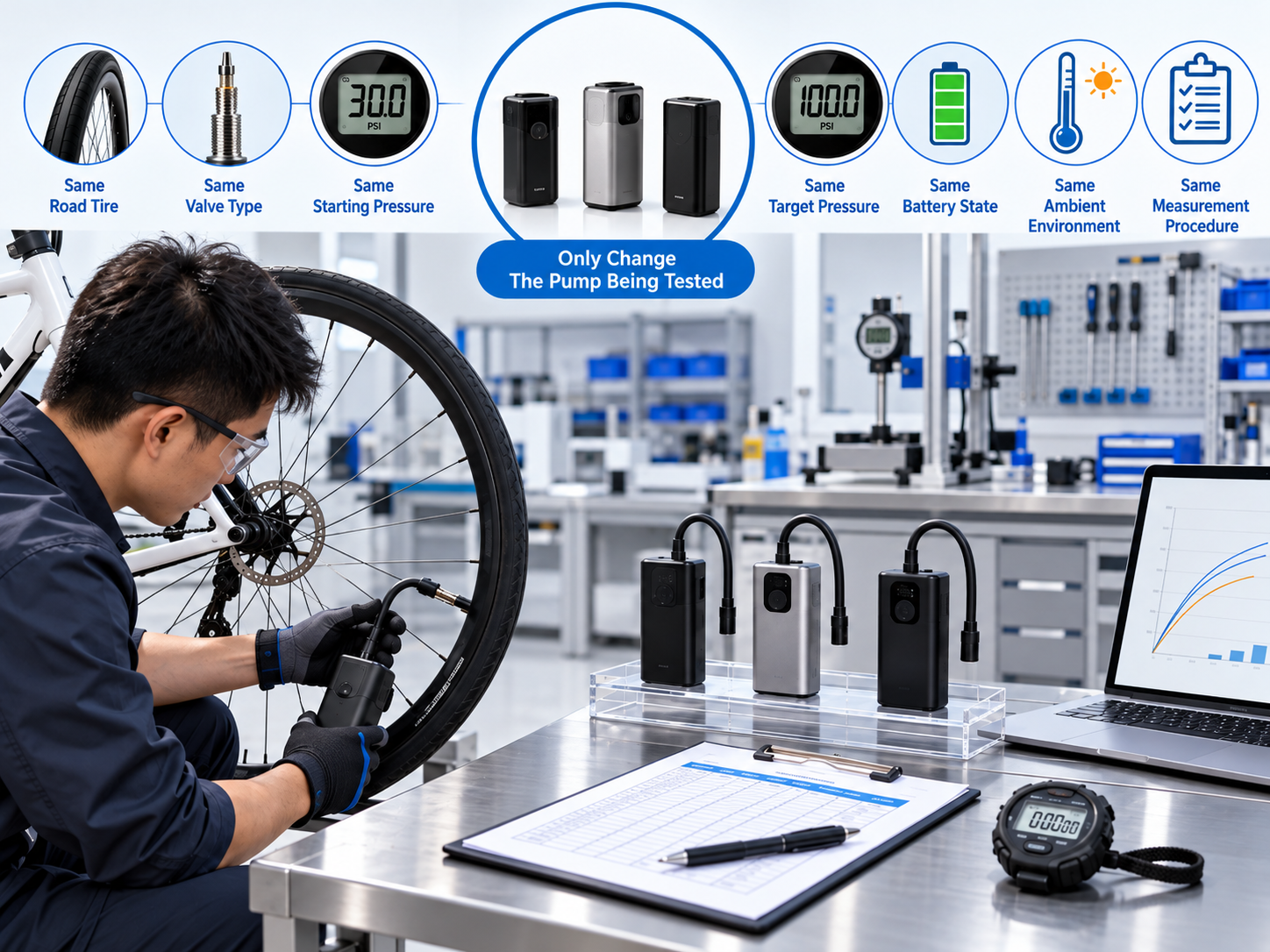
Procurement Check 1: Are the Test Conditions Clearly Defined?
Benchmark data has little value without test conditions.
For electric bike pumps, small changes in the test setup can affect the result.
A report should identify the important controlled variables, such as:
- bicycle tire size
- tire type
- valve type
- initial tire pressure
- target pressure
- battery state before testing
- pump operating mode
- ambient conditions
- cooling interval
- number of previous inflation cycles
If several pumps are being compared, these conditions should remain as consistent as possible.
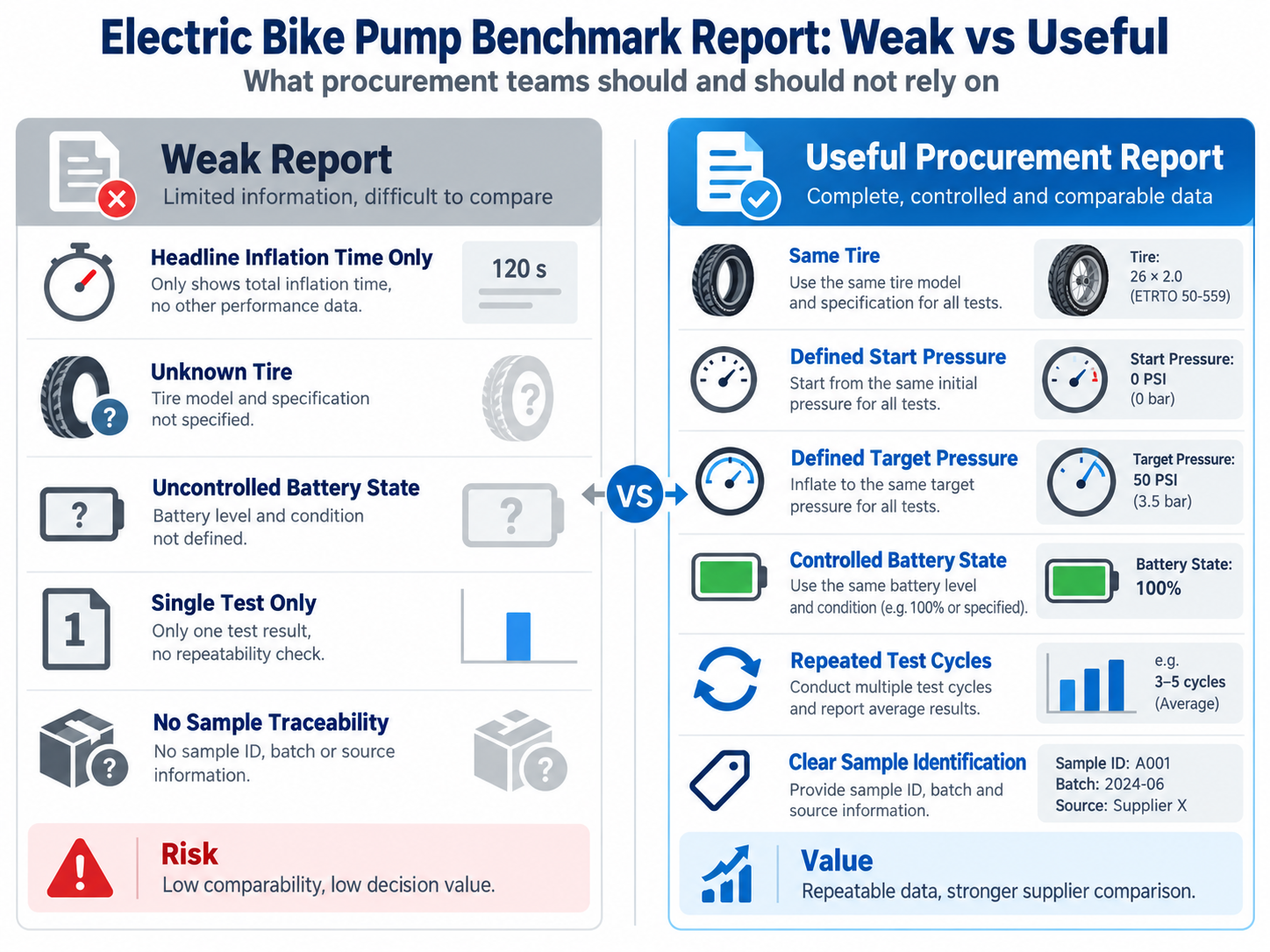
Same Tire Is Especially Important
Inflating different tires is not a valid direct comparison.
A larger-volume tire requires more air than a smaller one. Tire construction and starting pressure can also affect the workload.
For example, one supplier might report a fast inflation result using a smaller bicycle tire while another result was measured on a larger road or gravel tire.
Both numbers may be accurate, but they do not represent the same test.
A good benchmark report therefore makes the test load visible.
Instead of saying:
“Pump A reaches target pressure in less time,”
the report should allow the buyer to understand:
“Pump A and Pump B were tested on the same tire, from the same starting pressure to the same target pressure.”
That difference is critical.
Battery Condition Must Also Be Controlled
For rechargeable electric pumps, battery condition is another important variable.
A unit tested immediately after a full charge may behave differently from one tested after several inflation cycles.
The report should make clear whether samples were:
- fully charged before the test,
- tested at a defined battery level,
- tested on the first cycle,
- or tested after prior use.
The goal is not to make every benchmark laboratory-level complex.
The goal is to prevent uncontrolled variables from determining the winner.
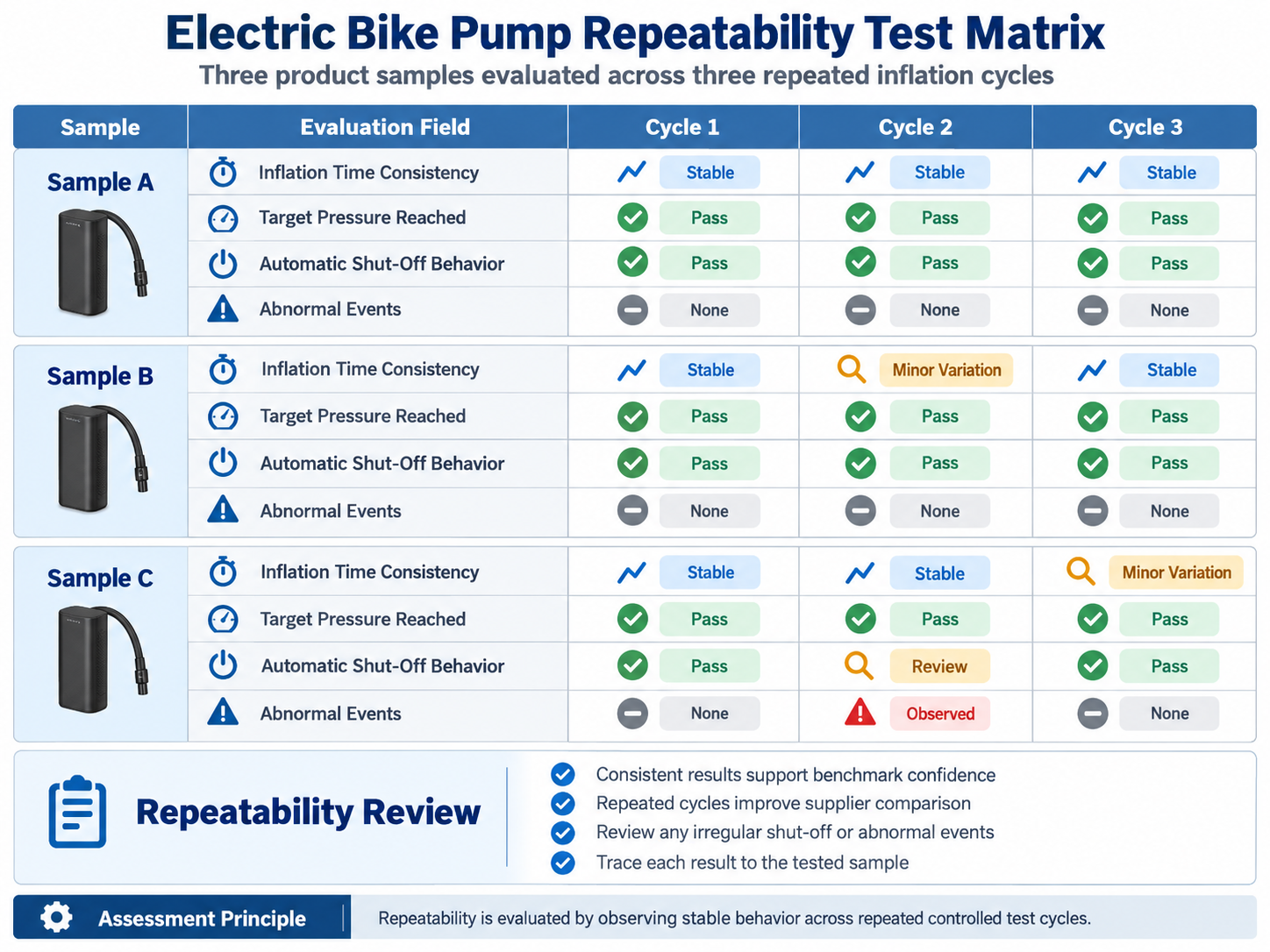
Procurement Check 2: Does the Report Show Repeatability, Not Just the Best Result?
One test result is useful for demonstration.
Procurement decisions need more than that.
A benchmark report should ideally show whether the product can reproduce similar performance across repeated tests.
This is important because a buyer is not purchasing one perfect sample. The buyer is purchasing a production lot.
Useful repeatability information may include:
- several inflation cycles from the same unit
- results from multiple samples
- total inflation time variation
- automatic shut-off consistency
- restart behavior
- pressure-reading consistency
- performance after the pump becomes warm
- any protection events or abnormal behavior
A single unusually good result should not define the benchmark.
Watch for “Best-Case” Reporting
If a report contains only one number per product, buyers should ask how that number was selected.
Was it:
- the first test?
- the fastest test?
- the average?
- one representative result?
- the result from the best-performing sample?
These approaches can produce very different impressions.
For procurement, the report should explain how the final reported value was obtained.
Even if the supplier does not provide a statistical analysis, buyers should be able to see whether the result is based on a repeatable test rather than a single favorable run.
Warm-Unit Behavior Can Reveal Differences
Electric bike pumps generate heat during operation.
If the benchmark only tests completely cold samples once, it may not show how the pump behaves during realistic repeated use.
Depending on the product’s intended use, procurement teams may want to compare:
- first-cycle performance
- repeated-cycle performance
- warm-unit inflation time
- required cooling intervals
The test should remain within the manufacturer’s intended operating conditions.
The purpose is not to force the pump into failure.
It is to understand whether normal performance remains predictable after repeated use.
Procurement Check 3: Can the Result Be Traced Back to the Actual Sample and Method?
A benchmark report should be traceable.
The buyer should know which sample generated each result and how the measurement was made.
Useful information can include:
- sample model
- sample identification
- test date
- test procedure
- tire specification
- measuring device
- battery condition
- test cycle number
- tester notes
- abnormal observations
This becomes especially important during OEM development.
A buyer may approve one sample and later receive a revised sample with changes to:
- motor
- battery
- cylinder
- firmware
- pressure sensor
- hose
- valve connector
If the benchmark report does not identify the tested version, the buyer may later be comparing production units against data from a different configuration.
Connect the Benchmark to the Golden Sample
For an OEM project, benchmark data is most useful when it can be connected to the approved golden sample.
For example, the procurement file can state that the approved sample achieved a defined performance range under a defined test procedure.
Later production checks can then use the same method.
This creates a clearer chain:
Supplier sample → benchmark test → approved configuration → golden sample → production acceptance
That is much more useful than keeping an isolated presentation containing several impressive numbers.
 OEM bike pump golden sample test
What Should a Useful Bike Pump Benchmark Report Include?
A practical report does not have to be complicated.
A basic structure can include:
| Report Section | What Buyers Should See |
|---|---|
| Sample Information | Model and sample identification |
| Test Tire | Tire size and valve type |
| Starting Condition | Initial pressure and battery condition |
| Target Condition | Defined target pressure |
| Inflation Result | Total time and pressure behavior |
| Repeat Tests | Multiple cycles or samples |
| Thermal Condition | Cold or warmed unit |
| Auto Shut-Off | Result and consistency |
| Abnormal Behavior | Protection, noise, delay, error |
| Test Method | Same procedure for compared products |
| Notes | Any differences or limitations |
This type of report allows a buyer to understand the context behind the headline result.
Benchmark Reports Should Compare Finished Products
Component specifications can help explain performance, but they should not replace finished-product testing.
Two electric bike pumps may use motors with similar rated specifications and still behave differently.
Finished performance also depends on:
- cylinder design
- air path
- battery output
- PCB control
- pressure sensing
- firmware
- heat management
- hose and valve connection
- assembly consistency
For this reason, B2B buyers should prioritize complete-product benchmark results when deciding which sample performs better in the actual use case.
Look for Comparable Evidence, Not More Data
A long report is not automatically a good report.
Twenty pages of unrelated specifications may be less useful than one controlled comparison table.
The most valuable benchmark data answers three questions:
- Were the products tested under the same conditions?
- Can the results be repeated?
- Can the data be traced back to the exact sample and method?
If the answer to these three questions is yes, the report can support a real procurement decision.
If not, the numbers should be treated carefully.
Questions to Ask a Supplier About a Benchmark Report
Before accepting a comparison report, buyers can ask:
- What tire was used?
- What were the starting and target pressures?
- Were all pumps tested on the same tire?
- What was the battery condition?
- How many times was each test repeated?
- Were multiple samples tested?
- Is the reported result an average or a single run?
- Was the pump cold or already warm?
- Were cooling intervals controlled?
- Which exact sample version was tested?
- What equipment was used to record pressure and time?
- Can the same procedure be repeated during sample approval or production inspection?
These questions make supplier comparisons much more transparent.
Conclusion
A bike pump benchmark report should do more than rank products from fastest to slowest.
For procurement teams, the report needs to show whether the comparison is controlled, repeatable, and traceable.
Three checks are especially important:
- confirm that test conditions are clearly defined and comparable,
- check whether the result can be repeated across cycles and samples,
- make sure every result can be traced to the actual sample and test method.
These checks help buyers move from marketing claims to usable product evidence.
When benchmark testing is connected to sample approval and later production acceptance, it can become a practical part of supplier selection and quality control.
YANTU supports electric bike pump projects for cycling brands, distributors, retailers, and private-label customers. We can work with buyers on comparative testing, sample validation, benchmark conditions, golden-sample approval, product configuration, and bulk production requirements.