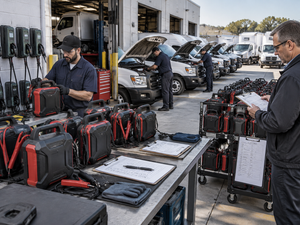
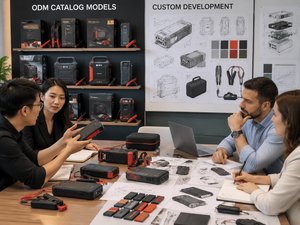
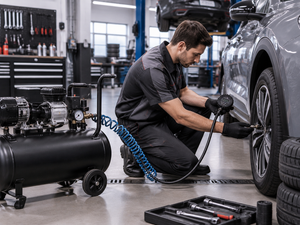
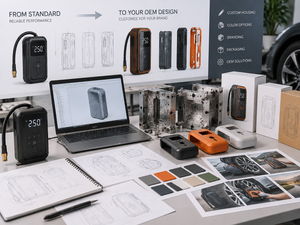
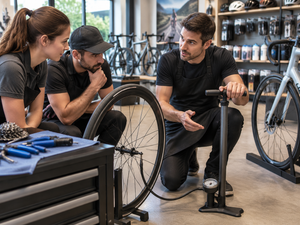
Quality control in an OEM tire inflator project should begin long before the finished products are packed into cartons.
For B2B buyers, one of the most common sourcing mistakes is assuming that quality is entirely the factory’s responsibility. The manufacturer is responsible for production control, but the buyer must also define what the approved product is supposed to be.
Pressure performance, inflation time, hose construction, accessories, packaging, appearance, electrical configuration, and inspection criteria should all be clarified before mass production.
A successful OEM project therefore depends on shared responsibility: the buyer defines and approves the requirements, while the manufacturer controls production against those agreed standards.
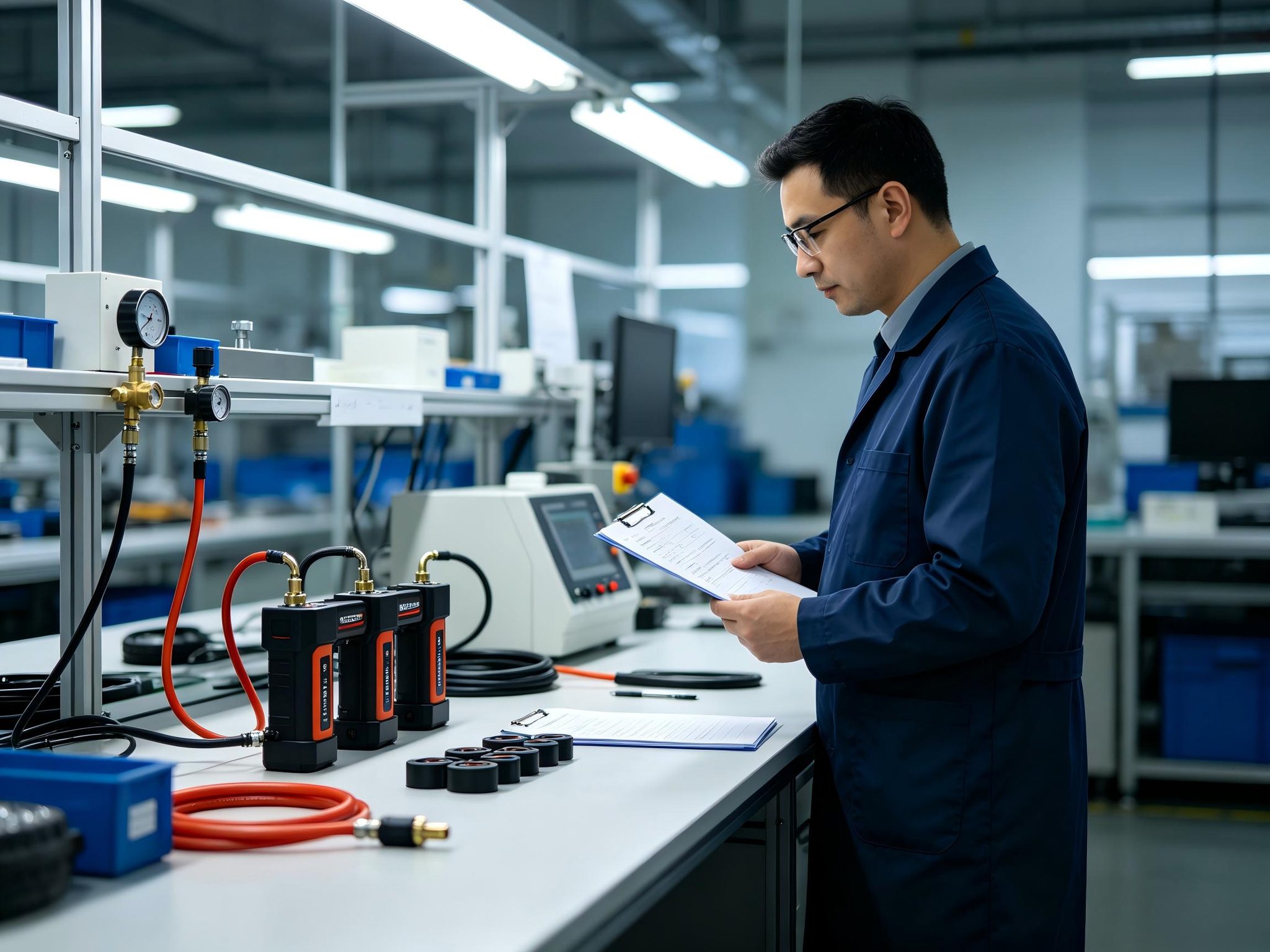
Quality Control Starts with a Clear Product Specification
Factories cannot consistently inspect a product if the acceptance standard is unclear.
Before production begins, the buyer and manufacturer should confirm the final configuration of the tire inflator.
This may include:
- rated voltage and power configuration
- maximum pressure specification
- expected inflation performance
- pressure display or gauge requirements
- hose length and connection type
- tire chuck design
- power cable or charging configuration
- included nozzles and accessories
- housing material and color
- logo position
- packaging
- instruction manual
- labels and markings
For an OEM project, changes may also involve the housing, internal structure, software settings, controls, or accessories.
Each approved detail should become part of the production reference.
This is why a confirmed specification sheet and approved sample are more useful than general descriptions such as “high quality” or “heavy duty.”
Quality needs measurable or observable acceptance criteria.
Incoming Material and Component Inspection
Quality control does not begin at final assembly.
Many tire inflator problems can originate from components supplied before production starts.
Important incoming materials may include:
- motors
- cylinders or compressor components
- pressure sensors
- gauges
- PCB assemblies
- batteries for rechargeable models
- hoses
- tire chucks
- cables
- plugs
- switches
- housings
- seals and fittings
The manufacturer should have a process for checking critical incoming components before they enter production.
The exact inspection method depends on the component and product design.
For example, visual appearance may be sufficient for some packaging materials, while electrical components or pressure-related parts may require functional checks.
For OEM buyers, the important question is whether critical components are controlled consistently and whether unauthorized substitutions can occur without approval.
If a component is changed after sample confirmation, the buyer should understand whether the change affects performance, appearance, safety, or compliance requirements.
In-Process Quality Control During Assembly
Waiting until final inspection to discover production problems can be expensive.
In-process quality control helps identify issues while the product is still being assembled.
For tire inflators, manufacturers may need to monitor areas such as:
- wire connections
- hose installation
- air sealing
- fastener assembly
- motor and compressor installation
- PCB connection
- display operation
- button response
- battery connection
- housing fit
- label placement
The specific checkpoints should match the product structure.
Air leakage is a good example.
If hose fittings, seals, or connectors are not assembled correctly, the product may still turn on but perform poorly during inflation. Detecting this problem during assembly can be easier than discovering it after packaging.
Consistency is especially important for OEM projects.
A prototype may perform well, but B2B buyers ultimately need hundreds or thousands of production units to remain within the agreed quality range.
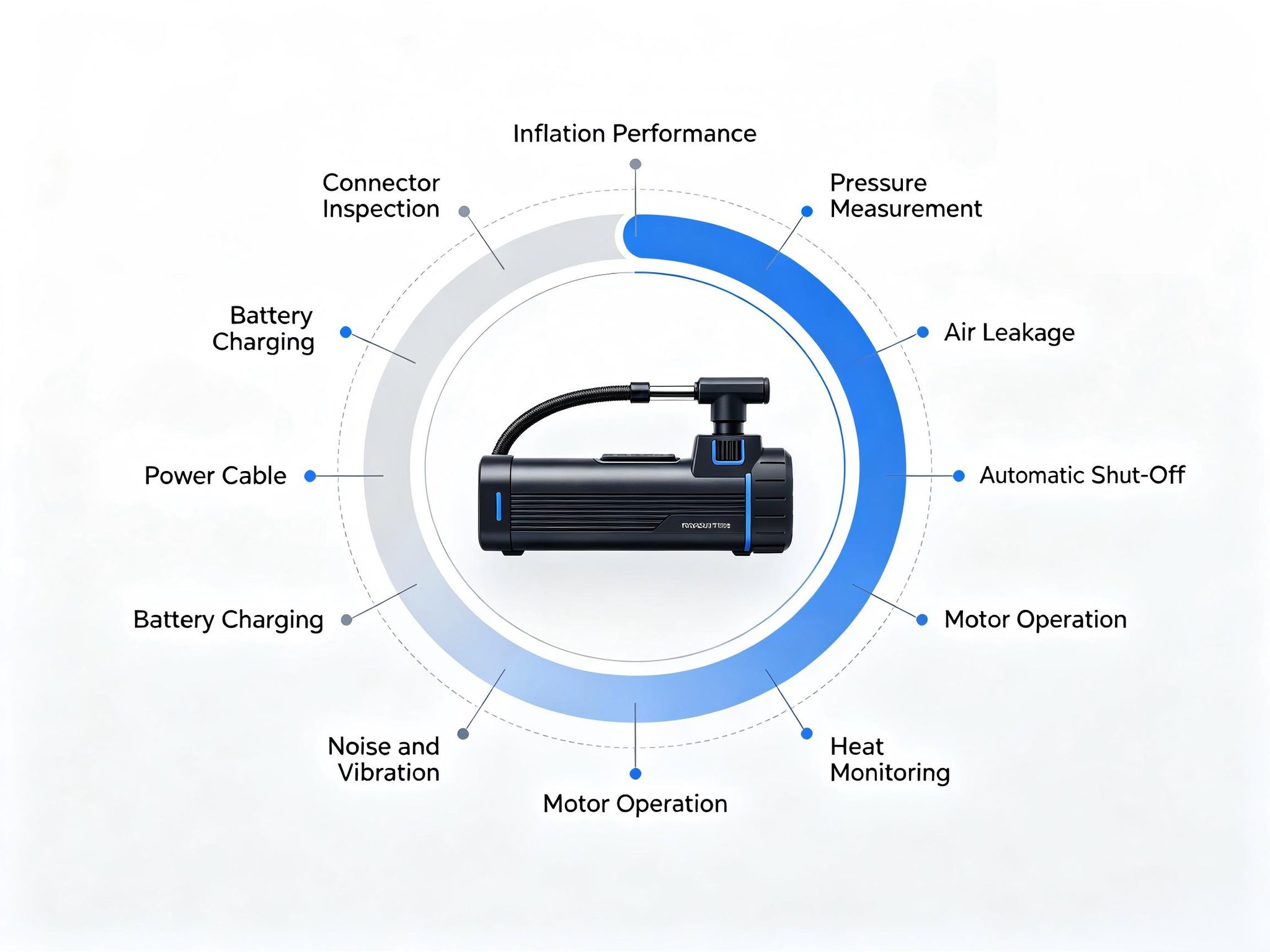
Performance Testing Should Reflect the Product’s Real Use
A tire inflator is a functional product, so appearance inspection alone is not enough.
Performance checks should reflect the intended application.
Depending on the product, buyers may want to confirm:
- inflation performance
- pressure reading
- automatic shut-off
- air leakage
- operating sound and abnormal vibration
- heat development
- repeated operation
- battery or charging function
- power cable and connector operation
- display and controls
The testing conditions matter.
Inflation time can vary depending on tire size, starting pressure, target pressure, voltage, battery state, and temperature.
Noise measurements also depend on distance and environment.
This means buyers and manufacturers should agree on the test method rather than compare isolated numbers without context.
For commercial or higher-frequency products, repeated-operation testing may also be important because a product that performs well during one short inflation cycle may behave differently after several cycles.
Final Inspection and the Approved Sample
Before shipment, final inspection should confirm that finished products match the approved project requirements.
A useful reference is an approved production sample, sometimes called a golden sample.
This sample can establish expectations for:
- product appearance
- color
- logo
- accessories
- packaging
- labels
- user interface
- basic function
- overall configuration
Final inspection can then compare production units against this reference and the agreed specification.
Buyers should also define how inspection results will be handled.
Questions may include:
- Which defects are considered unacceptable?
- Which functions require testing?
- How many units will be sampled?
- What happens if the inspection fails?
- Will the factory rework and reinspect the goods?
- Does the buyer require a third-party inspection?
There is no single inspection plan that fits every OEM project.
Order size, product complexity, buyer requirements, target market, and previous supplier performance can all affect the inspection approach.
Who Is Responsible for What?
Quality problems often become difficult when responsibilities were never clearly defined.
A practical division can look like this:
| Area | Buyer Responsibility | Manufacturer Responsibility |
|---|---|---|
| Product Requirements | Define and approve | Confirm feasibility |
| Approved Sample | Review and approve | Produce according to approval |
| Component Selection | Approve critical requirements | Control approved components |
| Production Process | Define special requirements if needed | Manage assembly and process QC |
| Performance Criteria | Agree on expected results | Test against agreed criteria |
| Packaging | Approve artwork and configuration | Produce and inspect accordingly |
| Final Inspection | Define acceptance expectations | Perform internal final QC |
| Compliance | Confirm target-market requirements | Provide applicable product documentation and agreed support |
The exact responsibility can vary by project, but it should be discussed before production rather than after a problem occurs.
OEM quality control works best when both sides know what must be controlled and who is responsible for confirming it.
What B2B Buyers Should Ask Before Mass Production
Before approving an OEM tire inflator order, buyers should ask:
- What incoming components are inspected?
- Which production steps have QC checkpoints?
- How is air leakage checked?
- How is pressure performance verified?
- How is inflation performance tested?
- Are repeated-operation tests performed where relevant?
- How are abnormal noise and vibration handled?
- Can critical components be changed without buyer approval?
- What sample will be used as the production reference?
- What final inspection records are available?
- How are failed units reworked or rejected?
- Can the buyer arrange pre-shipment or third-party inspection?
These questions help turn “we have strict QC” into a process that buyers can actually evaluate.
 heavy duty tire inflator duty cycle
Conclusion
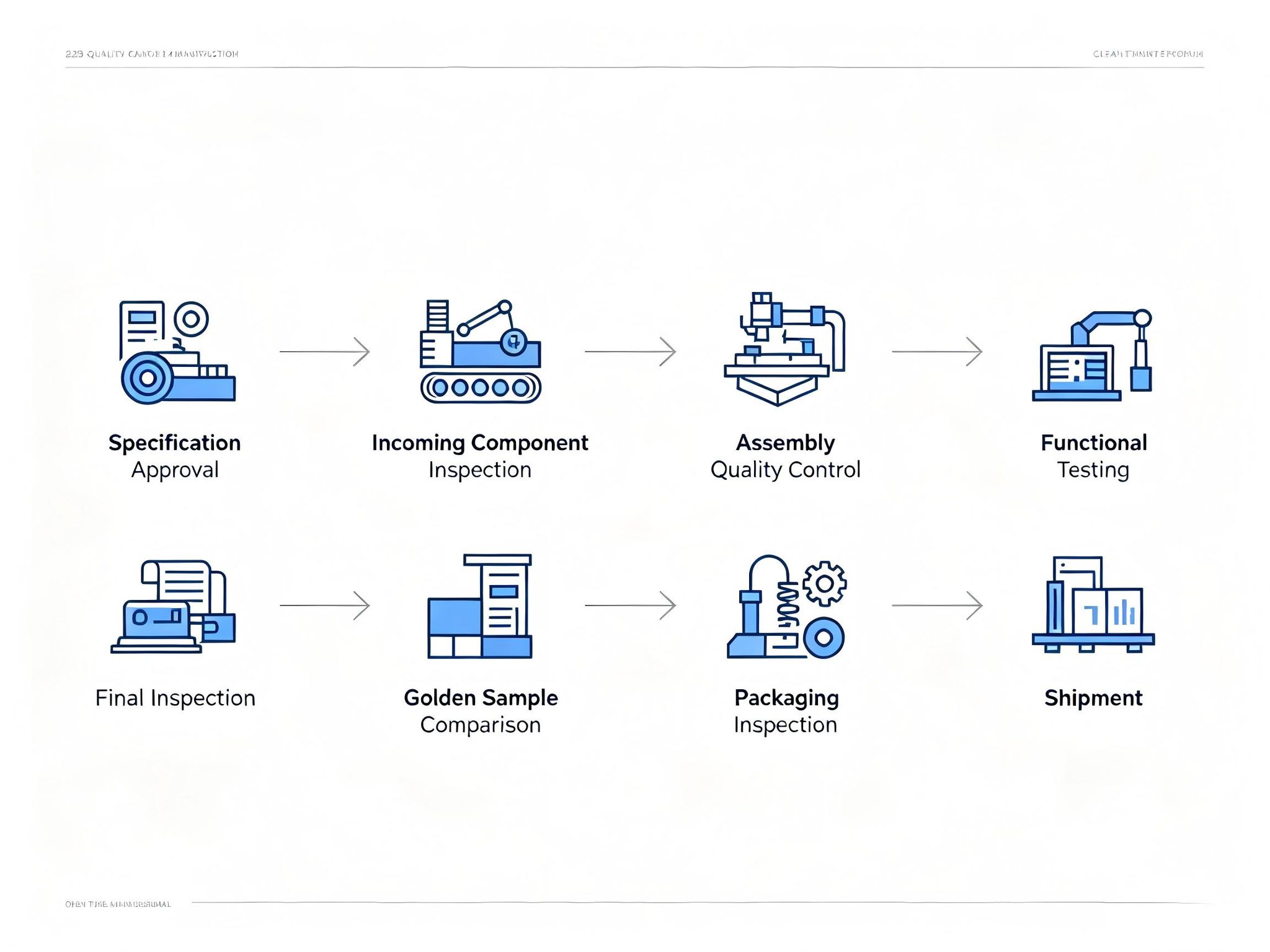
Quality control in OEM tire inflator production is not one inspection performed at the end of the production line.
It begins with clear specifications and continues through component control, assembly, functional testing, sample approval, final inspection, and shipment.
For B2B buyers, the most important step is to define the product clearly enough that quality can be measured against an agreed reference.
For manufacturers, the responsibility is to maintain production consistency and prevent uncontrolled changes from entering mass production.
When both sides establish clear responsibilities and inspection criteria before production, OEM projects become easier to manage and quality disputes are less likely to appear after shipment.
YANTU supports OEM and private label tire inflator projects for automotive brands, distributors, retailers, and professional channels. If you are developing a tire inflator product line, our team can discuss specifications, sample approval, performance testing, packaging, quality control requirements, and bulk production planning.