A jump starter is primarily an automotive emergency tool. Its most important job is to provide enough power to help start a suitable vehicle when the vehicle battery cannot do so on its own.
However, many modern jump starters also include power outputs for charging electronic devices.
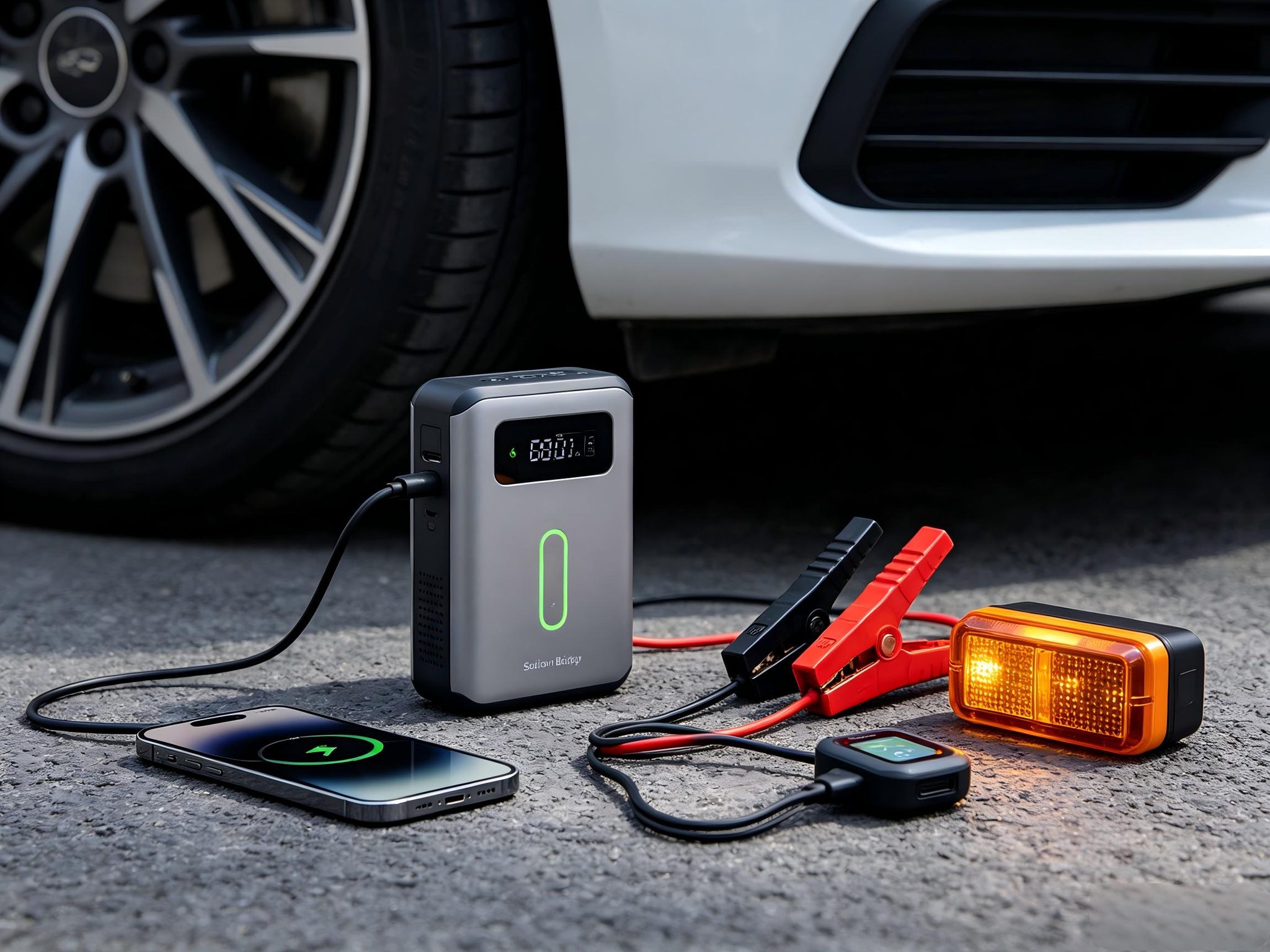
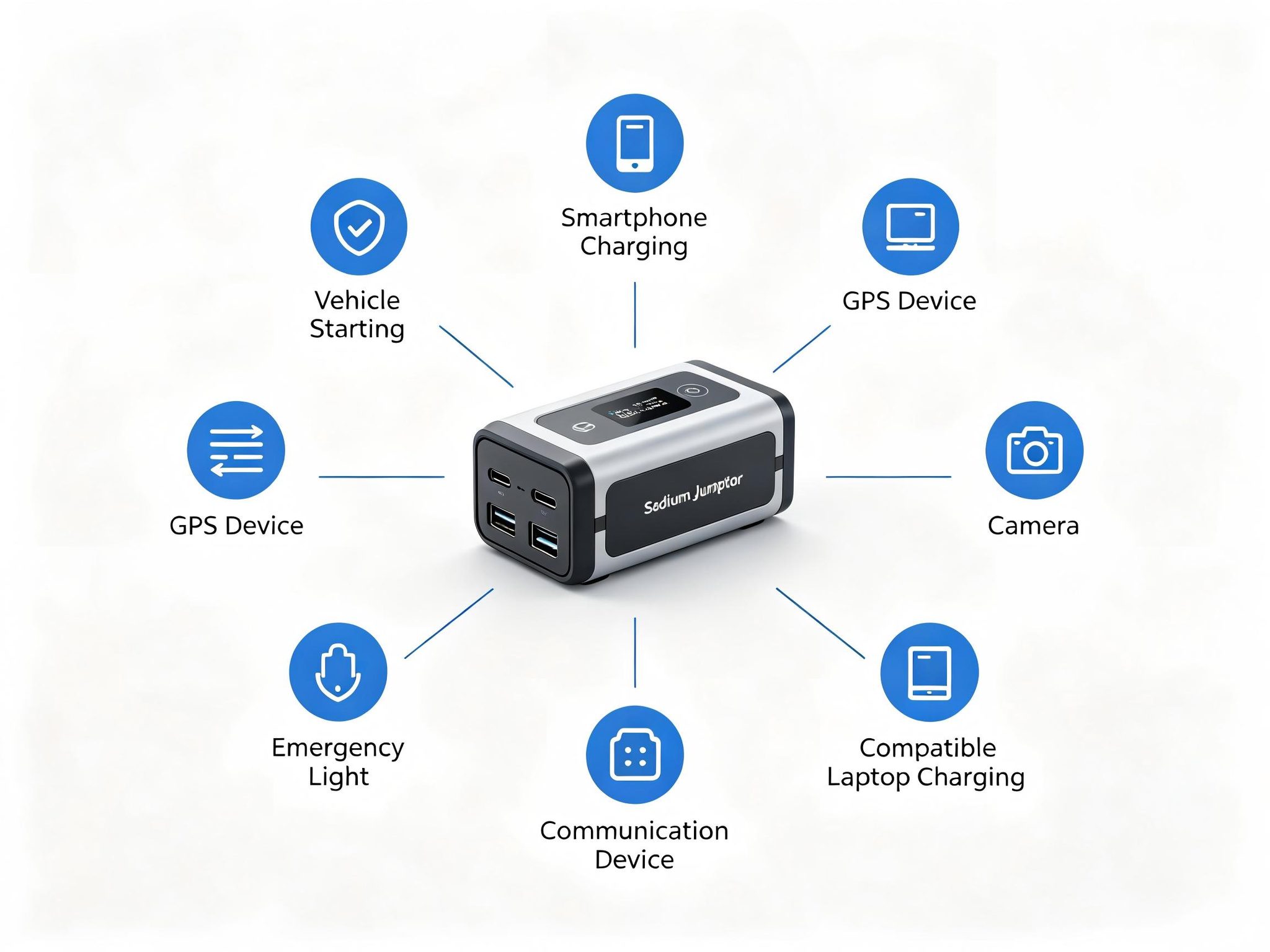
This creates another useful product position: a compact emergency power bank that stays with the vehicle and can support phones, cameras, GPS devices, lights, and other compatible electronics when normal charging is unavailable.
For B2B buyers evaluating sodium jump starters, this secondary function can add value—but only when it is explained correctly.
A jump starter should not automatically be marketed as a replacement for a portable power station. The better positioning is a vehicle emergency tool with additional power support.
Vehicle Starting Should Remain the Core Function
The first purchasing principle is simple: a jump starter should still be evaluated primarily as a jump starter.
Adding USB ports, Type-C output, lighting, or other functions does not compensate for weak starting performance.
B2B buyers should first verify areas such as:
- suitable vehicle applications
- starting performance
- clamp and cable design
- battery system
- protection functions
- storage guidance
- charging method
- sample performance
Only after the core starting function is confirmed should buyers evaluate the product’s additional power-bank features.
This matters for product positioning.
If the listing and packaging focus too heavily on charging phones and electronics, customers may misunderstand the main purpose of the product.
A clearer message is:
Vehicle starting first, emergency device charging second.
This keeps customer expectations aligned with the product’s actual role.
What Devices Can a Jump Starter Support?
The answer depends on the output configuration of the specific model.
A jump starter with standard USB output may be useful for charging devices such as:
- smartphones
- GPS units
- action cameras
- small rechargeable lights
- Bluetooth devices
- communication equipment
- other compatible USB-powered electronics
Some models may also include USB-C or other higher-power outputs.
If a seller wants to position the product for laptop charging, the output specification needs to be checked carefully.
A USB-C connector alone does not mean the product can charge every laptop.
Buyers should verify:
- output voltage
- maximum output current
- supported charging protocol
- maximum output power
- cable requirements
- device compatibility
The same principle applies to cameras and other electronics.
For B2B buyers, the safest approach is to market only the applications supported by the actual output specification and product testing.
Why Emergency Charging Adds Value
A vehicle emergency can involve more than a weak starter battery.
Drivers may also need their phone for:
- navigation
- contacting roadside assistance
- communicating with family or colleagues
- accessing maps
- making emergency calls
- using vehicle or travel apps
If the phone battery is also low, a jump starter with power-bank functionality becomes more useful.
This can also matter in other scenarios:
- road trips
- fleet vehicles
- winter travel
- camping
- overlanding
- remote work
- roadside service
- emergency vehicle kits
For distributors and retailers, this creates a broader product story.
Instead of selling only a device that may be used once during a battery emergency, the product can be positioned as part of a complete vehicle emergency kit.
However, the secondary function should still support the main automotive purpose rather than replace it.
Battery Capacity Needs to Be Managed Differently
Using a jump starter as a power bank consumes stored energy.
That sounds obvious, but it has an important practical consequence.
A customer who fully drains the unit charging phones or other devices may reduce the energy available for vehicle starting later.
The manual and product content should therefore explain how to manage the battery responsibly.
Useful guidance may include:
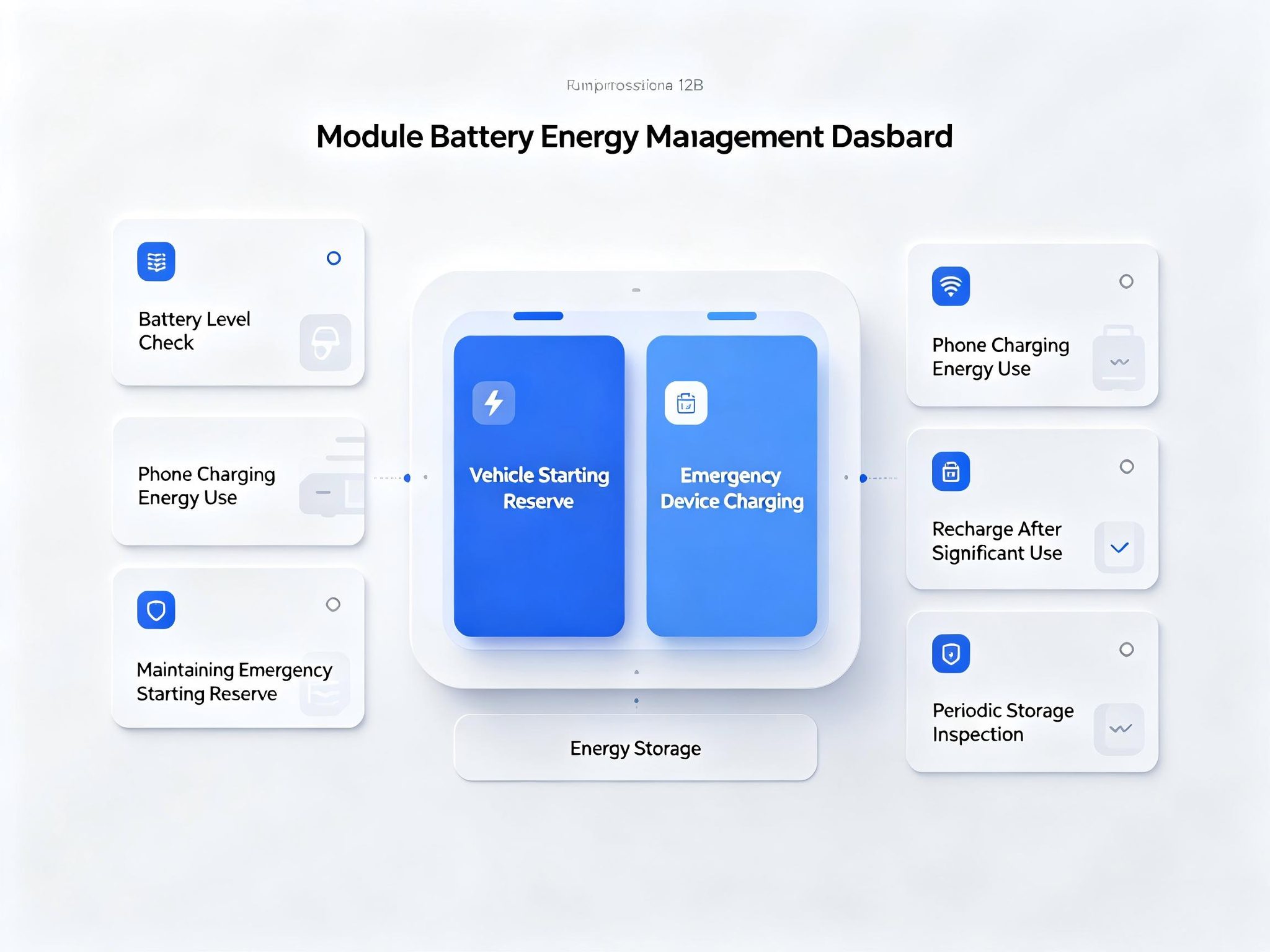
- check battery level before long trips
- recharge according to the manufacturer’s instructions
- avoid intentionally draining the product completely before emergency use
- inspect the unit periodically during long-term vehicle storage
- understand how device charging affects remaining battery level
- recharge after significant power-bank use
For fleet managers, this can become part of equipment inspection.
If a jump starter is assigned to a service van or fleet vehicle, staff should not assume it remains fully ready simply because it is still stored in the vehicle.
Emergency readiness depends on actual battery condition.
 sodium jump starter storage comparison
Sodium Battery Positioning Should Be Product-Specific
Sodium battery technology can create a useful differentiation story for jump starter buyers, especially around areas such as storage management, temperature performance, and battery system positioning.
But battery chemistry alone does not define the performance of the finished product.
A complete sodium jump starter also includes:
- battery cells
- battery management system
- protection circuitry
- charging electronics
- output electronics
- smart clamps
- cables
- housing
- software
- connectors
For this reason, claims about standby time, temperature performance, charging behavior, or safety should be based on the actual product and supporting test information.
The same rule applies to power-bank performance.
Buyers should not assume that every sodium jump starter has the same USB output, charging speed, usable energy, or device compatibility.
For private label projects, product-specific specifications are more valuable than broad battery chemistry claims.
Jump Starter vs Portable Power Station
A multi-function jump starter and a portable power station can overlap in some applications, but they are not the same product.
| Factor | Sodium Jump Starter | Portable Power Station |
|---|---|---|
| Primary Purpose | Vehicle emergency starting | Stored power for electronic devices |
| Vehicle Starting | Core function | Usually not the main function |
| Phone Charging | Useful secondary function | Standard use |
| Laptop Charging | Depends on output configuration | More commonly supported |
| High-Power Devices | Usually limited | Depends on power station capacity/output |
| Size | Usually compact | Usually larger |
| Vehicle Storage | Often convenient | Depends on product size |
| Emergency Kit Role | Strong automotive focus | Broader portable energy focus |
For B2B sellers, positioning these products correctly can reduce customer confusion.
A jump starter is best presented as a compact automotive emergency power tool.
A portable power station is better suited to customers whose primary requirement is longer-duration or higher-capacity device powering.
What B2B Buyers Should Check Before Ordering
If power-bank functionality is part of the sales strategy, buyers should confirm it during sourcing.
Useful questions include:
- What output ports are included?
- What voltage and current does each output support?
- Is USB-C included?
- Which charging protocols are supported?
- Can the product charge laptops, and under what conditions?
- How does device charging affect remaining starting capacity?
- Is there a clear battery-level indicator?
- What charging cable is included?
- What protection functions apply to the output ports?
- Is emergency lighting included?
- Does the manual explain power-bank use?
- Can samples be tested with representative devices?
This information should remain consistent across the product, packaging, manual, specification sheet, and marketplace listing.
Quick Emergency Power Function Checklist
| Area | What Buyers Should Verify |
|---|---|
| Core Starting Function | Suitable vehicle applications and tested performance |
| USB Output | Voltage, current, and connector |
| USB-C | Actual supported output and protocol |
| Laptop Charging | Confirm compatibility rather than assume |
| Battery Indicator | Easy to understand remaining charge |
| Lighting | Emergency or work-light functionality if included |
| Accessories | Correct cables supplied |
| Manual | Clear charging and storage instructions |
| Product Claims | Match actual configuration and testing |
| Sample Test | Check both vehicle starting and device charging |
Conclusion
Using a sodium jump starter as an emergency power bank can add practical value to an automotive emergency product.
Phone charging, navigation support, emergency lighting, camera charging, and other compatible low-power applications can make the product more useful during road trips, fleet operations, camping, and roadside emergencies.
But B2B buyers should keep the positioning clear.
Vehicle starting remains the core function. Device charging is an additional capability whose performance depends on the actual ports, output power, battery system, and product design.
Sellers should therefore verify output specifications, device compatibility, battery management, storage guidance, accessories, and sample performance before making marketing claims.
YANTU supports sodium jump starter projects for automotive brands, distributors, marketplace sellers, fleets, and private label customers. If you are developing a multi-function jump starter, our team can help discuss starting performance, output configuration, accessories, sample testing, packaging, documentation, and bulk production requirements.