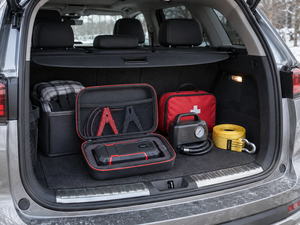
A roadside assistance fleet can own enough jump starters and still discover that the right unit is not ready when a technician needs it.
The problem is often not the number of products in the depot. It is visibility.
One unit may still be inside a service van from the previous shift. Another may have been used but not recharged. A third may have a damaged clamp that somebody noticed but never recorded. During winter, these gaps become more important because jump starters may spend long periods in cold vehicles while demand for emergency starting support can increase.
For fleet operators, readiness therefore needs to be treated as an equipment-management process.
A winter depot readiness log gives the team a simple way to know where each jump starter is, what condition it is in, and whether anything must happen before it returns to service.
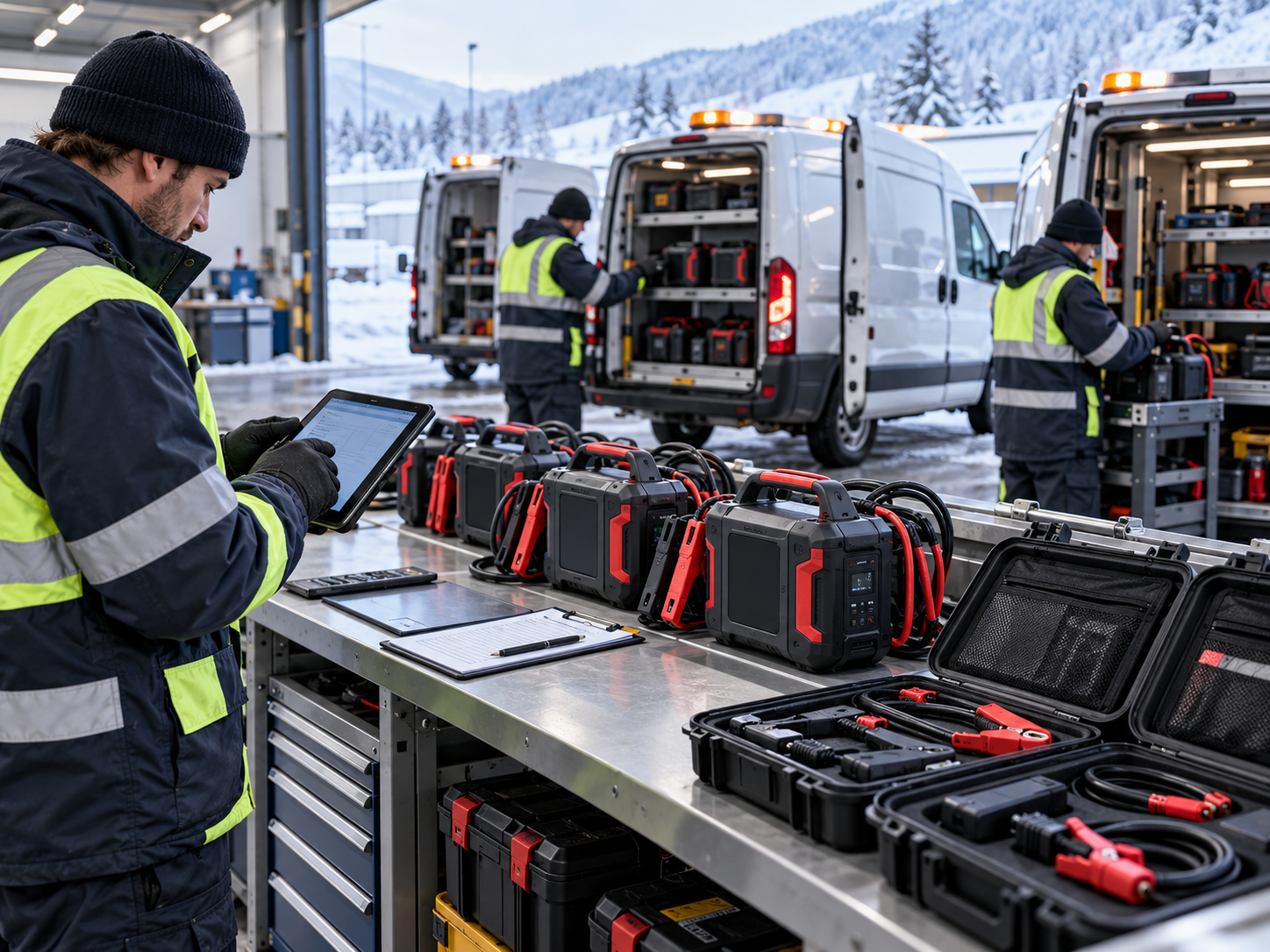
What Does “Ready for Service” Actually Mean?
Battery level is only one part of readiness.
A jump starter showing a high battery indication may still be unsuitable for deployment if its clamp is damaged, a cable connection is unreliable, an accessory is missing, or an earlier warning has not been investigated.
A useful fleet definition of Ready should consider several areas together:
- the unit can be identified
- its current location is known
- battery status is acceptable for the fleet’s procedure
- clamps and cables are present
- there is no obvious physical damage
- no unresolved fault is attached to the unit
- storage and charging conditions are consistent with the product instructions
This creates a much clearer operational standard than simply asking whether the product has been charged recently.
Start With a Unique Identity for Every Jump Starter
A readiness log becomes difficult to maintain if multiple units are recorded only by product model.
Each jump starter should have its own asset ID, serial reference, QR label, or another unique identifier.
The goal is to make statements such as these possible:
Unit JS-018 is assigned to Service Van 6.
Unit JS-023 is in the charging area.
Unit JS-031 is on hold because of a clamp issue.
This matters because similar products can easily move between vehicles, depot shelves, workshops, and charging stations.
Without individual identification, a fault reported on one unit can easily become disconnected from the equipment that actually caused it.
For multi-vehicle operations, location should therefore be treated as part of readiness rather than as a separate inventory issue.
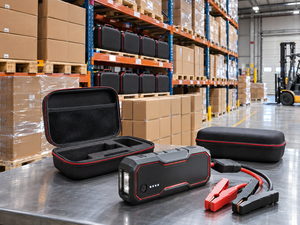
 jump starter storage conditions
Map the Normal Equipment Journey Through the Depot
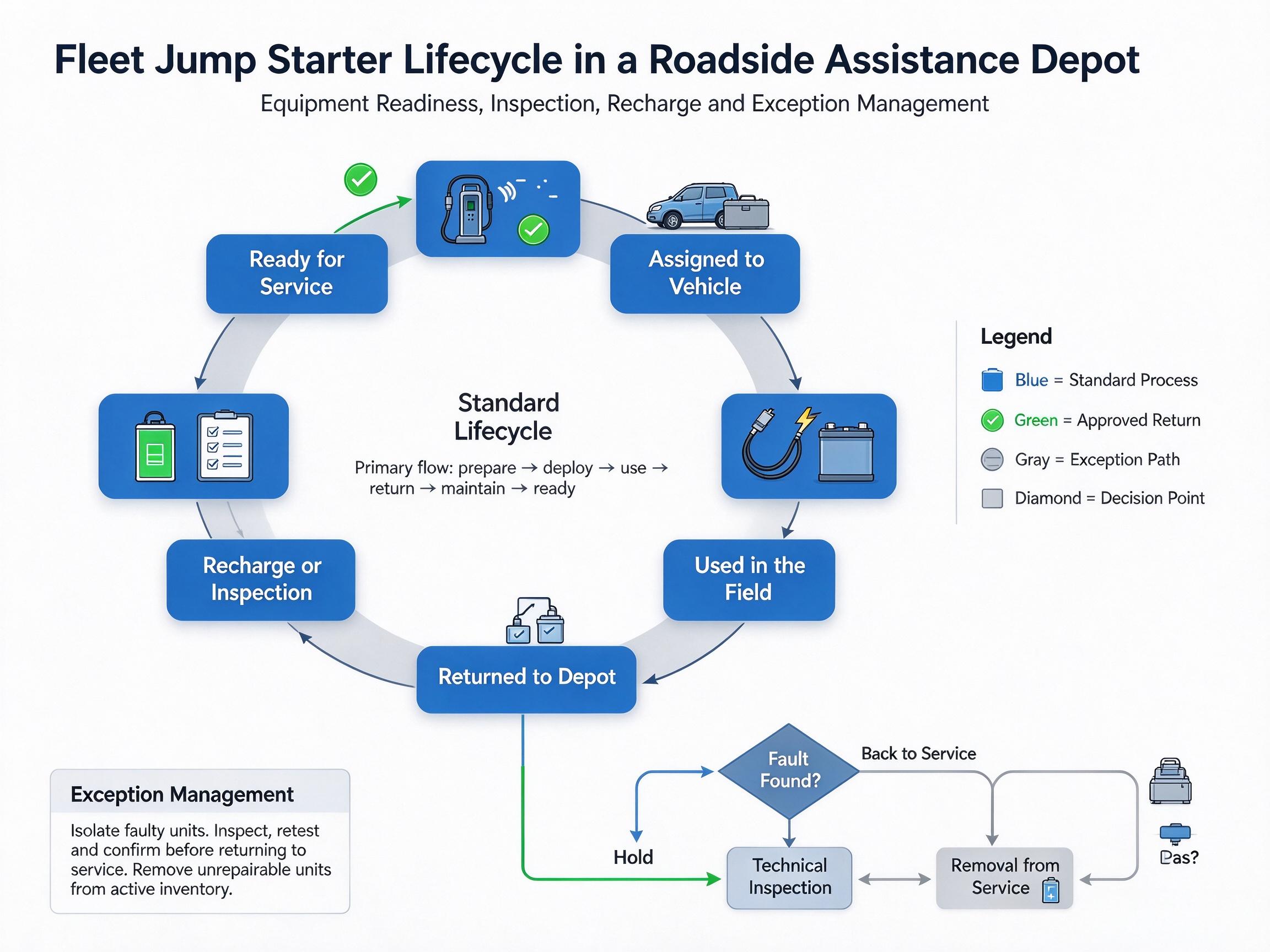
Instead of building the readiness log as a long inspection form, fleets can organize it around the normal movement of equipment.
A typical jump starter may pass through this sequence:
Ready → Assigned to Vehicle → Used in Service → Returned to Depot → Recharge or Inspection → Ready
The value of this approach is that the log follows the equipment rather than forcing every technician to complete the same large checklist repeatedly.
Only the information that changes needs to be updated.
After a roadside starting job, for example, the technician may only need to record that the unit was used and requires return inspection.
After recharge and inspection, the depot team can move the unit back to Ready status.
If a fault is discovered, the route changes:
Used → Fault Reported → Hold → Inspection or Repair → Retest → Ready or Removed from Service
This creates a visible operating history.
Winter Conditions Add Another Layer to Readiness
Cold-weather use is more complicated than simply asking whether a jump starter works at low temperature.
A battery product may have different specifications for:
- storage
- discharge or engine starting
- charging
- recovery after cold exposure
These conditions should not be merged into one general winter status.
For example, a unit that has spent the night inside a cold service vehicle may still be available for starting under its approved discharge conditions, while charging may require a different temperature condition.
This distinction is particularly important when the equipment returns to a warm depot after a roadside job.
The log can include a simple field that shows whether the unit is:
- available for use
- waiting for recharge
- waiting for temperature recovery
- under inspection
- unavailable
The exact operating limits should always come from the product specification and manual.
The depot record should translate those limits into an easy operational status rather than inventing new temperature rules.
Shift Handover Deserves Its Own Record
Many readiness failures happen between shifts.
A technician may use a jump starter at the end of the day and return the vehicle without telling the next team that the equipment needs attention.
The next technician sees the jump starter inside the van and assumes it is ready.
A basic handover entry can prevent this.
Useful information includes:
| Handover Field | What It Tells the Next Shift |
|---|---|
| Unit ID | Which jump starter is involved |
| Current Location | Van, workshop, charging area, or storage |
| Last Use | Whether the unit was recently deployed |
| Current Status | Ready, recharge, hold, or inspection |
| Open Issue | Any unresolved problem |
| Next Action | What must happen before deployment |
This is especially useful in depots where service vehicles are shared by different teams.
Readiness should not depend on the memory of the technician who used the product last.
Keep the Daily Record Short Enough to Be Used
A readiness system can fail because it asks staff to record too much information.
If every routine inspection requires several pages of data, technicians may eventually treat the process as paperwork instead of operational support.
The daily or shift-level log should focus on information that changes deployment decisions.
A practical record may contain:
| Field | Purpose |
|---|---|
| Unit ID | Identifies the exact product |
| Model | Distinguishes product platform |
| Current Location | Shows where the unit can be found |
| Assigned Vehicle | Links the unit to the service fleet |
| Battery Status | Records readiness information |
| Clamp / Cable Condition | Identifies obvious equipment issues |
| Current Status | Ready, recharge, inspection, hold, removed |
| Last Use | Gives context for recent workload |
| Last Recharge | Supports maintenance tracking |
| Open Issue | Prevents unresolved faults from disappearing |
| Required Action | Recharge, inspect, repair, retest |
| Technician / Date | Provides traceability |
More detailed technical measurements can remain in periodic inspection or maintenance records.
The everyday depot log should make deployment decisions easier.
Make Exceptions More Visible Than Normal Units
Most jump starters in a depot should normally be available.
That means the most valuable part of the readiness system is not the list of equipment that passed.
It is the small group of units that need attention.
Examples may include:
- recharge required
- damaged clamp
- loose cable connection
- missing accessory
- abnormal warning
- charging problem
- power-on failure
- unresolved previous complaint
- uncertain storage condition
These units should be easy to identify at a glance.
A dashboard or spreadsheet can separate them into statuses such as:
- Ready
- Recharge Required
- Inspection Required
- On Hold
- Removed from Service
This helps supervisors focus on exceptions instead of reading every individual record.
Do Not Let a Fault Disappear After It Is Reported
Recording a problem is only the beginning.
The readiness process should show what happened afterward.
A fault record should ideally include:
- the issue found
- the person responsible for follow-up
- the required action
- whether the unit is blocked from service
- the retest result
- the final status
If a technician reports intermittent clamp behavior, the unit should not return to Ready status merely because somebody charged it.
The relevant issue needs to be checked and closed.
This creates a simple rule for fleet management:
No unresolved issue should return silently to the available equipment pool.
Maintenance History Can Reveal Patterns
Individual records become more valuable over time.
A single charging complaint may be an isolated event.
Several similar complaints from the same unit may suggest that it deserves deeper inspection.
Fleet managers can review equipment history for patterns such as:
- repeated charging problems
- recurring clamp warnings
- damaged cables
- intermittent connections
- repeated removal from service
- unusually frequent recharge intervention
This history can support maintenance decisions and help identify whether a particular unit should remain in the fleet.
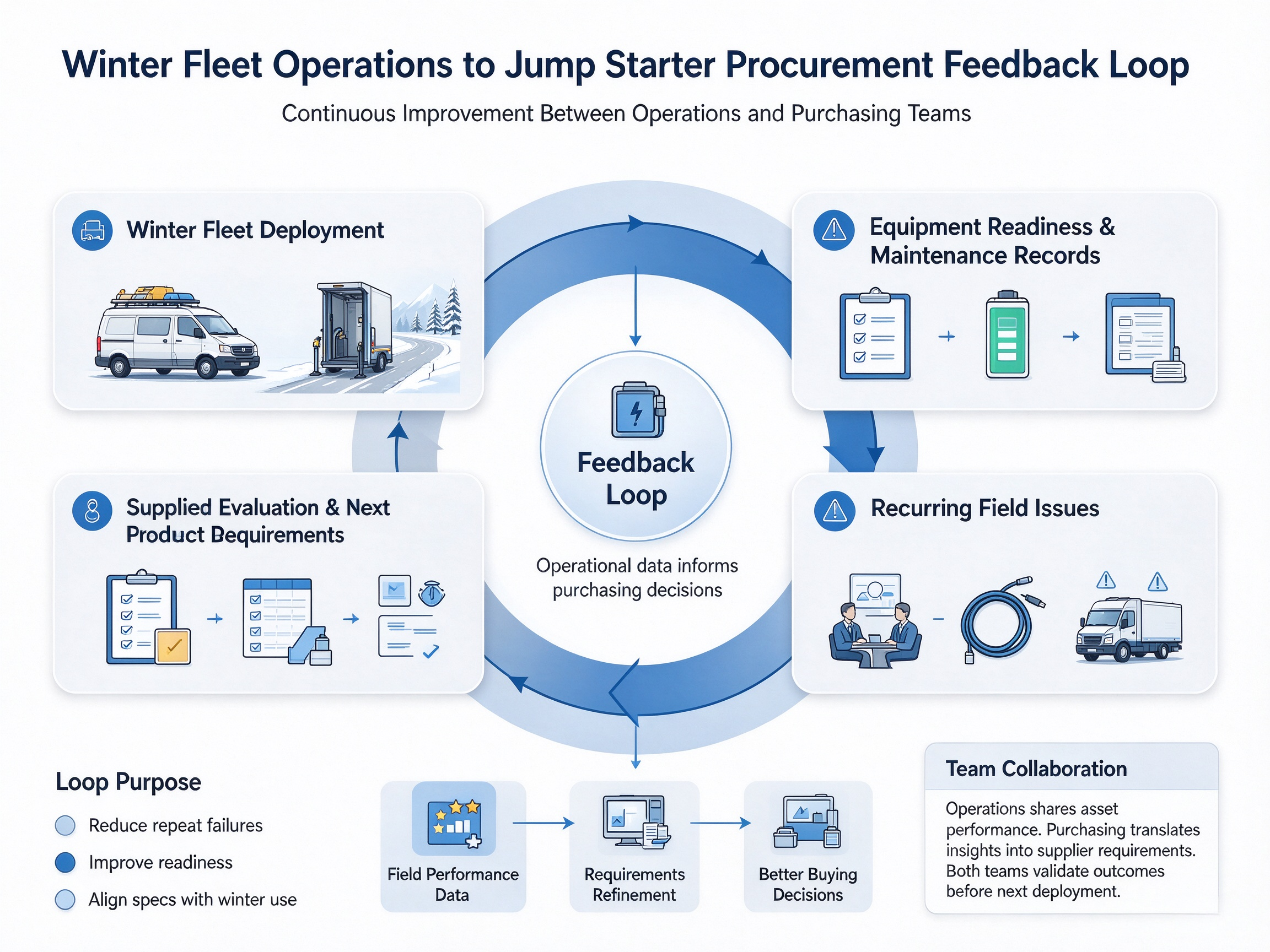
It can also provide useful information for future purchasing.
Use Winter Operations to Improve the Next RFQ
Depot records are not only useful to operations teams.
They can also improve procurement.
At the end of the winter season, buyers can review what actually happened in the fleet.
Questions may include:
- Which units required the most manual intervention?
- Which accessories were most often damaged?
- Were clamp or cable complaints recurring?
- Did technicians understand the cold-charging instructions?
- Which products were easiest to verify before deployment?
- Were some units frequently removed from service?
- Did packaging and storage cases survive daily professional use?
These findings can be converted into more specific requirements for the next sourcing project.
Instead of asking suppliers only for high peak current or long standby time, buyers can also ask about:
- readiness indication
- clamp durability
- cable design
- storage guidance
- cold-charging instructions
- equipment identification
- service documentation
- replacement accessories
Field operations can therefore become a source of procurement evidence.
Spreadsheet, QR Code, or Fleet Software?
The readiness system does not need to begin with specialized software.
A small depot may manage the process with a spreadsheet.
A larger roadside-assistance network may prefer:
- QR-linked equipment records
- mobile inspection forms
- fleet-maintenance software
- asset-management platforms
The best system is the one technicians will consistently use.
Regardless of the platform, a supervisor should be able to answer one question quickly:
Which jump starters are ready for deployment right now?
If answering that question requires checking several vans, asking multiple technicians, and searching through messages, the readiness process is too fragmented.
Keep the Depot Procedure Aligned With the Product Manual
Fleet procedures should be built around the actual jump starter specification.
The manufacturer’s documentation should define product-related conditions such as:
- storage limits
- operating conditions
- charging requirements
- warnings
- temperature protection
- recovery procedures
The depot log then converts those technical requirements into practical equipment-management actions.
This is also relevant for OEM and private-label projects.
Fleet-oriented buyers can discuss documentation requirements during product development so that the final manual supports real operating scenarios rather than only explaining basic consumer use.
Conclusion
A winter jump starter readiness log is not simply a charging checklist.
It is a system for connecting equipment identity, location, battery status, physical condition, winter operating restrictions, shift handover, and fault follow-up.
For roadside assistance fleets, the most useful readiness process makes it easy to know:
where the equipment is,
whether it is available for immediate deployment,
and what must happen before a non-ready unit can return to service.
The purpose is not to create more paperwork.
It is to prevent a technician from discovering an uncharged, damaged, missing, or incorrectly managed jump starter only after reaching a roadside call.
YANTU supports jump starter projects for automotive brands, roadside assistance fleets, distributors, and private-label customers. We can work with buyers on winter-use requirements, storage and charging documentation, clamp and cable configuration, fleet-oriented packaging, sample validation, and bulk production planning.